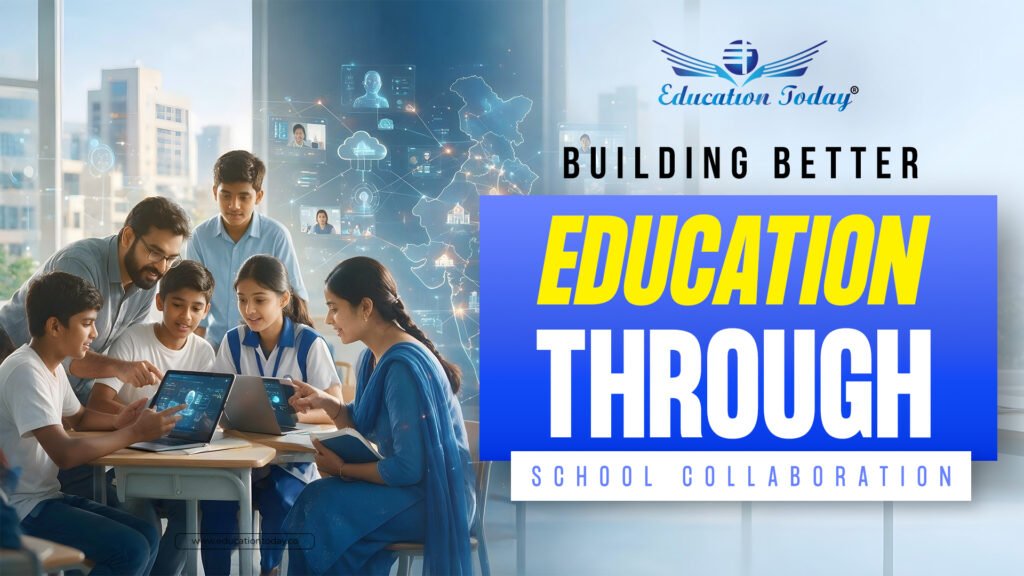
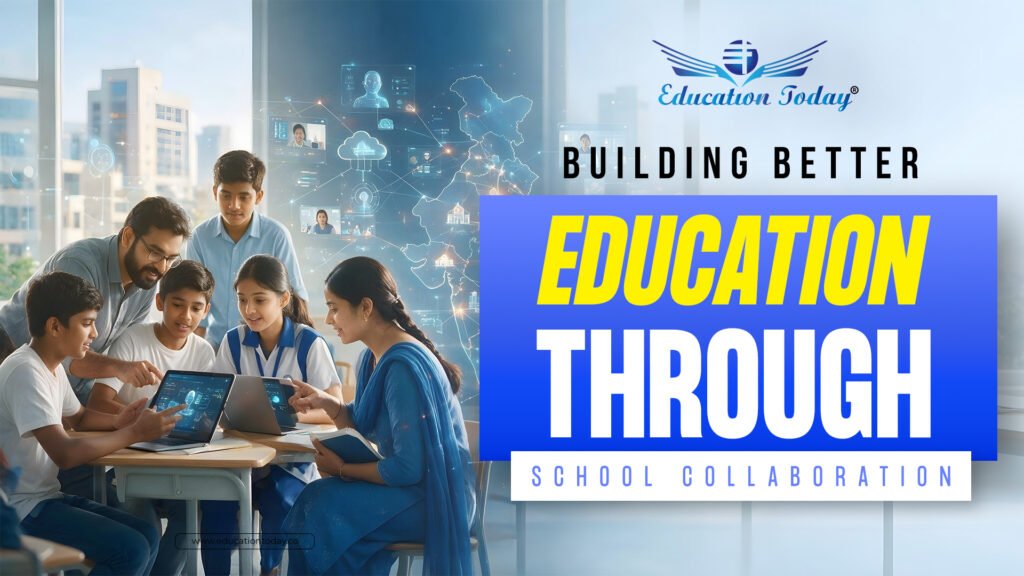
The education sector has undergone a profound transformation over the past decade, with digital technologies redefining how knowledge is created, shared and applied. Traditional classrooms, once characterised by teacher-centred instruction and individual learning, are steadily evolving into collaborative environments where students actively participate in discussions, solve problems collectively and build knowledge together. Information and Communication Technology (ICT) has emerged as the catalyst for this transition, enabling learners to collaborate beyond the physical classroom while fostering creativity, communication and critical thinking. In India, the emphasis on collaborative education has gained momentum through initiatives such as the National Education Policy (NEP) 2020, Digital India, DIKSHA, SWAYAM, Virtual Labs and the National Digital Education Architecture (NDEAR). These initiatives demonstrate the government’s commitment to integrating technology into education, not merely as a supplementary tool but as a fundamental component of modern pedagogy. At the same time, schools and higher education institutions are increasingly recognising that meaningful collaboration prepares learners for a workplace where teamwork, innovation and adaptability are essential.
Why Collaborative Learning Matters More Than Ever
Collaboration has become one of the defining competencies of the twenty-first century. Employers across industries seek professionals who can communicate effectively, work in diverse teams, solve complex problems and adapt to changing circumstances. Consequently, education systems worldwide are shifting their focus from rote memorisation towards experiential and collaborative learning.
Collaborative learning encourages students to share perspectives, debate ideas and develop solutions collectively. Rather than passively receiving information, learners become active contributors to the educational process. This approach strengthens conceptual understanding while nurturing interpersonal skills such as empathy, leadership, negotiation and conflict resolution.
Research consistently demonstrates that collaborative classrooms promote higher levels of student engagement and motivation. When learners work together, they become accountable not only for their own success but also for the progress of their peers. This shared responsibility creates an inclusive learning culture where knowledge is constructed collectively rather than transmitted unidirectionally.
ICT: The Backbone of Collaborative Education
Digital technologies have significantly expanded the possibilities of collaborative learning. Modern ICT platforms allow students and teachers to interact synchronously and asynchronously, irrespective of geographical boundaries.
Cloud-based applications such as Google Workspace facilitate real-time co-authoring of documents, collaborative presentations and shared project management. Digital whiteboards, mind-mapping platforms and brainstorming applications enable learners to visualise ideas collectively while encouraging creative problem-solving. Meanwhile, video conferencing tools support interactive discussions, virtual classrooms and peer mentoring across locations.
The growing adoption of communication platforms has also transformed teacher-student interactions. Instant messaging, discussion forums and collaborative workspaces provide continuous opportunities for feedback, clarification and knowledge sharing beyond school hours.
According to recent research on India’s digital transformation in education, collaborative ICT tools can be categorised into four broad functions: co-creation, communication, brainstorming and knowledge archiving. Together, these technologies create dynamic learning ecosystems where students actively participate in developing knowledge instead of merely consuming information.
India’s Policy Framework Supporting Digital Collaboration
India’s educational reforms have increasingly recognised that technology must support meaningful learning experiences rather than simply digitise existing teaching practices.
The National Education Policy (NEP) 2020 represents a significant policy shift by positioning digital literacy and technology integration at the heart of educational transformation. The policy advocates learner-centred pedagogy, critical thinking and collaborative problem-solving while encouraging institutions to integrate digital tools throughout the teaching-learning process rather than treating them as optional additions.
One of the policy’s major recommendations is the establishment of the National Educational Technology Forum (NETF), designed to facilitate evidence-based decision-making, promote innovation and enable educators to share best practices in educational technology. The policy also emphasises multilingual digital content, accessible learning platforms and improved teacher professional development through technology.
Complementing NEP 2020 is the National Digital Education Architecture (NDEAR), which seeks to create an interoperable digital ecosystem where government agencies, educational institutions and technology providers can collaborate more effectively. Rather than operating in isolated systems, NDEAR promotes shared standards, reusable digital infrastructure and innovation across the education sector.
Government Initiatives Driving Collaborative Learning
India has introduced several digital platforms that support accessible and technology-enabled education.
DIKSHA has become one of the country’s largest repositories of multilingual educational content, providing teachers and students with digital textbooks, learning resources and professional development materials.
SWAYAM offers free online courses from leading higher education institutions, democratising access to quality education across geographical and socio-economic boundaries.
Virtual Labs enable students to conduct scientific experiments remotely, allowing groups of learners to analyse data collaboratively and engage in inquiry-based learning without requiring sophisticated physical laboratory infrastructure.
Similarly, PM e-VIDYA and related digital initiatives have expanded educational access through television, online platforms and mobile technologies, helping reduce learning disruptions while supporting blended learning models. Although many of these initiatives excel in content delivery, experts suggest that greater emphasis on real-time peer collaboration and collaborative authoring tools could further enhance their educational impact.
Teachers as Facilitators of Collaborative Learning
Technology alone cannot transform education. The effectiveness of collaborative learning depends largely on educators’ ability to design meaningful learning experiences that encourage participation, dialogue and reflection.
Today’s teachers increasingly function as facilitators rather than sole providers of knowledge. They guide discussions, organise group activities, encourage inquiry and help students evaluate information critically. ICT tools support these roles by enabling continuous assessment, personalised feedback and flexible classroom management.
Professional development therefore becomes essential. Teachers require ongoing training not only in using digital platforms but also in designing collaborative learning activities that align with curriculum objectives and student needs.
The National Curriculum Framework for ICT in Education similarly encourages educators to create, evaluate and share digital learning resources collaboratively while promoting ethical technology use, originality and safe digital practices.
Benefits Beyond Academic Achievement
The advantages of collaboration extend far beyond improved examination performance.
Students engaged in collaborative learning typically demonstrate stronger communication skills, greater confidence and improved problem-solving abilities. Working with peers from different backgrounds also develops cultural awareness, emotional intelligence and respect for diverse viewpoints.
Digital collaboration further prepares students for increasingly globalised workplaces where remote teamwork has become commonplace. Whether participating in international research projects, virtual internships or multidisciplinary professional teams, future graduates will require digital communication skills that extend well beyond technical proficiency.
Moreover, collaborative learning supports lifelong learning by encouraging curiosity, adaptability and continuous knowledge sharing. Students become comfortable seeking feedback, learning from peers and embracing multiple perspectives, qualities that remain valuable throughout their professional careers.
Addressing Persistent Challenges
Despite significant progress, several challenges continue to limit the widespread adoption of collaborative digital learning in India.
The digital divide remains one of the most pressing concerns. While many urban schools benefit from smart classrooms, high-speed internet and individual devices, numerous rural institutions continue to experience unreliable connectivity, limited infrastructure and inconsistent access to digital resources. These disparities affect students’ ability to participate fully in collaborative online learning environments.
Teacher preparedness also varies considerably across institutions. Some educators have embraced digital pedagogy enthusiastically, whereas others require additional support to integrate collaborative technologies effectively into everyday teaching.
Cybersecurity, digital wellbeing and responsible online behaviour present further considerations. Educational institutions must establish clear policies for data privacy, ethical technology use and digital citizenship while helping students navigate online environments safely.
Finally, institutions should ensure that technology complements sound pedagogy rather than replacing meaningful human interaction. The most successful collaborative classrooms combine digital innovation with thoughtful instructional design and strong interpersonal relationships.
Building the Collaborative Classrooms of Tomorrow
The future of education lies not simply in adopting more technology but in creating richer learning communities where technology strengthens collaboration, inclusion and innovation.
Artificial intelligence, immersive virtual environments, adaptive learning systems and advanced analytics will undoubtedly shape the next phase of educational transformation. However, these technologies will achieve their greatest potential only when integrated within pedagogical approaches that prioritise teamwork, creativity and shared knowledge creation.
India’s policy landscape provides a strong foundation for this transformation through initiatives aligned with NEP 2020 and NDEAR. Continued investment in digital infrastructure, teacher capacity-building, equitable access and collaborative learning platforms will help ensure that every learner benefits from these opportunities.
Ultimately, collaborative education is about preparing students not merely to succeed academically but to thrive in an interconnected world. By combining innovative ICT tools with inclusive educational policies and learner-centred teaching practices, educational institutions can cultivate confident, capable and socially responsible citizens equipped for the challenges and opportunities of the digital future.