
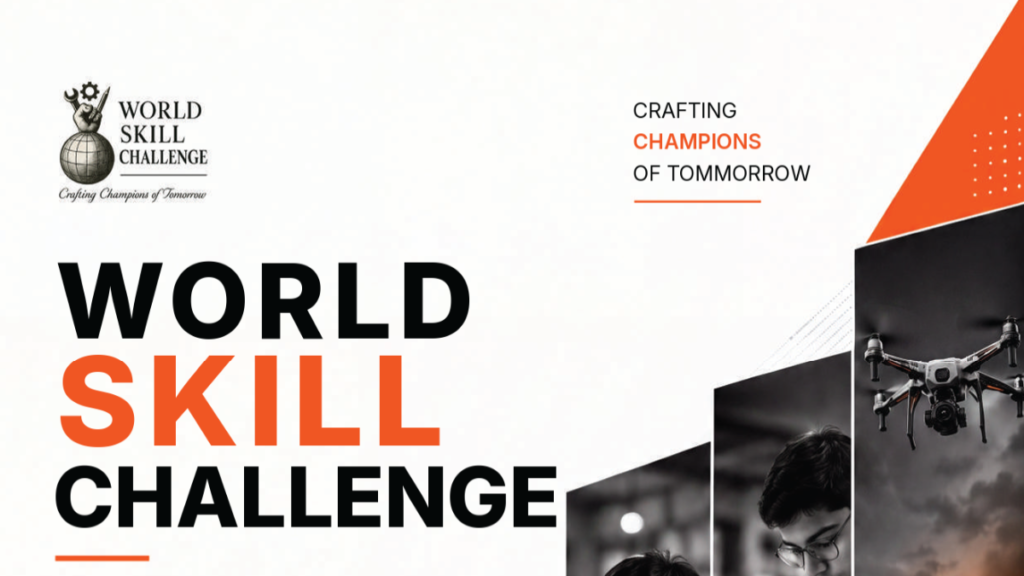
Students need opportunities to explore their interests, demonstrate their abilities, and apply their knowledge through practical challenges. Alongside academic learning, developing creativity, teamwork, leadership and problem-solving skills can help young learners discover their strengths and understand how their ideas can be put into practice. The World Skill Challenge (WSC) 2026 aims to provide such an opportunity through a national platform that brings together students across eligible age groups. With competitions spanning technology, design, innovation, aerospace, and other skill-based activities, the initiative encourages students to explore different fields while showcasing their talents. Offering cash prizes of up to ₹1 lakh, the competition invites young participants to challenge themselves, gain practical experience and work towards recognition at a national level.
A National Platform for Student Talent
The World Skill Challenge is designed around innovation, teamwork and real-world problem-solving. Its focus is on giving students a platform to demonstrate their abilities through different challenges while encouraging them to explore areas that interest them.
The 2026 edition continues this focus by offering opportunities across multiple skill categories. Students can choose competitions that match their interests and participate according to the applicable eligibility requirements.
The participation figures published for the 2025 season provide an indication of the platform’s reach. According to the organisers’ event material, the previous season involved more than 1,600 students from over 65 schools across India. As per reports, ₹3 lakh in cash prizes was distributed to students during the 2025 season.
These figures highlight the participation of students and schools in the initiative and provide context for the upcoming edition. For students, the opportunity to present their abilities on a national platform can add a practical dimension to their learning experience.
The World Skill Challenge is designed for students from Classes 3 to 12, with competitions organised across three age groups: Primary, Junior and Senior. The handbook offers different challenges for students interested in science, technology, robotics, research, design, gaming and aerospace activities. Depending on the competition, students can participate individually or in teams with a mentor.
The competition is suitable for the following groups:
- Primary students (Classes 3-5): Students interested in astronomy, space quizzes, glider building, rocketry and mini-drone flying can explore competitions such as Stars & Beyond, Wing-Shot Championship, RocketMania and DroneX Kids
- Junior students (Classes 6-8): Students interested in research, design thinking, robotics, innovation, gaming, RC cars, BattleBots, aeromodelling and drone activities can participate in the competitions listed for the Junior category
- Senior students (Classes 9-12): Students who want to develop research-based solutions, demonstrate robotics projects, participate in gaming challenges or explore RC plane and drone design and flying can consider the competitions available for the Senior category
The handbook specifies individual participation for Stars & Beyond, Idea Ignite and Esports Showdown. Several other competitions require a team of three students and one mentor, including Mystery Makers, Tech for Good, RC Car Challenge, BattleBot Showdown and the aeromodelling challenges. Students should check the requirements for their chosen competition before registering.
With challenges ranging from research-based problem-solving and robotics to rocket building, drone flying and esports, the World Skill Challenge provides students with opportunities to apply their interests in practical settings, demonstrate creativity and teamwork, and compete at regional and national levels. The handbook also outlines an international round for national champions, offering selected winners an opportunity to represent their country on a global platform.
Exploring Diverse Skill Categories
One of the main features of World Skill Challenge 2026 is the variety of competitions available to students. The categories cover technology, creative thinking, aerospace-related activities, and other challenges, allowing participants to explore different interests.
The key categories include:
- Technology: Robotics, coding, and artificial intelligence provide opportunities for students to engage with technology and demonstrate their technical skills
- Design and Innovation: Design thinking and creative problem-solving encourage participants to explore ideas and approach challenges creatively
- Aerospace: Aeromodelling, drones, rockets and remote-controlled planes introduce students to a range of activities connected with aerospace and engineering
- Other Challenges: E-sports, quizzes and additional competitions offer further opportunities for students to demonstrate their abilities
This range allows the competition to appeal to learners with different interests. Students drawn to technology can explore robotics, coding and artificial intelligence, while those interested in design can focus on creative problem-solving. Aerospace activities provide another avenue for participants who wish to engage with aeromodelling, drones, rockets, or RC planes.
By bringing these categories together under one platform, the World Skills Challenge encourages students to explore their potential and participate in activities beyond their regular academic work.
World Skill Challenge 2026 offers students a range of competitions designed to help them explore their interests, demonstrate their abilities and gain practical experience. The programme features four major tracks: ExperienceX, SoarFest, RC Thrill and Virtual X, covering activities in technology, robotics, innovation, aerospace, engineering, product design and digital challenges.
ExperienceX: STEAM, Robotics and Innovation
ExperienceX focuses on science, technology, engineering, arts and mathematics (STEAM), robotics and software innovation. Students can participate in Tech for Good, which encourages the development of technology-based projects addressing real-world problems using artificial intelligence, the Internet of Things and robotics. Code Combat focuses on coding and software development, while Mystery Makers challenges participants to create useful products using provided materials. Esports Showdown offers students an opportunity to demonstrate their gaming abilities, strategic thinking and quick decision-making.
SoarFest: Aeromodelling and Aerospace Challenges
SoarFest introduces students to the fundamentals of flight, aerodynamics and aircraft design through hands-on activities. The Wing-Shot Championship involves building and launching catapult gliders, while RocketMania focuses on rocket assembly and flight challenges. Wing Warriors gives students an opportunity to design and build remote-controlled planes, and Throttle Titans tests their RC plane-flying skills. DroneX Kids introduces younger participants to mini-drone flying, while DroneX offers drone-flying challenges involving manoeuvring, hovering and precision landings.
RC Thrill: RC Cars, BattleBots and RC Boats
RC Thrill brings engineering and remote-controlled vehicle challenges together. The RC car competition focuses on vehicle design, control and performance on a challenging track. The BattleBot competition involves designing and operating remotely controlled robots in a combat arena, while the RC Boat challenge tests participants’ ability to navigate a water course with obstacles and checkpoints. These activities encourage students to explore mechanical design, engineering principles, strategy and teamwork.
Virtual X: Online Design and Knowledge Competitions
Virtual X provides opportunities for students interested in space science, product design and creative thinking. Stars & Beyond is an online quiz that explores astronomy, planets, satellites, astronauts, rockets and other space-related topics. Design for Tomorrow challenges participants to conceptualise an innovative product that addresses a real-world problem, with an emphasis on creativity, practicality, sustainability and user-centred design.
Participation Formats and Registration
The competitions offer different participation formats depending on the activity. While selected challenges allow individual participation, several practical competitions require teams of three students and one mentor. Eligibility varies by competition and age group, so students should consult the official handbook and registration information before choosing their preferred challenge. The brochure lists different registration fees for individual competitions. For example, it displays fees of ₹499 for Stars & Beyond, ₹832 for Design for Tomorrow and ₹4,999 for the RC car, BattleBot and RC Boat competitions. These amounts are based on the supplied brochure and should be verified on the official website before registration.
Prizes, Recognition and Additional Opportunities
Beyond the competitions themselves, World Skill Challenge 2026 offers cash prizes of up to ₹1 lakh and opportunities for students to showcase their talents on a national platform. The programme also outlines an international round for national champions, subject to the applicable competition arrangements. Promotional material additionally mentions the possibility of a visit to an ISRO centre, subject to the relevant selection criteria and event terms.
For the South Regional Competition, expected to take place on 21st November 2026 at Bannerghatta, Bengaluru, students can use the coupon code PGK20 to receive a 20% discount on the registration fee, subject to applicable terms and conditions.
Through these varied offerings, the World Skill Challenge aims to give students opportunities to explore different disciplines, apply their knowledge in practical settings and discover areas in which they may wish to develop their skills further.
Why Practical Skills Matter
Practical challenges offer students an opportunity to demonstrate what they can do with their knowledge and ideas. Through participation, learners can work towards developing technical abilities, creativity and teamwork while experiencing the process of taking on a challenge.
The World Skills Challenge identifies several benefits for participants, including:
- Skill development: Students can explore technical skills and gain hands-on experience through practical challenges
- Creativity and problem-solving: Design and innovation activities encourage students to develop ideas and approach challenges thoughtfully
- Teamwork and leadership: The competition highlights collaboration and leadership as important aspects of participation
- National recognition: Students receive an opportunity to showcase their talents on a national platform
- Awards and other opportunities: Cash prizes of up to ₹1 lakh and potential recognition opportunities form part of the competition’s offering
The event material also mentions the possibility of a visit to an ISRO centre. This opportunity is subject to the applicable selection criteria and event terms, and should not be understood as a guaranteed benefit for every participant.
Together, these opportunities give students several reasons to explore the competition. The emphasis on practical activities, skill development and recognition makes participation relevant to learners who want to test their abilities and discover areas in which they would like to develop further.
South Regional Competition in Bengaluru
As part of the 2026 programme, the South Regional Competition is expected to take place on 21st November 2026 at Bannerghatta, Bengaluru, Karnataka. The event offers students in the region an opportunity to participate in the World Skills Challenge and demonstrate their skills through their chosen competition categories.
Students, parents, and schools interested in participating can visit the official website, worldskillchallenge.com, for registration details, category-wise eligibility requirements, competition guidelines, and the latest information about the regional event.
A special registration offer has also been announced. Participants can use the coupon code PGK20 to receive a 20% discount on the registration fee, subject to the applicable terms and conditions.
Checking the official information before registering is important, as students need to understand the requirements associated with their preferred categories and ensure that their participation follows the competition guidelines.
Schools, Parents and the Journey Ahead
Schools and parents can encourage students to explore opportunities that allow them to identify and develop their interests. Introducing learners to different skill-based activities can help them consider areas they may wish to pursue, while participation in competitions gives them a platform to demonstrate their abilities.
For schools, the World Skills Challenge offers an opportunity to encourage students to engage with innovation, creativity and teamwork. Parents can support their children by helping them explore suitable categories and understand the practical requirements of participation.
As EducationToday continues to cover opportunities shaping the education landscape, initiatives such as the World Skill Challenge bring attention to the importance of student participation, skill development and creative exploration.
Preparing Tomorrow’s Innovators
World Skill Challenge 2026 invites students to explore their potential through technology, design, aerospace and other skill-based challenges. With a national platform, practical activities, cash prizes of up to ₹1 lakh and opportunities for recognition, the competition encourages learners to take an active role in demonstrating their abilities. For students, the experience begins with identifying their interests and choosing a suitable challenge. By encouraging participation, creativity, and teamwork, the initiative aims to support young learners as they develop their skills and take steps towards becoming tomorrow’s innovators and creators.
The World Skills Challenge 2026 focuses on encouraging students to develop practical skills, explore innovative ideas, and create solutions to real-world problems.
Its central objective is to promote creativity, critical thinking, problem-solving, and practical skill development among students.
It can help students build confidence, strengthen their practical abilities, develop teamwork, and apply classroom learning to real-life situations.
Practical skills help students connect theoretical knowledge with real-world applications, adapt to changing career demands, and approach challenges with confidence.
Students can identify everyday problems, research possible solutions, collaborate with peers, develop prototypes, and test and improve their ideas based on feedback.

