IGNOU June 2026 TEE Revised Schedule Released Till July 21
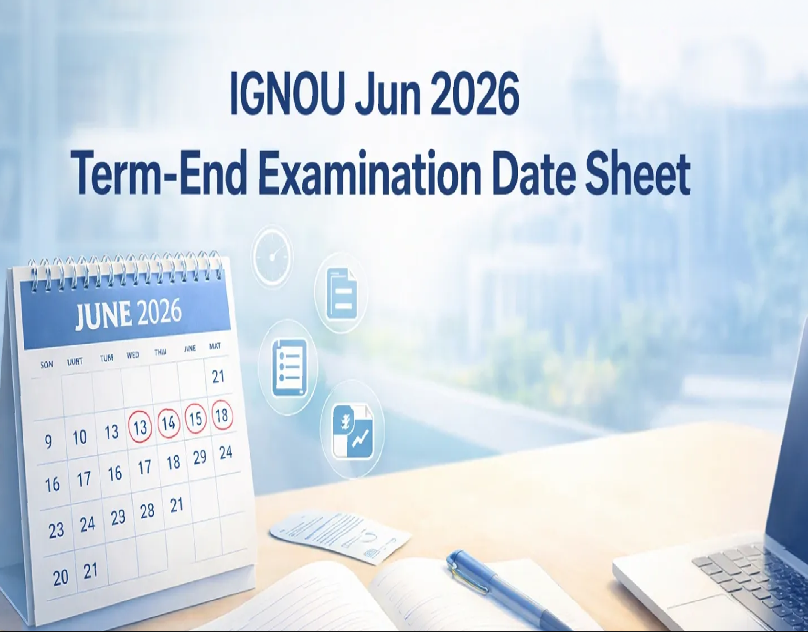
IGNOU Revises June 2026 TEE Schedule; Exams to Continue Till July 21
Indira Gandhi National Open University has officially revised the schedule for the June 2026 Term-End Examinations (TEE), extending the examination period until July 21, 2026. The updated date sheet has been released on the university’s official portal and applies to students enrolled in undergraduate, postgraduate, diploma and certificate programmes offered through both Open and Distance Learning (ODL) and online learning modes.
The announcement has come as a major academic update for lakhs of learners studying under India’s largest open university system. For students spread across multiple regions and enrolled in varied academic disciplines, the revised schedule serves as an important framework around which preparation strategies, travel plans and assignment submissions will now be organised.
According to the revised timetable, the examinations will commence on June 1 and continue until July 21, replacing the earlier tentative timeline that had proposed the conclusion of examinations by mid-July.
Two Daily Examination Shifts to Continue
The university has retained its existing examination structure, with papers scheduled in two separate shifts each day. The morning session will be conducted from 10:00 AM to 1:00 PM, while the evening session will take place between 2:00 PM and 5:00 PM.
Students have been advised to carefully review the revised subject-wise examination dates and timings before appearing for the examinations. IGNOU officials have specifically cautioned candidates against relying on previously circulated tentative schedules, as several modifications have now been incorporated into the final timetable.
The revised PDF date sheet is currently available on the university’s official website under the announcements section, where candidates can download and verify programme-specific schedules.
Significance for Lakhs of Distance Learners
The June TEE remains one of the most critical academic exercises conducted by IGNOU every year. The examinations determine progression, semester completion and degree eligibility for students pursuing programmes across disciplines such as humanities, commerce, management, social sciences, education, computer applications and public administration.
What distinguishes IGNOU from conventional universities is the sheer diversity of its learner base. The institution caters not only to full-time students but also to working professionals, homemakers, rural learners, government employees and individuals pursuing education alongside employment.
For many such learners, examination schedules are not merely academic notifications; they directly affect work commitments, travel arrangements and personal responsibilities. The extension of the examination window until July 21 is therefore expected to offer greater flexibility and improved preparation time for a substantial section of students.
At the same time, a longer examination duration also demands sustained concentration and disciplined planning from candidates, particularly those appearing for multiple papers spread across several weeks.
Why IGNOU Frequently Revises Examination Schedules
Periodic revisions to examination schedules are not uncommon at IGNOU. As one of the world’s largest open universities, the institution manages an extensive academic network involving thousands of examination centres, diverse programme structures and a continuously evolving student database.
The logistical complexity associated with conducting nationwide examinations often requires multiple rounds of scheduling adjustments. Factors such as course registrations, examination centre allocations, practical examination timelines and subject overlap considerations frequently influence the final structure of the date sheet.
Earlier versions of the June 2026 TEE schedule had been released as tentative notifications in previous months. The latest announcement now appears to formalise the examination calendar for the upcoming session.
Education analysts often note that institutions operating at IGNOU’s scale must continuously balance administrative efficiency with student convenience. Consequently, phased revisions become part of the broader academic management process rather than exceptional occurrences.
Student Reactions Reflect Relief and Anxiety
The revised examination calendar has generated mixed reactions among students. Many candidates have welcomed the extended schedule, viewing it as an opportunity to strengthen preparation and manage revision more effectively.
Students enrolled in programmes with extensive theoretical syllabi or closely spaced papers are likely to benefit from the additional preparation time. Working professionals, in particular, may find the revised structure more manageable given the flexibility it offers in balancing employment and academic obligations.
However, some concerns remain. Extended examination windows often lead to prolonged academic uncertainty, especially for final-year students awaiting results for higher education admissions or employment opportunities.
Learners preparing simultaneously for competitive examinations may also find it challenging to sustain momentum across an examination period stretching nearly two months.
Despite these concerns, the overall student sentiment appears cautiously positive, with many viewing the revision as a practical administrative decision under the circumstances.
Examination Form and Assignment Requirements
Beyond the date sheet itself, IGNOU students must also remain attentive to the university’s procedural requirements linked to the June 2026 TEE.
The university had earlier initiated the examination form submission process and issued guidelines regarding assignment submissions, practical examinations and eligibility conditions.
Assignments continue to remain a mandatory component of IGNOU’s evaluation system. Students who fail to submit assignments within prescribed deadlines may not be permitted to appear for the examinations, irrespective of registration status.
The university’s academic framework combines continuous internal assessment with term-end written examinations, making assignment performance an integral contributor to final grades.
Candidates are also required to ensure that they have completed the minimum programme duration criteria applicable to their respective courses before appearing for the examinations.
Hall Tickets Expected Later This Month
Alongside the revised date sheet, students are now awaiting the release of hall tickets for the June 2026 TEE. Reports indicate that IGNOU is expected to issue admit cards during the final week of May.
The hall ticket will contain essential examination details, including examination centre information, subject codes and reporting instructions. Students will be able to download the admit card online using their enrolment numbers.
The university has clarified in previous examination sessions that hall tickets will not be dispatched through post or email. Candidates will therefore need to download and print their admit cards directly from the official portal.
Growing Importance of Flexible Higher Education
The revised TEE schedule also reflects the increasing significance of open and flexible learning systems within India’s higher education landscape.
Over the past decade, distance education has evolved from being an alternative academic route to becoming a mainstream educational framework. Institutions such as IGNOU have played a pivotal role in expanding access to higher education for learners who may otherwise remain excluded from conventional university systems.
The rise of digital learning platforms, hybrid academic models and online education has further accelerated the relevance of institutions offering flexible learning structures.
IGNOU, in particular, continues to occupy a unique position within India’s academic ecosystem because of its ability to combine affordability, accessibility and academic diversity at scale.
However, this scale also introduces considerable operational challenges, especially in areas such as examination coordination, student communication and evaluation management.
Strategic Preparation Becomes Essential
With the revised examination calendar now officially in place, students have entered the final phase of preparation for one of the university’s most significant academic sessions of the year.
Academic experts often recommend that candidates create structured revision schedules aligned with the revised dates, prioritise high-weightage topics and regularly practise previous years’ question papers.
Equally important is staying informed through official university notifications. Students are advised to frequently monitor the IGNOU website for updates related to hall tickets, practical examinations, examination centres and any additional procedural announcements.
For many learners, particularly those balancing education with employment or personal commitments, effective time management will now become central to examination success.
As the June 2026 TEE approaches, the revised schedule represents more than just an administrative adjustment. It reflects the broader realities of managing large-scale distance education in a rapidly evolving academic environment, one where flexibility, coordination and adaptability continue to shape the future of higher learning in India.