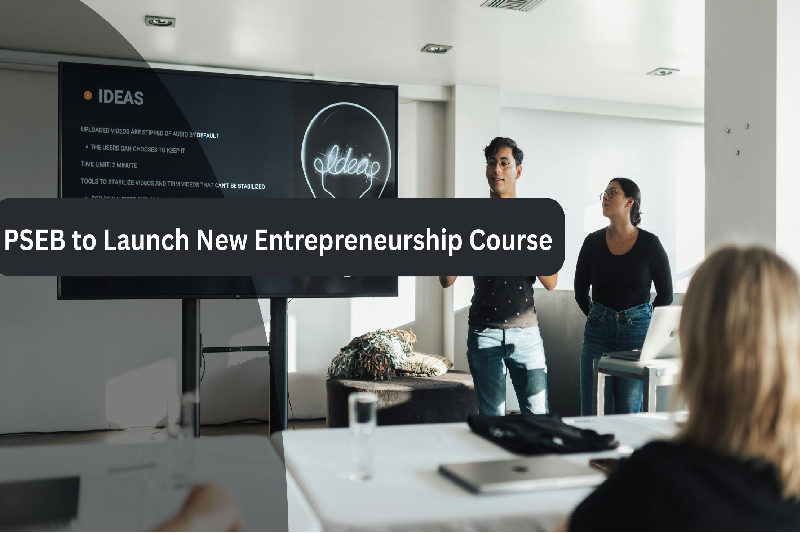
PSEB Launches New Class 12 Entrepreneurship Curriculum to Equip 5.6 Lakh Students for Innovation and Self-Employment
In a landmark step toward nurturing future innovators and job creators, the Punjab School Education Board (PSEB) has officially announced the completion of its Class 12 entrepreneurship curriculum. This marks the culmination of a two-year school-level entrepreneurial education pathway that began with the introduction of the Class 11 curriculum in 2022–23. According to Punjab Education Minister Harjot Singh Bains, this move is designed to instill innovation, self-reliance, and an entrepreneurial mindset in the state’s youth, ultimately contributing to Punjab’s economic growth.
The initiative is set to benefit over 5.60 lakh students across the state who will study entrepreneurship as a compulsory subject starting in the 2026–27 academic session.
Building a Two-Year Entrepreneurship Education Pathway
The new Class 12 curriculum completes PSEB’s structured, two-year entrepreneurship programme that introduces students to the fundamentals of business, creative problem-solving, and real-world project execution. The curriculum is designed not only to teach theoretical concepts but also to build practical skills that students can immediately apply in their communities.
This two-year track builds directly on the Business Blaster initiative, which was launched for Class 11 students in the 2022–23 academic year. The flagship programme gained popularity for its hands-on learning model, where students brainstormed business ideas, prepared mini-projects, and received seed funding to test their entrepreneurial potential. Its success provided the foundation for expanding entrepreneurship education to Class 12.
Entrepreneurship as a Compulsory Subject Across Punjab
To take this vision statewide, the PSEB has rolled out entrepreneurship as a mandatory subject in 3,692 senior secondary schools. This is one of the largest school-level entrepreneurship education expansions in India.
The extensive adoption required major teacher preparation efforts. PSEB has:
- Trained 10,382 teachers,
- Up-skilled 231 master trainers,
- Conducted 104 specialised training programmes,
ensuring that educators are well-equipped to teach entrepreneurial concepts and guide students through business-building activities.
This robust teacher training aligns with the state’s goal of providing consistent, high-quality entrepreneurship education across government and recognised schools.
Curriculum Prepared Ahead of Schedule
One of the standout achievements acknowledged by Minister Bains is PSEB’s efficiency in preparing the curriculum and textbooks ahead of schedule. This early readiness ensures that Class 12 students will transition smoothly into their second year of entrepreneurship studies without syllabus gaps or delays.
As a result, nearly 5.6 lakh students will be able to pursue entrepreneurship in the 2026–27 academic year without interruption.
What the New Class 12 Entrepreneurship Curriculum Covers
The Class 12 curriculum aims to develop students’ ability to convert ideas into viable ventures. It includes a mix of conceptual learning, project-based activities, and exposure to real-world business challenges.
Key focus areas include:
1. Understanding Startup Challenges
Students explore the common roadblocks faced by new businesses—from resource limitations to competitive pressures—and learn strategies to navigate them.
2. Legal and Regulatory Framework
Learners engage with essential aspects of business law, including:
- Registration procedures
- Intellectual property rights
- Licensing requirements
- Compliance obligations
This ensures they understand the formal processes behind launching a startup.
3. Finance and Budgeting
Students acquire core financial skills, such as:
- Preparing budgets
- Managing cash flow
- Understanding basic accounting
- Evaluating funding options
These skills are essential for any entrepreneurial venture, big or small.
4. Business Planning and Strategy
Students learn how to articulate their ideas through structured business plans, conduct market research, and develop marketing strategies.
5. Real-World Application
Through project work and assessments, students convert ideas into action by conceptualizing, planning, and executing mini-ventures.
The curriculum’s applied learning approach is intended to transform student ideas into actionable solutions, nurturing a generation that views entrepreneurship not just as a career option but as a mindset.
Preparing Youth as Job Providers, Not Job Seekers
Education Minister Harjot Singh Bains emphasized that the curriculum aims to transform Punjab’s youth into job providers rather than job seekers. In his statement, he highlighted that the comprehensive course content is designed to build skills that promote:
- Independent thinking
- Problem-solving
- Leadership
- Creative decision-making
- Financial literacy
By introducing students to the entrepreneurial ecosystem early, the Punjab government hopes to expand the culture of startup creation and encourage young people to contribute meaningfully to economic development.
A Major Promise Fulfilled by the Punjab Government
The initiative delivers on a key promise of the Bhagwant Mann-led Punjab government, which had committed to equipping school students with practical, future-ready skills related to startups and self-employment.
The integration of entrepreneurship across senior secondary classes is part of a broader vision to:
- Promote innovation among school-going youth
- Build a strong foundation for the state’s startup ecosystem
- Foster self-reliance among young learners
- Encourage students to pursue unconventional career paths
- Strengthen Punjab’s economic landscape through youth-driven ventures
By institutionalizing entrepreneurship at the school level, the government aims to bridge the gap between education and employability while igniting an entrepreneurial spark early in students’ lives.
Why Entrepreneurship Education Matters for School Students
In today’s fast-changing economy, entrepreneurship is no longer limited to business creation. It includes critical life skills such as:
- Opportunity recognition
- Financial planning
- Team collaboration
- Risk assessment
- Communication and pitching skills
Introducing these skills at the school level helps students develop resilience, confidence, and the ability to navigate uncertainty—traits essential for both employment and self-employment.
For Punjab’s youth, who often seek career opportunities outside the state, entrepreneurship education provides an alternative pathway to build careers locally and contribute to community development.
Looking Ahead: A Stronger Ecosystem for Youth Entrepreneurship
With the launch of the Class 12 curriculum, Punjab now has a complete school-level entrepreneurial pathway that complements national programmes promoting innovation, such as Startup India and Atal Innovation Mission.
The initiative is expected to inspire a new generation of entrepreneurs who can identify local problems, develop solutions, and build sustainable businesses. It also holds the potential to create a ripple effect—strengthening the local economy, generating employment, and fostering innovation across rural and urban parts of the state.
Conclusion
The Punjab School Education Board’s new Class 12 entrepreneurship curriculum represents a progressive step in reimagining the role of education in shaping the future workforce. By embedding entrepreneurial thinking across two key years of senior secondary education, the state is preparing its youth not just for exams but for real-world challenges. With over 5.6 lakh students set to benefit, this initiative promises to nurture creativity, independence, and economic empowerment—laying the foundation for Punjab’s next generation of innovators and leaders.