SSC CGL 2025 Exam: Vacancies Increased To 15,130, Applications Invited For Post, Department Preference
The recruitment landscape for government employment in India continues to evolve, and the latest announcement regarding the Combined Graduate Level Examination (SSC CGL) 2025 marks an important development for aspirants across the country. The Staff Selection Commission (SSC) has officially increased the number of vacancies under the 2025 recruitment cycle to 15,130 posts, reflecting a significant expansion in opportunities for graduates seeking employment in central government ministries and departments.
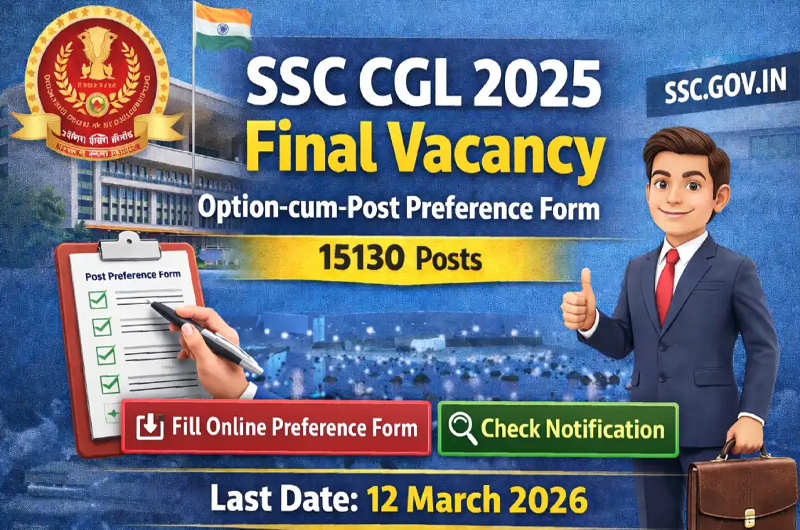
Alongside this revision in vacancy numbers, the commission has invited candidates who appeared for the Tier-II examination to submit their option-cum-preference for posts and departments, a mandatory step that will determine final allotment once the results are declared.
For thousands of aspirants who have invested months, and often years, in preparing for the examination, this announcement represents a crucial stage in the selection process. As the recruitment cycle approaches its concluding phase, candidates must complete the preference submission process within the stipulated timeline to remain eligible for final appointment.
Understanding SSC CGL: A Premier Recruitment Examination
The SSC Combined Graduate Level Examination is among the most prestigious and widely attempted recruitment examinations in India. Conducted annually by the Staff Selection Commission, the examination aims to recruit graduates for Group B and Group C posts in various ministries, departments and constitutional bodies of the Government of India.
Over the years, SSC CGL has emerged as one of the most sought-after government recruitment examinations because of the diversity of roles it offers. Selected candidates may be appointed to positions such as:
- Assistant Section Officer
- Inspector of Income Tax
- Auditor
- Accountant
- Tax Assistant
- Sub-Inspector
- Upper Division Clerk
These roles play an essential part in the functioning of India’s administrative and financial systems. Government service through SSC CGL is often regarded as a pathway to stable employment, professional growth and meaningful participation in public administration.
Increase in Vacancies: A Major Opportunity for Aspirants
In its initial recruitment notification for SSC CGL 2025, the commission had announced 14,582 vacancies across various ministries and government departments. However, following additional requisitions received from several departments, the total number of posts has now been revised to 15,130.
This increase reflects the dynamic staffing requirements of government institutions and the continued demand for skilled administrative personnel. The additional vacancies span multiple departments and roles, expanding opportunities for candidates across diverse functional areas.
According to reports, a significant share of these vacancies is located within key revenue-generating departments of the government. For instance, the Central Board of Direct Taxes (CBDT) accounts for a large proportion of the posts, including positions such as Income Tax Inspector and Tax Assistant.
Similarly, several vacancies are available within the Central Board of Indirect Taxes and Customs (CBIC), where roles include Inspector (Central Excise), Preventive Officer and Examiner.
Such positions are widely regarded as some of the most desirable postings within the SSC CGL framework due to their responsibilities and career prospects.
Post and Department Preference: A Crucial Step
With the recruitment cycle nearing completion, SSC has introduced an important procedural step for candidates who appeared in the Tier-II examination. Before the final results are declared, candidates must submit their option-cum-preference for posts and departments through the official SSC portal.
The preference submission window opened on March 9, 2026, and will remain active until March 12, 2026.
During this period, candidates must log into their accounts on the official SSC website and select the posts and departments they wish to be considered for. The final allocation of posts will be determined based on a combination of candidate merit and submitted preferences.
Importantly, the commission has emphasised that submitting the option-cum-preference is mandatory. Candidates who fail to complete this step within the specified timeframe will not be considered for the final merit list or appointment process.
This requirement ensures that candidates have the opportunity to express their choices regarding job roles and departmental placements.
The SSC CGL Selection Process
The SSC CGL recruitment process is designed to evaluate candidates through multiple stages of assessment. Each stage measures different aspects of knowledge, aptitude and analytical ability.
Tier I Examination
The first stage of the examination is the Tier-I test, which serves as a preliminary screening examination. It is conducted in computer-based mode and assesses candidates in four major areas:
- General Intelligence and Reasoning
- General Awareness
- Quantitative Aptitude
- English Comprehension
The Tier-I result for SSC CGL 2025 was declared on December 18, 2025, enabling shortlisted candidates to proceed to the next stage of evaluation.
Tier II Examination
Candidates who qualified in Tier-I were required to appear for the Tier-II examination, which took place between January 18 and January 20, 2026.
Tier-II includes more advanced papers designed to test candidates’ proficiency in subjects such as quantitative abilities, English language skills, statistics and general studies related to finance and economics.
Performance in Tier-II plays a decisive role in determining final merit and eventual job allocation.
Pay Structure and Career Prospects
One of the primary attractions of SSC CGL recruitment is the competitive salary structure offered under different pay levels of the central government.
Depending on the post allocated, selected candidates may fall within the following pay bands:
- Pay Level-7: ₹44,900 – ₹1,42,400
- Pay Level-6: ₹35,400 – ₹1,12,400
- Pay Level-5: ₹29,200 – ₹92,300
- Pay Level-4: ₹25,500 – ₹81,100
In addition to the basic salary, government employees are entitled to a range of allowances, including:
- Dearness Allowance
- House Rent Allowance
- Travel Allowance
- Medical benefits
- Pension and retirement benefits
These financial and social security benefits make government service an attractive career choice for graduates across India.
Distribution of Vacancies Across Categories
The SSC CGL 2025 recruitment cycle also follows the Government of India’s reservation policies to ensure representation across different social categories.
Of the 15,130 vacancies, the approximate category-wise distribution includes:
- Unreserved: 6,464 posts
- Other Backward Classes (OBC): 3,834 posts
- Scheduled Castes (SC): 2,223 posts
- Scheduled Tribes (ST): 1,134 posts
- Economically Weaker Sections (EWS): 1,475 posts
This structured distribution reflects the government’s commitment to maintaining equitable access to public employment opportunities.
Strategic Importance of Preference Selection
For many candidates, the option-cum-preference stage is not merely a procedural formality but a strategic decision that can shape their professional trajectory.
Different SSC CGL posts vary in terms of:
- Nature of work
- Location of posting
- Opportunities for promotion
- Level of fieldwork versus desk responsibilities
For instance, positions within taxation departments often involve investigative and regulatory responsibilities, while roles such as Assistant Section Officer typically involve administrative and policy-related functions.
Consequently, aspirants must carefully review the responsibilities and career progression associated with each role before finalising their preferences.
Guidance for Candidates Completing the Preference Form
Candidates filling out the preference form should consider several important factors:
- Career Goals – Select roles aligned with long-term professional aspirations.
- Work Environment – Some posts involve field assignments, while others are primarily office-based.
- Location Preferences – Certain departments may offer postings across different regions of the country.
- Promotion Prospects – Some roles provide faster career advancement within the government hierarchy.
The SSC portal allows candidates to modify their preferences multiple times within the submission window. The final saved list before the deadline will be treated as the candidate’s official choice.
The Growing Significance of SSC Recruitment
In recent years, recruitment examinations conducted by the Staff Selection Commission have witnessed increasing participation from candidates across India. The allure of stable employment, structured career progression and public service continues to attract millions of graduates each year.
The SSC CGL examination, in particular, remains one of the most competitive recruitment tests in the country. Its comprehensive selection process and diverse range of career opportunities ensure that it continues to play a central role in shaping India’s administrative workforce.
Conclusion
The announcement of 15,130 vacancies under SSC CGL 2025 marks a significant development in the current recruitment cycle. With expanded opportunities across numerous government departments, the examination offers a valuable pathway for graduates aspiring to build careers in public administration.
However, the process has now reached a decisive stage. Candidates who appeared for the Tier-II examination must submit their post and department preferences between March 9 and March 12, 2026, ensuring that they remain eligible for final selection.
As the final results approach, aspirants must exercise careful judgement while choosing their preferences. The decisions made during this stage will ultimately determine not only their initial posting but also the trajectory of their careers within the Indian government system.
For many candidates, the journey through the SSC CGL examination represents more than just an academic test, it is the beginning of a career dedicated to public service, administrative responsibility and national development.