Why More Chinese Students Are Returning Home as Overseas Job and Visa Options Shrink
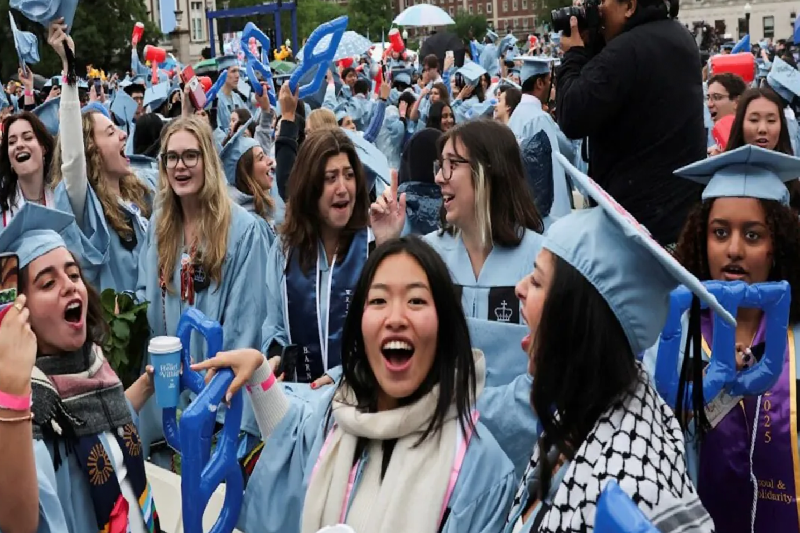
China is witnessing a significant surge in the number of students returning home after completing their studies abroad. In 2024 alone, around 4.95 lakh (495,000) Chinese students returned, marking a 19.1 per cent increase compared to the previous year, according to data released by the Ministry of Education. This sharp rise reflects changing global conditions that are making it harder for international graduates to remain and work overseas.
Experts believe this is not a one-year spike but part of a longer trend. Zheng Jinlian, vice-president of the Beijing-based think tank Centre for China and Globalisation, has predicted that the number of returnees will continue to grow over the coming years. Even though China’s domestic economy is facing challenges, she argues that opportunities at home may still be comparatively better than those available in many foreign countries.
Global Visa Restrictions and Weak Job Markets Abroad
One of the main drivers behind this mass return is the tightening of visa and immigration policies in key destination countries, especially the United States. Many Chinese students who previously hoped to secure jobs and long-term work visas after graduation are now finding it increasingly difficult to do so.
In addition to stricter visa rules, job markets in several Western economies have weakened. Companies are hiring fewer international graduates, and sponsorship for work visas has become more selective. As a result, many Chinese students see returning home not as a setback, but as a practical response to shrinking opportunities abroad.
China’s Long History of Sending Students Overseas
China has sent millions of students overseas over the past several decades as part of its broader strategy to build a highly skilled workforce. Between 1978 and 2024, approximately 7.43 million Chinese students completed their studies abroad. Many of these students were supported by government programmes, scholarships, or bank loans designed to encourage advanced study in leading universities, particularly in the US and Europe.
Out of this total, about 6.44 million students eventually returned to China. These returnees have played a major role in shaping the country’s modern development, especially in fields such as science, technology, engineering, and higher education.
Returnees and Their Contribution to National Development
Foreign-educated Chinese graduates have been central to China’s technological and institutional growth. According to China’s Ministry of Human Resources and Social Security, as of 2023, over 70 per cent of leaders of key national projects and university presidents were former overseas students. A majority of directors at top-tier hospitals also fall into this category.
These figures highlight why the Chinese government continues to value overseas returnees. Their exposure to international research standards, advanced technologies, and global professional networks has helped strengthen China’s innovation capacity and talent pool.
Government Launches a Dedicated Platform for Returnees
In response to the growing number of returning students, China has launched a national-level service platform aimed at helping overseas graduates find employment and start businesses. This initiative is led by the Ministry of Education, which has partnered with 50 organisations to provide practical support.
Through this platform, returnees can access entrepreneurial mentors, career guidance, and direct job-matching services. The programme also connects graduates with local governments and companies, ensuring that their skills align with regional development needs.
Strategic Sectors Targeted for Overseas Talent
To make the best use of returning talent, the Ministry of Education has identified key industries where overseas experience is particularly valuable. These include artificial intelligence, new materials, and other advanced technology sectors that are crucial to China’s future economic and industrial strategy.
By directing returnees toward these priority areas, the government aims to boost innovation, reduce dependence on foreign technology, and strengthen domestic research and development capabilities.
The Chunhui Programme and State Support for Returnees
The latest support measures were unveiled during an event in Shanghai marking the 30th anniversary of the “Chunhui” programme. This long-running state initiative encourages overseas Chinese students to contribute to national development upon their return.
The anniversary event served as a reminder that, despite occasional public scepticism about the value of foreign education, overseas returnees remain an important national asset. As Zheng Jinlian noted, these graduates continue to drive entrepreneurship and innovation across multiple industries.
Rising Tensions Between Returnees and Local Graduates
While returnees bring valuable skills, their growing numbers have also created social tension. Many local graduates feel resentful, as employers often prefer foreign-educated candidates, particularly for roles requiring technical expertise and strong English-language skills.
This perception of unequal competition has added pressure to an already strained job market. For local graduates who studied entirely within China, the preference shown to returnees can feel unfair, especially during a period of high unemployment.
A Crowded Job Market and Youth Unemployment Pressures
China’s employment landscape is becoming increasingly competitive. Each year, over 12 million students enter the job market, while overall economic growth has slowed. Recent reports place China’s unemployment rate at around 19 per cent, with young people facing the greatest difficulties in securing stable jobs.
The influx of overseas returnees, although beneficial in the long term, adds another layer of complexity to this situation. Balancing opportunities for both local graduates and returnees has become a key policy challenge.
China’s Long-Term Plan for Education, Talent, and Innovation
At the recent annual Central Economic Work Conference, Chinese leaders acknowledged these challenges and pledged to develop an integrated plan linking education, science and technology, and talent development. This strategy aims to better align graduate skills with national priorities while easing employment pressures.
As global conditions continue to change, the return of overseas students is likely to remain a defining feature of China’s talent landscape. How effectively the country integrates these returnees—while ensuring fair opportunities for all graduates—will play a crucial role in shaping China’s economic and technological future.