
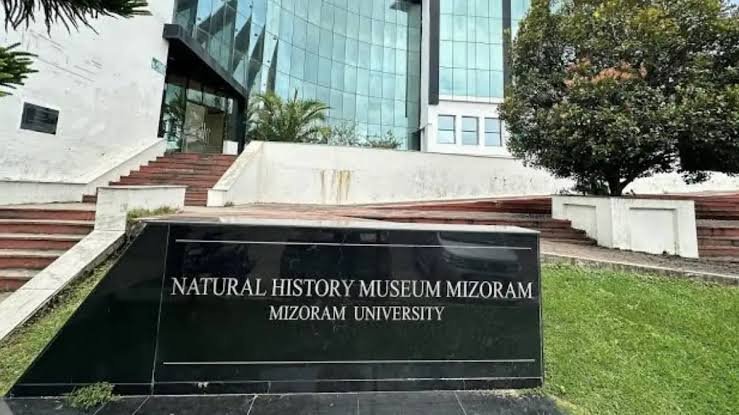
India has taken another significant step towards strengthening biodiversity conservation and scientific research with the designation of the Natural History Museum at Mizoram University as the country’s 21st Designated Repository under the Biological Diversity Act, 2002. The recognition, conferred by the Ministry of Environment, Forest and Climate Change on the recommendation of the National Biodiversity Authority (NBA), highlights the museum’s growing contribution to preserving the rich biological heritage of the Indo-Burma Biodiversity Hotspot. The development is not merely an institutional achievement for Mizoram University; it is an important milestone for India’s biodiversity governance framework. The designation strengthens the country’s scientific infrastructure by ensuring that valuable biological specimens are preserved, documented and made available for future research and conservation efforts. As reported by EducationTodayNews, the announcement underscores the increasingly vital role that universities play in addressing environmental challenges through research, education and conservation.
Understanding a Designated Repository
A Designated Repository is an institution officially recognised under Section 39 of the Biological Diversity Act, 2002, to preserve authenticated biological specimens collected under the provisions of the Act. These repositories maintain voucher specimens and other biological materials that serve as permanent scientific references for researchers, conservationists and policymakers.
Such repositories are essential for documenting India’s extraordinary biodiversity. They help scientists accurately identify species, verify discoveries and maintain reference collections that support ecological research, environmental assessments and conservation planning.
With the inclusion of Mizoram University’s Natural History Museum, India now has 21 designated repositories that collectively strengthen the nation’s biodiversity documentation network.
Why Mizoram University Was Chosen
The Mizoram University Natural History Museum is strategically located within one of the world’s most biologically diverse regions. Mizoram forms part of the globally recognised Indo-Burma Biodiversity Hotspot, an area known for its exceptional variety of plant and animal species, many of which are endemic or threatened.
The museum has been actively documenting and preserving the region’s natural heritage through scientific collections and research. Following an evaluation by the National Biodiversity Authority, the Central Government officially notified the museum as a Designated Repository on 19th June 2026.
Its responsibilities will include maintaining voucher specimens of selected flora such as pteridophytes and macrofungi, along with faunal groups including reptiles, amphibians, fishes, moths, beetles and butterflies. These carefully preserved specimens will serve as authoritative references for scientific studies and biodiversity monitoring.
Why This Recognition Matters
- Mizoram University’s Natural History Museum has been designated as India’s 21st Designated Repository under the Biological Diversity Act, 2002
- The repository will preserve authenticated specimens from the Indo-Burma Biodiversity Hotspot, supporting biodiversity conservation and scientific research
- The recognition strengthens India’s biodiversity documentation and research infrastructure
- The designation will promote collaboration among universities, researchers and conservation agencies
- It highlights the growing role of higher education institutions in advancing environmental conservation and scientific innovation
Strengthening India’s Biodiversity Conservation Efforts
India is recognised as one of the world’s megadiverse countries, hosting a remarkable range of ecosystems and species. Conserving this biological wealth requires more than protecting forests and wildlife; it also depends on accurate scientific documentation.
Designated repositories play a crucial role by preserving biological materials that enable researchers to verify species identities, describe newly discovered organisms and monitor ecological changes over time.
The addition of the Mizoram University museum expands India’s scientific capacity to safeguard biological resources while improving long-term biodiversity documentation. It also supports national efforts to meet international conservation commitments through robust scientific evidence.
Benefits for Research and Higher Education
The designation is expected to significantly enhance research opportunities at Mizoram University and other collaborating institutions.
Students, taxonomists, ecologists and environmental scientists will gain access to authenticated biological collections that support academic learning and advanced research. These collections provide valuable resources for species identification, ecological surveys, conservation biology and climate-related studies.
The repository will also encourage interdisciplinary collaboration among universities, research institutes and government agencies working on biodiversity conservation.
Mizoram University’s Natural History Museum Becomes India’s 21st Biodiversity Repository: A Milestone for Conservation and Research
For students pursuing life sciences, environmental science and zoology, such facilities provide practical exposure that complements classroom education and strengthens scientific training.
Click below to watch the video.
Supporting Future Scientific Discoveries
Scientific repositories are not merely storage facilities; they form the backbone of taxonomic research.
Whenever researchers discover a new species, authenticated voucher specimens are deposited in designated repositories to establish a permanent scientific record. These specimens enable future scientists to validate discoveries, compare species characteristics and continue taxonomic investigations.
The Designated Repository at Mizoram University will therefore contribute directly to expanding scientific knowledge about India’s rich biodiversity while preserving valuable biological records for future generations.
Importance of the Indo-Burma Biodiversity Hotspot
The Indo-Burma Biodiversity Hotspot is internationally recognised for its exceptional ecological significance. The region supports thousands of plant and animal species, including many that occur nowhere else in the world.
Because of its unique ecological characteristics, continuous scientific documentation is essential for understanding species diversity and responding to environmental challenges such as habitat degradation, climate change and invasive species.
By establishing an officially recognised repository within this biodiversity-rich region, India strengthens its ability to study, conserve and sustainably manage one of Asia’s most valuable ecological landscapes.
The designation also highlights the importance of regional universities in advancing national conservation priorities through locally relevant scientific research.
A Boost for Scientific Infrastructure
The recognition of the Mizoram University Natural History Museum reflects India’s continued investment in strengthening scientific institutions beyond metropolitan research centres.
Universities located in ecologically significant regions possess unique opportunities to contribute directly to biodiversity research because of their proximity to diverse natural habitats. Empowering such institutions with national responsibilities encourages decentralised scientific development while expanding research capacity across the country.
The repository is expected to facilitate stronger collaboration between the National Biodiversity Authority, environmental researchers and higher education institutions working towards common conservation goals.
Advancing Biodiversity Research in India
The designation of Mizoram University’s Natural History Museum as India’s 21st Designated Repository marks an important achievement for biodiversity conservation, scientific documentation and higher education. By preserving authenticated biological specimens and supporting taxonomic research, the museum will contribute significantly to understanding and protecting India’s extraordinary natural heritage.
The recognition also demonstrates how universities are becoming central to addressing global environmental challenges through research, innovation and knowledge creation. As biodiversity conservation gains increasing international importance, institutions such as Mizoram University will play an even greater role in generating scientific evidence that informs sustainable development and environmental policy.
Developments such as these, highlighted by EducationTodayNews, reaffirm India’s commitment to building a stronger scientific ecosystem while preserving its remarkable biodiversity for future generations.