
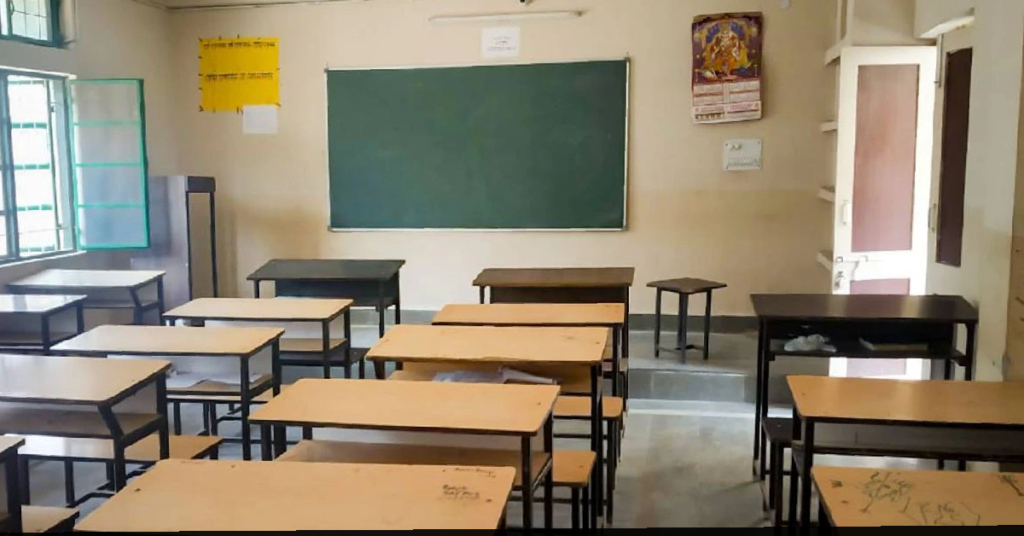
In a significant administrative move, the Uttar Pradesh Madhyamik Shiksha Parishad (UPMSP), popularly known as the UP Board, has withdrawn recognition from 465 self-financed schools across the state. The decision came after authorities found that these institutions neither conducted regular classes nor presented students for High School and Intermediate Board examinations during the 2024-25 and 2025-26 academic sessions. The move represents one of the Board’s largest efforts in recent years to address the issue of inactive educational institutions existing only on paper. While the immediate impact is on the affected schools, the decision also raises broader questions about educational accountability, regulatory oversight, and school governance.
According to officials, the derecognised schools failed to fulfil the most basic responsibility of an educational institution: providing active teaching and learning opportunities. Investigations revealed that these schools had remained non-functional for two consecutive years and had not participated in the Board examination process.
Key findings included:
- No regular academic activities.
- No students are appearing for Board examinations.
- Inactivity across two consecutive academic sessions.
Under existing regulations, institutions that remain inactive for an extended period become liable for the withdrawal of recognition.
Recognition is more than an official approval. It confirms that a school is actively delivering education and complying with prescribed academic and administrative standards. When institutions cease to function yet continue to retain recognised status, the credibility of the regulatory framework is weakened.
The challenge of non-functional schools is not unique to Uttar Pradesh. Across India, educational authorities have periodically identified institutions that maintain recognition despite having little or no academic activity.
Such schools create several administrative and policy concerns. They may exist in official records but fail to attract students, conduct classes, or contribute to educational outcomes.
Their continued presence can result in:
- Distorted enrollment figures.
- Inaccurate planning and forecasting.
- Misallocation of resources.
- Difficulty in assessing educational performance.
Removing inactive institutions from the recognised network helps create a clearer picture of the educational landscape and allows authorities to make decisions based on reliable data.
The derecognition of 465 schools is not an isolated development. It forms part of a wider effort by the UP Board to strengthen educational standards and improve regulatory compliance.
In recent years, authorities have increased scrutiny of institutions with operational deficiencies. Measures have also been introduced to improve transparency in the recognition process and strengthen oversight of schools operating within the formal education system.
These initiatives reflect a growing focus on:
- Institutional accountability.
- Regulatory transparency.
- Compliance with educational norms.
- Protection of student interests.
The latest action, therefore, aligns with a broader strategy aimed at enhancing the integrity and credibility of school education in the state.
Click below to watch the video.
For students and parents, the Board’s decision serves as an important reminder to verify a school’s recognition status and operational credibility before seeking admission.
In some cases, institutions continue to advertise educational services despite limited academic activity. Students associated with such schools may face uncertainty regarding examinations, certification, and academic progression.
A stricter regulatory environment reduces these risks by ensuring that recognised schools remain active participants in the education system. The removal of inactive institutions also promotes transparency and helps families make informed educational choices.
By ensuring that recognised schools meet basic operational expectations, authorities are ultimately protecting student interests and strengthening public confidence in the education system.
Recognition remains one of the most important tools available to educational regulators. It establishes minimum expectations relating to infrastructure, staffing, governance, academic delivery, and statutory compliance.
However, recognition retains its value only when it is actively monitored and enforced. If schools can continue to hold recognised status despite prolonged inactivity, the effectiveness of the framework comes into question.
The UP Board’s action reinforces an important principle: recognition is not a permanent entitlement but an ongoing responsibility. Schools must continuously meet operational expectations to remain part of the recognised educational ecosystem.
By acting against inactive institutions, the Board has made it clear that compliance is essential and that educational regulations must have meaningful consequences.
The withdrawal of recognition from 465 non-functional schools marks a significant step towards strengthening educational governance in Uttar Pradesh. By taking action against institutions that failed to fulfil their core responsibilities, the UP Board has demonstrated a commitment to transparency, accountability, and quality assurance.
The decision is more than an administrative exercise. It sends a clear message that recognised status must be supported by genuine educational activity and continued compliance with regulatory requirements.
For policymakers, educators, and stakeholders, the development highlights the importance of robust oversight in maintaining the credibility of the education system. As efforts to improve school governance continue, the removal of inactive institutions may prove to be an important milestone in building a more accountable and effective educational framework for the future.