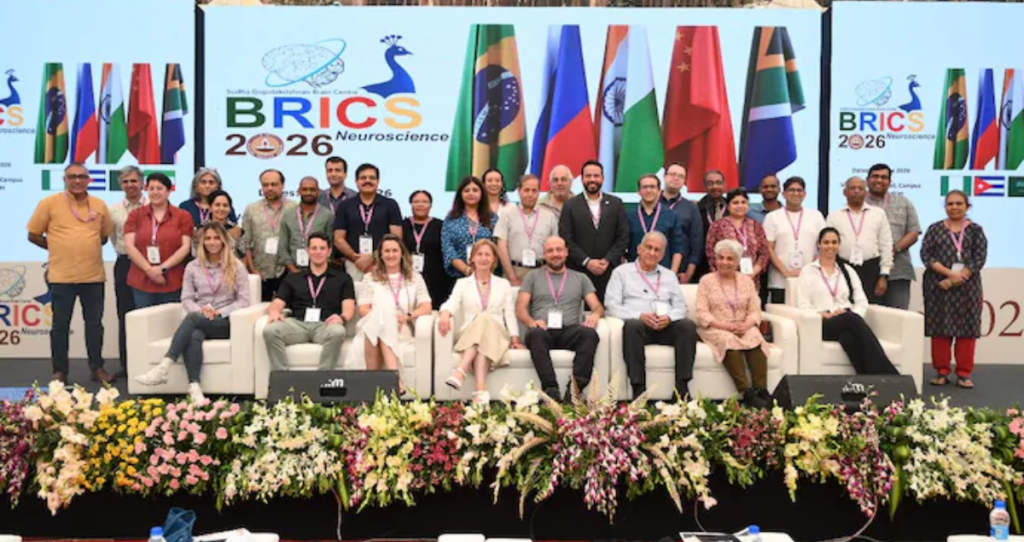
As part of its BRICS Presidency 2026, India has reaffirmed its growing role in shaping the future of global higher education by hosting the International Governing Board (IGB) meeting of the BRICS Network University (BRICS NU) along with the BRICS Network University Conference on Traditional and Indigenous Knowledge Systems. The two-day engagement reflected India’s commitment to fostering stronger academic partnerships, collaborative research and institutional cooperation among BRICS member countries.
The initiative highlights how international academic collaboration is becoming increasingly significant in addressing shared educational challenges and creating opportunities for innovation. By bringing together policymakers, university leaders, researchers and education experts, the meeting demonstrated the importance of collective efforts in strengthening higher education across emerging economies.
For readers following global developments through EducationTodayNews, the event marks another important milestone in India’s expanding international education agenda.
A Platform for Academic Collaboration
Organised by the Union Ministry of Education, the meeting provided an opportunity for representatives from BRICS member countries to exchange ideas, review ongoing initiatives and discuss future collaborations. The International Governing Board meeting was conducted virtually on 21st July and was inaugurated by Dr K. M. Praphullachandra Sharma, Joint Secretary in the Ministry of Education.
During the session, Prof. Sudarshan Kumar, Dean (International Relations) at IIT Bombay, presented an overview of the BRICS Network University and highlighted its growing institutional network along with its collaborative academic initiatives. Participating nations also shared updates regarding their universities and the progress made in academic cooperation over the previous year.
The discussions reflected a shared vision of making higher education more collaborative, research-oriented and globally connected.
Countries Share Best Practices
Representatives from Brazil, China, Egypt, Indonesia, Iran, Russia, South Africa, the United Arab Emirates and India showcased various national initiatives that have strengthened their higher education ecosystems.
The exchange of experiences focused on:
- Expanding collaborative research programmes
- Encouraging institutional partnerships among universities
- Promoting academic knowledge exchange
- Strengthening international cooperation in higher education
- Sharing successful educational practices among member countries
These discussions reinforced the common objective of creating stronger educational links that benefit students, researchers and academic institutions across BRICS nations.
Spotlight on Traditional and Indigenous Knowledge Systems
One of the defining highlights of the engagement was the presentation of outcomes from the BRICS Network University Conference on Traditional and Indigenous Knowledge Systems. According to the Ministry of Education, this was the first conference of its kind organised under the BRICS Network University framework.
The conference focused on preserving and documenting traditional knowledge while exploring responsible methods for its digital dissemination. Participants emphasised the importance of ensuring ethical governance, community ownership, equitable benefit-sharing and the responsible application of emerging technologies, including artificial intelligence.
Rather than viewing traditional knowledge as historical information alone, the conference recognised its continuing relevance in contemporary research, sustainable development and cultural preservation.
India’s Proposal Gains Broad Support
Building upon the recommendations emerging from the conference, India proposed the inclusion of Traditional and Indigenous Knowledge Systems as a new International Thematic Group under the BRICS Network University framework.
The proposal received broad support from member countries, signalling growing recognition of the importance of structured international collaboration in this field. Member nations agreed to continue consultations regarding the proposal and its concept note before moving towards formal implementation.
If approved, this thematic group could provide a dedicated platform for universities to undertake collaborative research, develop academic programmes and facilitate greater knowledge exchange relating to indigenous traditions and cultural heritage.
Click below to watch the video.
Reviewing the Future Roadmap
Beyond thematic discussions, the International Governing Board also reviewed several important institutional developments designed to strengthen the BRICS Network University.
Key areas discussed included:
- Review of the BRICS Network University Action Plan (2025 to 2028)
- Development of a new BRICS Network University website
- Measures to improve institutional cooperation
- Promotion of academic mobility among participating universities
- Expansion of joint research initiatives
- Adoption of the BRICS Network University International Governing Board Declaration
These initiatives indicate a long-term approach towards building a stronger academic ecosystem that encourages greater interaction among higher education institutions across BRICS countries.
Strengthening Global Higher Education
The meeting reaffirmed that higher education has become an important pillar of international cooperation. Universities today play a critical role not only in producing skilled graduates but also in advancing research, innovation and cross-cultural understanding.
Collaborative academic platforms such as the BRICS Network University enable institutions to work together on common priorities while sharing expertise across borders. Such partnerships create opportunities for faculty exchange, collaborative research projects, student mobility and joint academic programmes that contribute to improving educational quality.
As higher education increasingly addresses global challenges ranging from technological advancement to sustainable development, international partnerships become even more valuable in generating shared solutions.
India’s Vision During BRICS Presidency 2026
The conclusion of the meeting reflected a collective commitment by BRICS member countries to strengthen the BRICS Network University as a platform for higher education, research, innovation and people-to-people exchanges.
India thanked all participating delegations for their constructive engagement. It reiterated its commitment to advancing academic cooperation under the theme of its 2026 BRICS Presidency, “Building for Resilience, Innovation, Cooperation and Sustainability.”
The successful organisation of the International Governing Board meeting and the conference on Traditional and Indigenous Knowledge Systems demonstrates India’s continued emphasis on expanding international academic partnerships while encouraging collaborative research and educational innovation. As the BRICS Network University continues to evolve, such initiatives are expected to strengthen institutional cooperation and create new opportunities for universities across member nations to work together in shaping the future of global higher education.