Table of Contents
- From Humble Beginnings to Expanding Horizons
- Redefining Education for the Modern Age
- Balancing Technology with Character
- A Holistic Approach to Student Well-being
- Learning Beyond the Classroom
- Preparing Students for an Uncertain Future
- Values Shaped by Personal Experience
- Leadership in Times of Crisis
- A Legacy Reflected in Achievement
- Shaping Minds, Building Futures
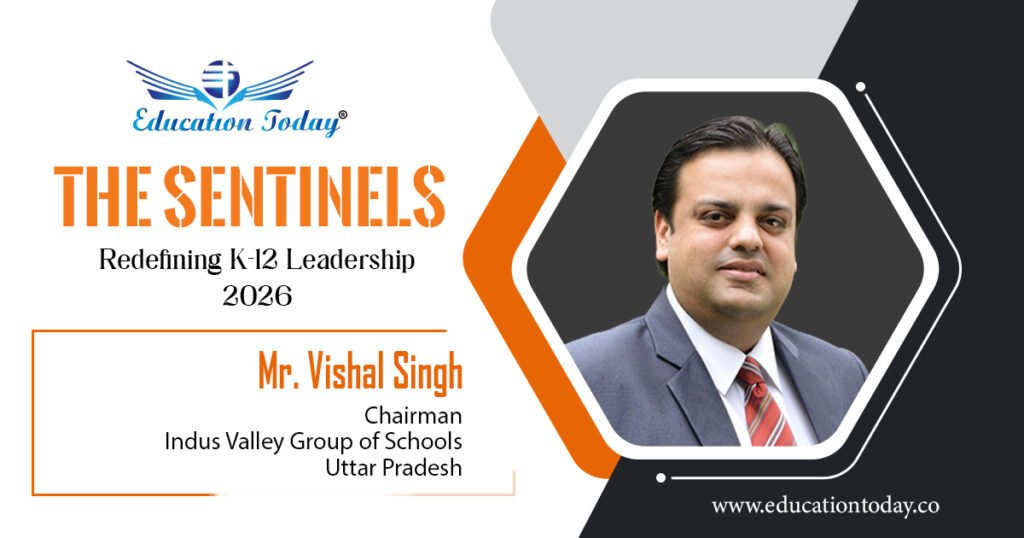
In an era defined by rapid transformation and uncertain horizons, the true purpose of education is increasingly under scrutiny. Is it merely a conduit for academic attainment, or should it serve as a more profound instrument for shaping character, curiosity, and resilience? Few education leaders articulate and embody the latter vision as convincingly as Mr. Vishal Singh, Chairman of the Indus Valley Group of Schools in Uttar Pradesh. His journey reflects not only institutional growth, but a sustained commitment to reimagining education as a holistic and deeply human endeavour.
At the heart of Mr. Singh’s philosophy lies a simple yet compelling belief: education must begin not with infrastructure, but with the innate curiosity of young minds. While many educational institutions place emphasis on facilities and scale, his approach foregrounds purpose, intention, and impact.
From Humble Beginnings to Expanding Horizons
Drawing inspiration from his forefathers’ dedication to serving underserved communities in the Bundelkhand region, Mr. Singh recognised early on that access to quality education should not be a privilege reserved for the few. It is this conviction that led to the establishment of schools in regions where educational opportunities were historically limited.
What distinguishes his leadership is not merely expansion, but the clarity of vision underpinning it. The Indus Valley Group of Schools has grown steadily, incorporating multiple institutions that consistently demonstrate academic excellence. Yet, this growth has not been pursued as a commercial venture; rather, it reflects a series of deliberate, values-driven decisions rooted in a desire to uplift communities. The schools are characterised by structured systems, nurturing environments and a strong emphasis on both discipline and creativity, an equilibrium that is often difficult to achieve under visionary leadership.
Redefining Education for the Modern Age
A defining feature of Mr. Singh’s approach is his insistence on education that extends beyond textbooks. In his view, traditional methods, while foundational, are insufficient in preparing students for the complexities of the twenty-first century. The contemporary learner must be equipped not only with knowledge, but with the ability to adapt, innovate, and think critically.
To this end, these institutions have embraced technological advancement in meaningful ways. The introduction of Atal Tinkering Labs, in collaboration with national innovation initiatives, has enabled students to engage with artificial intelligence, robotics, and coding from an early stage. These initiatives are not pursued for their novelty, but for their transformative potential. Mr. Singh regards curiosity as the most valuable educational resource, and technological engagement as a means to nurture it through innovative learning.
Balancing Technology with Character
However, it would be reductive to view his philosophy as purely technology-driven. On the contrary, Mr. Singh is acutely aware of the need to balance innovation with character development. He advocates for an education that nurtures not only intellectual capability, but also emotional intelligence and ethical grounding, reinforcing character development.
Teacher empowerment forms a cornerstone of this vision. Through regular workshops, leadership programmes, and skill enhancement sessions, educators are equipped to guide students with both competence and compassion. In this ecosystem, teachers are not merely instructors but mentors, strengthening teacher mentorship and shaping the moral and intellectual compass of the next generation.
A Holistic Approach to Student Well-being
Holistic development, in Mr. Singh’s framework, encompasses far more than academic or professional readiness. It includes attention to mental well-being, mindfulness, and physical health. Practices such as yoga, meditation and counselling are thoughtfully integrated into the school environment, prioritising student well-being and acknowledging the psychological pressures faced by today’s students.
His vision of a school transcends its academic function; it is conceived as a sanctuary, a space where young minds are nurtured with care, empathy and wisdom. This nurturing environment enables students to grow not only as learners, but as balanced individuals capable of navigating life’s complexities.
Learning Beyond the Classroom
Mr. Singh firmly believes that education cannot be confined within the four walls of a classroom. Physical activity, sportsmanship, and real-world exposure play a crucial role in shaping well-rounded individuals. The establishment of sports academies and the provision of infrastructure for activities such as tennis, athletics, basketball and football ensure that students have ample opportunities to discover and hone their talents.
Complementing these efforts are corporate exposure programmes, which prepare students for life beyond school by offering insights into professional environments. Such initiatives bridge the often-daunting gap between academic learning and real-world application, fostering confidence and practical understanding. This broader approach to educational exposure also reflects the kind of progressive school practices highlighted by EducationToday.
Environmental stewardship is another cornerstone of his philosophy. Sustainable practices, ranging from solar energy utilisation to the use of electric transport, instil in students a sense of responsibility towards the planet, transforming sustainability from an abstract concept into a lived experience.
Preparing Students for an Uncertain Future
Mr. Singh’s educational ethos is perhaps most poignantly reflected in his approach to preparing students for an uncertain future. In a world where change is the only constant, adaptability emerges as a critical skill. He places considerable emphasis on emotional intelligence, ethical reasoning, and communication abilities, recognising that these attributes will enable students to navigate complexity with confidence and integrity, ultimately shaping future-ready students.
Particular attention is given to language proficiency, especially in English, ensuring that students are equipped to articulate ideas clearly and engage effectively in a global context. This balanced focus equips learners not just to succeed, but to lead with purpose.
Values Shaped by Personal Experience
Beyond strategy and structure, there is a deeply personal dimension to Mr. Singh’s work. Fatherhood, he notes, has further strengthened his commitment to values such as humility, integrity, and compassion. These principles are not merely articulated but actively embedded within the culture of his schools.
Students are encouraged to remain curious, to ask questions and to engage thoughtfully with the world around them. This emphasis on inquiry and empathy fosters individuals who are not only knowledgeable but also socially conscious.
Leadership in Times of Crisis
The recent pandemic presented an unprecedented test of leadership across sectors. During this challenging period, Mr. Singh demonstrated a commitment that extended far beyond education. By establishing a COVID care centre and facilitating access to essential resources such as oxygen and medicines, he underscored the role of educational institutions as pillars of community support.
This response exemplifies a broader understanding of responsibility, one that transcends institutional boundaries and prioritises human well-being. It also highlights the profound impact that value-driven leadership can have in times of crisis.
A Legacy Reflected in Achievement
The success of Mr. Singh’s approach is evident not only within his institutions but also in the accomplishments of their alumni. Graduates have gone on to excel across diverse fields, including global corporations, creative industries, science, public service and sports.
These achievements are not incidental; they are the natural outcome of an education system that prioritises both excellence and character. They stand as a testament to the enduring impact of a philosophy that places equal emphasis on knowledge, values and purpose.
Shaping Minds, Building Futures
In an educational landscape often dominated by metrics and rankings, Mr. Vishal Singh offers a refreshing alternative. His work serves as a reminder that the true measure of an institution lies not in its infrastructure or accolades, but in its ability to inspire, empower and transform.
By placing students at the centre of his vision and fostering an environment that encourages exploration, empathy and excellence, he is, quite literally, shaping minds and building futures. As the demands of the modern world continue to evolve, his journey stands as both an inspiration and a blueprint, demonstrating that with clarity of purpose, commitment to values and a willingness to innovate, education can indeed fulfil its highest potential.
Mr. Vishal Singh is an education professional and school leader associated with initiatives focused on progressive learning and institutional development.
He is associated with educational leadership, innovation, purposeful learning, and efforts to build schools that respond to the changing needs of learners.
His vision emphasizes innovation, meaningful learning, strong values, and the development of skills that help students adapt to a rapidly changing world.
His approach focuses on encouraging progressive teaching practices, student-centred learning, and institutional initiatives that support creativity and lifelong learning.
Future-ready education helps students develop academic knowledge alongside critical thinking, creativity, collaboration, adaptability, and real-world skills.