Table of Contents
- From Administration to Purposeful Leadership
- A Holistic Philosophy: Educating Mind and Heart
- Technology with Purpose: Beyond Digital Saturation
- Leadership as Mentorship: Building Collective Strength
- Measuring Success Beyond Academics
- Reflection and Resilience: Foundations for Sustainability
- Envisioning the Future: Innovation and Inquiry
- Educating for an Unwritten Tomorrow
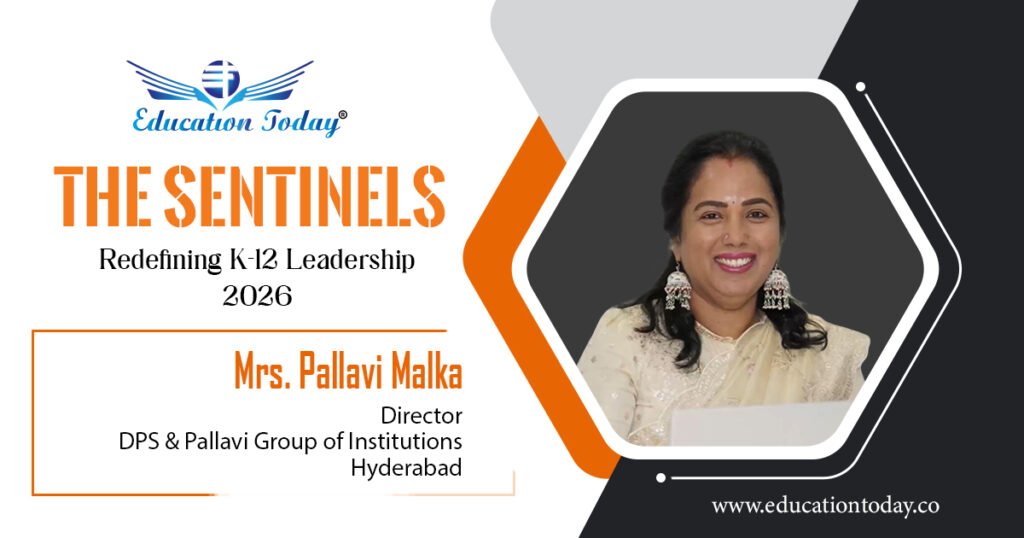
In an educational landscape increasingly defined by metrics, systems, and rapid technological change, the essence of meaningful leadership often risks being overshadowed. Yet, in the work of Mrs. Pallavi Malka, one encounters a model of educational stewardship that transcends administrative efficiency to embrace a far more profound purpose, exemplifying school leadership. Her journey is not merely one of institutional management, but of transformation of spaces, people, and possibilities. Through a carefully articulated vision, she has redefined what it means to lead a school in the twenty-first century: not as an organisation to be run, but as a living community to be nurtured through holistic education.
From Administration to Purposeful Leadership
Mrs. Pallavi Malka’s early engagement with education was rooted in operational excellence. Systems, processes, and organisational frameworks formed the backbone of her initial approach, ensuring that institutional mechanisms functioned with precision. However, over time, a pivotal shift reshaped her perspective. She began to view education not as an enterprise driven by structure alone, but as a deeply human endeavour, one that carries the responsibility of shaping individuals who will, in turn, shape society.
This transition from administration to purpose marked a defining moment in her leadership trajectory. Schools, in her understanding, are not confined to classrooms and timetables; they are ecosystems where young minds encounter ideas, values, and relationships that influence their lifelong journeys. Leadership, therefore, must extend beyond efficiency to encompass empathy, vision, and moral responsibility, rooted in ethical education.
A Holistic Philosophy: Educating Mind and Heart
At the core of Mrs. Malka’s educational philosophy lies a fundamental conviction: intellectual development without emotional and ethical grounding is inherently incomplete. Academic success, while important, cannot exist in isolation from the cultivation of character. This belief informs her commitment to a holistic educational model that integrates intellectual rigour with emotional intelligence, ethical awareness, and cultural rootedness, strengthening emotional intelligence in education.
Within this framework, sport, the arts, and reflective practices are not treated as supplementary activities but as essential components of the learning experience. They provide avenues for self-expression, collaboration, and resilience, qualities that are indispensable in an increasingly complex world. By embedding these elements into the academic fabric, she ensures that students emerge not merely as accomplished learners, but as thoughtful, empathetic individuals.
Her emphasis on samskaras, values that shape conduct and consciousness, further reinforces this approach. In nurturing these principles, the institution becomes a space where discipline is not imposed, but internalised; where responsibility is not instructed, but lived.
Technology with Purpose: Beyond Digital Saturation
In an era where technology often dominates educational discourse, Mrs. Malka advocates a measured and thoughtful approach. For her, digital tools are not ends in themselves, but means to enhance understanding and engagement. The objective is not to create technologically saturated classrooms, but to design environments where innovation supports, rather than supplants, human interaction, reflecting innovation in education.
Robotics, digital platforms, and interactive learning tools are introduced with clear pedagogical intent. They serve to deepen inquiry, facilitate collaboration, and expand access to knowledge. Yet, equal emphasis is placed on maintaining the human connections that lie at the heart of education. Dialogue, mentorship, and shared experiences remain central, ensuring that students develop not only technical competence but also interpersonal sensitivity.
This balanced integration guards against passive consumption of information. Students are encouraged to question, analyse, and create, transforming them from recipients of knowledge into active participants in their own learning journeys, reinforcing student-centred learning. In doing so, Mrs. Malka cultivates a culture of discernment, where technology is used with awareness and responsibility.
Leadership as Mentorship: Building Collective Strength
A distinguishing feature of Mrs. Pallavi Malka’s leadership is her commitment to mentorship in schools. She reimagines the role of the Director not as an authority figure issuing directives, but as a guide who fosters growth through engagement and dialogue. This approach extends to both students and educators, creating a culture of mutual respect and shared purpose.
Recognising that the strength of an institution lies in its people, she invests in identifying and nurturing the unique capabilities of her team. Teachers are encouraged to reflect on their practice, explore innovative methodologies, and collaborate in addressing challenges. Through structured support and open communication, she empowers them to take ownership of their roles, thereby strengthening the institutional fabric.
This emphasis on collective growth fosters resilience. When individuals feel valued and supported, they are better equipped to navigate change and uncertainty. The result is an educational community that is not only cohesive, but also adaptive, capable of evolving in response to emerging demands.
Measuring Success Beyond Academics
While academic achievement remains an important indicator of institutional effectiveness, Mrs. Malka’s understanding of success extends far beyond examination results. She places equal, if not greater, emphasis on the development of character, integrity, and social responsibility.
The true measure of a school, in her view, lies in the individuals it sends into the world. Are they capable of independent thought? Do they act with integrity? Can they engage constructively with diverse perspectives? These questions guide her approach, ensuring that educational outcomes are aligned with broader societal needs and the making of future-ready learners.
Achievements in board examinations and competitive platforms are acknowledged, but they are contextualised within a larger narrative of growth and development. By maintaining this balance, she prevents the reduction of education to mere performance, preserving its deeper purpose.
Reflection and Resilience: Foundations for Sustainability
One of the most significant insights to emerge from Mrs. Malka’s leadership journey is the importance of sustainability. Success, she believes, must endure beyond favourable circumstances. This requires building resilience, not only within systems, but within individuals.
Students are encouraged to approach challenges with clarity and composure. They learn to assess situations critically, make informed decisions, and act with confidence even in uncertain conditions. Such preparation equips them to navigate the complexities of contemporary life, where change is constant and unpredictability is the norm.
For educators, reflective practice becomes a cornerstone of professional growth. By continually evaluating and refining their approaches, they ensure that teaching remains dynamic and responsive. This culture of reflection sustains the institution’s ability to innovate while remaining grounded in its core values, a perspective that resonates strongly with the evolving conversations featured by EducationToday.
Envisioning the Future: Innovation and Inquiry
Looking ahead, Mrs. Pallavi Malka recognises that the future of education will be shaped by forces that are both transformative and unpredictable. Artificial intelligence, evolving career landscapes, and global interconnectedness demand a rethinking of traditional educational models.
In response, she envisions classrooms that prioritise inquiry over instruction, creativity over conformity, and exploration over memorisation. Project-based learning, interdisciplinary approaches, and early exposure to skill development form the foundation of this vision. Students are encouraged not merely to understand existing knowledge, but to generate new ideas and solutions.
Flexible learning environments, enriched by open spaces and opportunities for experimentation, support this shift. By fostering curiosity and innovation from an early stage, she prepares students to engage with a world that is still unfolding.
Educating for an Unwritten Tomorrow
Ultimately, the legacy of Mrs. Pallavi Malka’s leadership lies in her unwavering commitment to preparing students for an uncertain yet promising future. Her approach is rooted in the belief that education must cultivate not only competence, but conscience; not only knowledge, but wisdom.
By emphasising global citizenship, ethical responsibility, and the principle of “live and let live,” she instils values that transcend academic boundaries. Students learn to engage with the world not as passive observers, but as active contributors, individuals capable of shaping society with empathy and integrity.
In this vision, education becomes a lifelong journey rather than a finite process. It is an unfolding narrative, shaped by curiosity, reflection, and purposeful action. Through her leadership, Mrs. Pallavi Malka has demonstrated that when education is guided by both intellect and humanity, it has the power to transform not only individuals but the world they inhabit.
Mrs. Pallavi Malka is the Director of Delhi Public Schools and the Pallavi Group of Schools.
She is known for promoting holistic development, student-centric learning, creativity, confidence, and strong character among learners.
Her approach combines modern educational practices with empathy, values, and a focus on nurturing every child’s potential.
She supports inclusive and engaging classrooms, innovative learning approaches, and continuous educator development to improve student learning.
Her vision focuses on developing confident, responsible, and capable students through academics, co-curricular activities, emotional well-being, and future-focused learning.