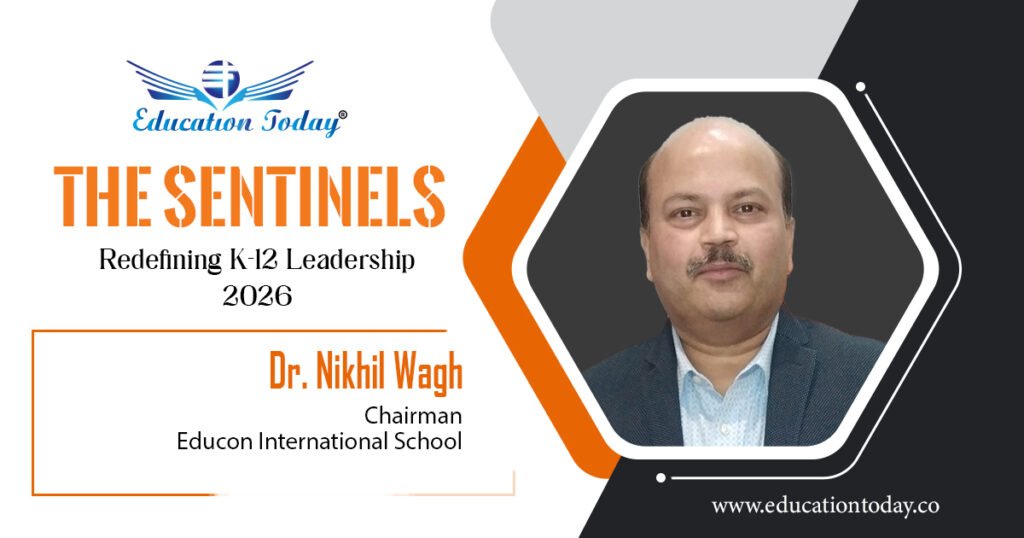
In an era where education must continually evolve to remain relevant, the challenge lies not merely in adopting new methodologies but in preserving the human essence of learning. At the forefront of this transformation stands Dr. Nikhil Wagh, Chairman of Educon International School (EIS), whose leadership reflects a deeply considered synthesis of innovation, empathy, and educational purpose. His philosophy is both simple and profound: education must adapt to the child, rather than expecting the child to conform to rigid systems. It is this conviction that has shaped EIS into a dynamic and inclusive learning environment where individuality is not only acknowledged but actively celebrated.
For Dr. Wagh, education is not a transactional process confined to textbooks and examinations. It is a lived experience, one that must engage curiosity, foster creativity and nurture a lifelong enthusiasm for learning. His approach, informed by early encounters with inspiring mentors, underscores the importance of personalised learning and meaningful guidance. The oft-quoted belief that “if a child isn’t learning the way we teach, we must teach the way the child learns” is not merely a pedagogical statement; it is the cornerstone of his educational vision rooted in holistic education. This philosophy also reflects the kind of progressive educational thinking highlighted by EducationToday in its coverage of evolving school leadership and learning practices.
The Journey: Defining Moments and Milestones
Dr. Wagh’s journey in education has been shaped by a series of experiences that have steadily refined his understanding of what meaningful learning entails. From his formative years, where he encountered educators who recognised the value of individual attention, to his eventual role as a leader, each stage contributed to his evolving philosophy.
Under his stewardship, Educon International School has emerged as a model of progressive education. A key milestone in this journey has been the integration of the VAK framework (Visual, Auditory, Kinesthetic), which acknowledges that children learn in diverse ways. By addressing these varied learning styles, the school ensures that each student can engage with content in a manner that resonates with their unique cognitive preferences.
Another defining moment came during the global disruption caused by the COVID-19 pandemic. While many institutions struggled to adapt, EIS implemented its Virtual Learning Framework (VLF), ensuring continuity without compromising on engagement. This initiative exemplified Dr. Wagh’s ability to navigate uncertainty with clarity and purpose, reinforcing the importance of adaptability in education.
Today, the school stands as a testament to his enduring commitment to nurturing critical thinkers – students who are not only academically proficient but also equipped with real-world knowledge, confidence, and essential 21st-century skills.
An Evolving Philosophy of Education
Central to Dr. Wagh’s approach is the belief that education must remain fluid and responsive. In a world characterised by rapid change, static models of teaching are increasingly inadequate. Instead, he advocates for a dynamic framework where learning is shaped through continuous observation, reflection and adaptation.
At EIS, this philosophy translates into classrooms that prioritise engagement over instruction. Teachers act as facilitators, guiding students through a process of discovery rather than delivering information in a one-directional manner. Lessons are designed to stimulate curiosity, encourage experimentation and foster independent thought, reinforcing ongoing innovation in education.
Importantly, this approach extends beyond academic achievement. Dr. Wagh places equal emphasis on the development of character, recognising that qualities such as resilience, empathy and integrity are fundamental to long-term success and student wellbeing. His alignment with India’s NEP 2020 further underscores his commitment to holistic education, demonstrating how progressive policy can complement visionary practice.
By integrating academic rigour with emotional and social development, EIS prepares students to navigate both intellectual and personal challenges with confidence.
Beyond Screens: The Thoughtful Use of Technology
In the contemporary educational landscape, technology is often viewed as both an opportunity and a challenge. While digital tools offer unprecedented access to information, their overuse can undermine the human connections that are central to meaningful learning. Dr. Wagh approaches this balance with deliberate care.
At Educon International School, technology in classrooms is not treated as a replacement for traditional methods but as an enhancement. Interactive smartboards, digital resources, and virtual platforms are integrated into the learning process in ways that support exploration and engagement. However, these tools are complemented by hands-on activities, outdoor learning experiences and collaborative projects that ensure a well-rounded educational experience.
The Virtual Learning Framework, developed during the pandemic, stands as a notable example of this balanced approach. It demonstrated that while digital literacy is essential, it must be accompanied by thoughtful pedagogy and sustained human interaction.
For Dr. Wagh, the objective is clear: to cultivate students who can use technology with discernment – leveraging it to enhance creativity, problem-solving and adaptability without becoming overly dependent on it.
Mentorship and the Culture of Continuous Learning
A defining feature of Dr. Wagh’s leadership is his emphasis on mentorship and reflective practice. He believes that the quality of education is intrinsically linked to the quality of teaching, and as such, invests significantly in the professional development of educators.
At EIS, teachers are encouraged to engage in continuous learning, exploring new methodologies and refining their practice through collaboration and reflection. This culture of growth ensures that educators remain responsive to the evolving needs of their students.
Mentorship, however, extends beyond professional development. Teachers play a crucial role in guiding students not only academically but also personally, helping them develop a sense of responsibility and ethical awareness. This holistic approach fosters a learning environment where relationships are built on trust, respect, and mutual understanding.
Through this ecosystem of shared responsibility, Dr. Wagh has cultivated a resilient educational community, one that values collaboration, innovation and a collective commitment to student growth.
Preparing Students for an Unwritten Future
As the future of work and society continues to evolve, the role of education must also be redefined. Dr. Wagh recognises that preparing students for the future is not about equipping them with fixed knowledge, but about developing the skills and mindset necessary to navigate change.
At Educon International School, this vision is realised through a focus on holistic development. Students are encouraged to think critically, communicate effectively and approach challenges with creativity and confidence. Emotional intelligence is given equal importance, ensuring that learners are not only capable but also compassionate.
Global citizenship forms another key component of this approach. By fostering awareness of diverse perspectives and encouraging social responsibility, the school prepares students to engage meaningfully with an interconnected world.
Dr. Wagh envisions an education system that is deeply personalised, one that recognises the individuality of each learner while equipping them with universal competencies. By merging innovation with enduring values, he ensures that students are prepared not only for the world as it exists today, but for the world as it will become.
A Legacy of Purpose and Possibility
Dr. Nikhil Wagh’s contribution to education extends beyond institutional success. His work represents a broader reimagining of what schooling can and should be in the twenty-first century. Through his leadership, Educon International School has become a space where learning is both personal and communal, where technology is harnessed thoughtfully and where the child remains at the centre of every decision.
His legacy is one of inspiration and intent, a commitment to nurturing the human spirit alongside intellectual growth. In a world often defined by rapid change and uncertainty, his approach offers a sense of clarity and direction, reminding us that the true purpose of education lies not merely in imparting knowledge, but in shaping individuals who are capable of thinking, feeling and contributing meaningfully to society.
Ultimately, Dr. Wagh’s vision reaffirms an enduring truth: that education, when guided by empathy, innovation and purpose, has the power to transform not only individual lives but the future itself.
Dr. Nikhil Wagh is the Chairman and Founder-Chairman of Educon International School, Pune, and an experienced educationist.
He is known for promoting innovative, student-centred and holistic approaches to education, including the concept of a “Living School.”
His vision focuses on holistic wellbeing, global citizenship, innovative learning environments, and helping students become lifelong learners.
The Living School concept emphasizes experiential and engaging learning, moving beyond rote learning while developing creativity, collaboration, and problem-solving skills.
He supports innovative teaching pedagogies, continuous professional development for teachers, and technology-enabled learning to create engaging educational experiences.