
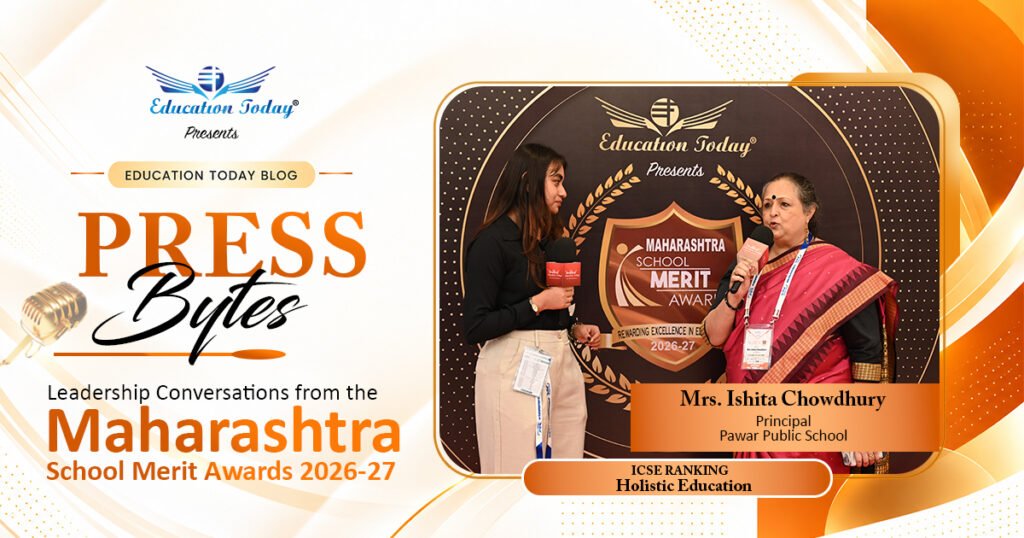
Mrs. Ishita Chowdhury, Founder-Principal of Pawar Public School, Dombivli, described receiving an EducationToday Award at the Maharashtra Educators’ Summit and Awards 2026 as a fulfilling experience. She dedicated the recognition to her students and fellow team members, acknowledging their collective contribution to the school’s journey.
Reflecting on the summit, Chowdhury highlighted its value as a platform for educators to exchange ideas, share best practices and learn from one another’s experiences. She emphasised that professional growth should remain an ongoing priority for everyone working in education.
“Always believe in lifelong education as we are here to make a difference in the lives of those we touch.”
Mrs. Chowdhury’s message underlines the importance of continuous learning in an evolving educational landscape. Educators who remain curious, open to new ideas and committed to professional development are better equipped to respond to students’ changing needs. Her perspective also reinforces the wider purpose of teaching: creating meaningful, lasting change in the lives of learners through knowledge, guidance, and inspiration.
Mrs. Ishita Chowdhury is featured in a discussion about lifelong learning and its role in creating meaningful educational impact.
Lifelong learning is the continuous pursuit of knowledge and skills throughout life, through formal education, professional development, and everyday experiences.
Lifelong learning helps educators and learners adapt to changing needs, develop new skills, and remain open to new ideas and approaches.
Schools can encourage curiosity, critical thinking, independent learning, teacher development, and opportunities to explore new subjects and skills.
It supports continuous improvement, helps educators strengthen their teaching practices, and encourages students to become adaptable, curious, and independent learners.
Mrs. Ishita Chowdhury

