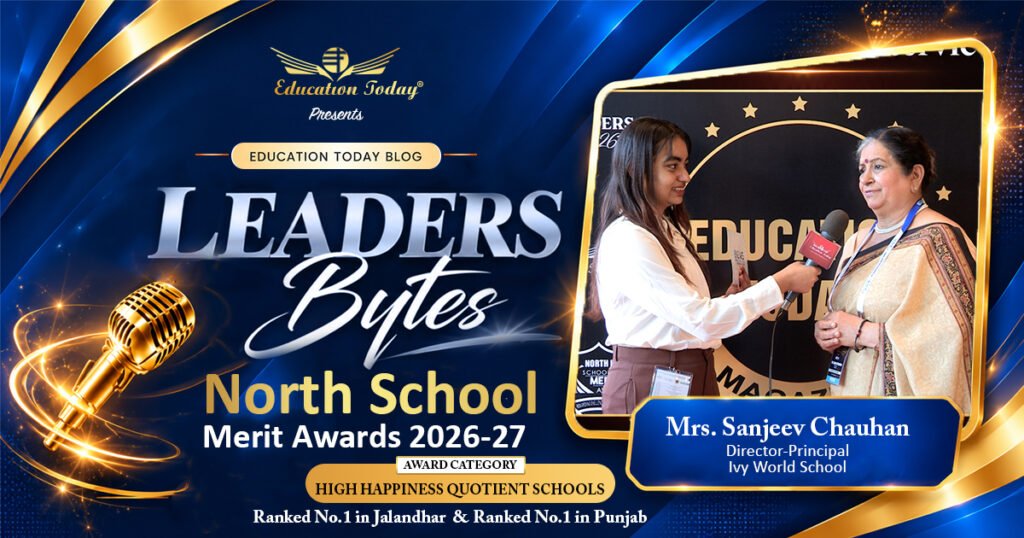
At the North Educators’ Summit & Awards 2026, Mrs. Sanjeev Chauhan represents the perspective of an educational leader focused on creating meaningful learning experiences and nurturing students’ individual potential. The interaction highlights the importance of progressive educational practices, student-centred learning and a balanced approach that combines academic achievement with creativity, confidence and essential life skills.
“Education should empower every child to discover their potential, think independently and develop the confidence to succeed in an ever-changing world.”
This editorially drafted statement reflects the importance of placing students at the centre of the learning process. Schools play a crucial role in creating supportive environments where learners can explore their interests, develop critical-thinking abilities and build the confidence to overcome challenges. Effective educational leadership encourages teaching practices that recognise individual strengths while promoting curiosity, collaboration and personal responsibility. By combining academic learning with holistic development, educational institutions can prepare students to become adaptable, independent and lifelong learners. This perspective underscores the significance of an inclusive and forward-looking educational approach that supports individual growth while preparing young people for future opportunities.
This feature also offers readers of EducationToday a perspective on the ideas and priorities shaping school education.
Mrs. Chauhan emphasises student-centred education as an approach to fostering holistic student development.
Student-centred education focuses on students’ individual needs, interests, abilities, and learning goals.
It encourages independent thinking, creativity, confidence, collaboration, and active participation in learning.
Holistic development includes academic achievement, emotional wellbeing, social skills, physical growth, and personal development.
Schools can use personalised teaching strategies, experiential activities, collaborative projects, and interactive classroom experiences.