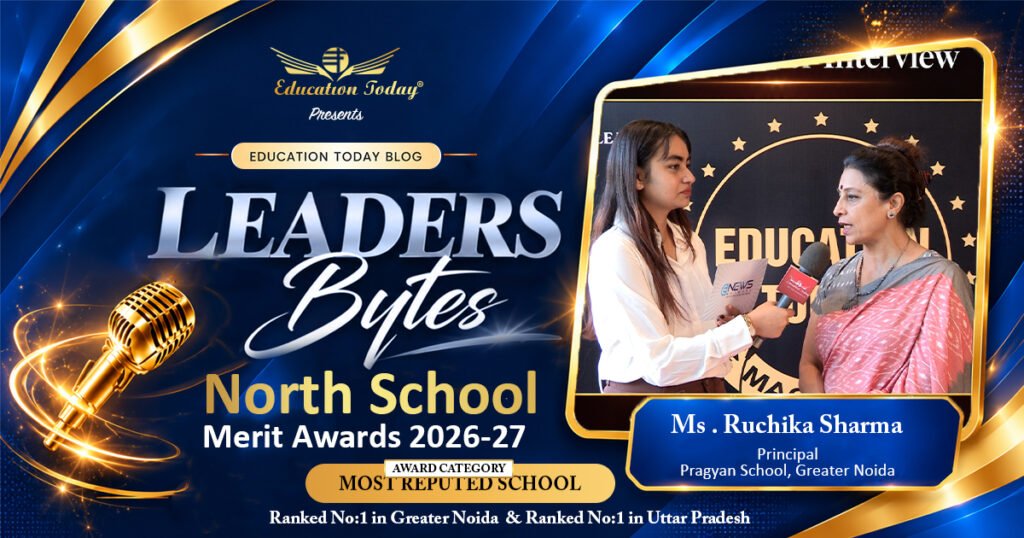
At the North Educators’ Summit & Awards 2026, Ms. Ruchika Sharma represents the perspective of a school leader focused on strengthening educational practices and preparing students for the demands of a changing world. The interaction highlights the importance of progressive teaching approaches, critical thinking and holistic development in creating meaningful learning experiences that extend beyond academic achievement.
“Education should inspire students to think independently, embrace challenges and develop the skills and confidence to shape their own futures.”
This editorially drafted statement reflects the growing importance of learner-centred education in contemporary schools. It emphasises the responsibility of educational institutions to nurture curiosity, encourage independent thinking and equip students with skills that extend beyond the classroom. Effective school leadership plays a crucial role in creating an environment where learners feel encouraged to explore ideas, learn from experiences and develop resilience. By combining academic learning with creativity, problem-solving and personal responsibility, schools can help students become adaptable, confident and lifelong learners who are prepared to contribute meaningfully to society.
This feature also offers readers of EducationToday a perspective on the ideas and priorities shaping school education.
Ruchika Sharma emphasises purposeful and progressive education that empowers learners and supports their overall development.
Purposeful education connects learning with clear goals, real-world relevance, and the development of essential life skills.
Progressive education encourages active participation, creativity, critical thinking, and learning through meaningful experiences.
It helps learners build confidence, independence, problem-solving abilities, and a deeper understanding of what they learn.
Schools can encourage experiential learning, collaborative projects, student-centred teaching, and opportunities for independent exploration.