JEE Main 2026 Chemistry Answer Key Issue: NTA Responds
NTA Responds to JEE Main 2026 Chemistry Answer Key Concerns: Transparency, Accountability and Student Trust
The Joint Entrance Examination (JEE) Main remains one of India’s most competitive and closely watched entrance tests, shaping the academic futures of millions of aspirants each year. Against this backdrop, the recent concerns surrounding the Chemistry answer key for Session 2 of JEE Main 2026, specifically the April 5 shift, have drawn widespread attention. The National Testing Agency (NTA), the body responsible for conducting the examination, has formally responded to these concerns, acknowledging discrepancies and initiating a review process. This development highlights not only the importance of accuracy in high-stakes examinations but also the growing role of student feedback in shaping institutional responses.
The Origin of the Issue
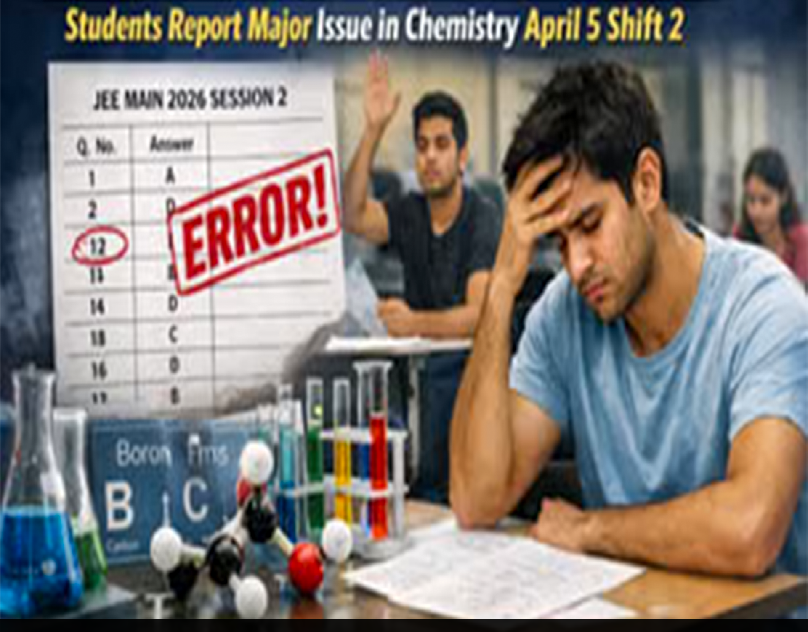
The controversy began shortly after the release of the provisional answer key for JEE Main 2026 Session 2 on April 11. Candidates, particularly those who appeared for the Chemistry paper on April 5 (Shift 2), began raising concerns about potential errors in the answer key.
Social media platforms quickly became a space for collective expression, with students pointing out discrepancies between their expected answers and those listed in the official key. Some candidates also alleged inconsistencies in their response sheets, intensifying the situation and creating a sense of anxiety among aspirants.
Given the high stakes associated with JEE Main, where even a single mark can influence rankings and future opportunities, these concerns gained traction rapidly.
NTA’s Official Response
In response to the growing unrest, the NTA issued a clarification acknowledging the reported discrepancies and confirming that the provisional answer key had been reviewed.
The agency stated that the reviewed answer key, including the Chemistry paper from April 5, had been made available on the official portal. Candidates were invited to check the updated key and raise objections through the prescribed challenge mechanism, if necessary.
Importantly, the NTA also expressed regret for the inconvenience caused, signalling an effort to address the issue transparently. This acknowledgement, though procedural, plays a critical role in maintaining trust between the examining body and candidates.
A Temporary Pause on Objections
Before the updated answer key was released, the NTA had advised candidates to refrain from submitting objections or paying challenge fees for the Chemistry section until the review process was completed.
This advisory was particularly significant, as the standard process for challenging answer keys involves a fee per question. By urging candidates to wait, the agency effectively prevented unnecessary expenditure and demonstrated a degree of responsiveness to student concerns.
Such a move also reflects an awareness of the financial and emotional pressures faced by aspirants during the examination process.
The Challenge Process Explained
The JEE Main answer key challenge system allows candidates to contest specific answers by submitting supporting evidence along with a prescribed fee. Typically, this fee is non-refundable and is charged per question challenged.
Once objections are submitted, subject experts review the challenges, and necessary corrections are incorporated into the final answer key. This final version forms the basis for result calculation.
In the context of the Chemistry discrepancies, the challenge process assumes even greater importance, as it provides a structured mechanism for addressing potential errors while ensuring fairness.
The Role of Social Media in Academic Accountability
One of the defining features of this episode has been the role of social media in amplifying student voices. Platforms such as X (formerly Twitter) became channels for candidates to share their experiences, raise concerns and demand accountability.
While social media can sometimes contribute to misinformation, in this instance it appears to have facilitated a collective response that prompted institutional action. The rapid dissemination of concerns ensured that the issue could not be overlooked, compelling the NTA to engage directly with the situation.
This dynamic underscores a broader shift in how institutions interact with stakeholders in the digital age.
The Importance of Accuracy in High-Stakes Examinations
Examinations like JEE Main are not merely academic assessments; they are gateways to premier institutions such as the Indian Institutes of Technology (IITs), National Institutes of Technology (NITs) and other centrally funded institutions.
Given this context, the accuracy of answer keys is of paramount importance. Even minor discrepancies can have far-reaching consequences, affecting rankings, admissions and ultimately, career trajectories.
The Chemistry answer key issue serves as a reminder of the complexities involved in conducting large-scale examinations and the need for rigorous quality control mechanisms.
Revisions and Updates: A Corrective Measure
Following its review, the NTA uploaded a revised answer key addressing the reported discrepancies.
This corrective step is central to maintaining the integrity of the examination process. By revising the provisional key before finalising results, the agency ensures that candidates are evaluated based on accurate information.
However, such revisions also raise questions about initial verification processes and the safeguards in place to prevent errors at the outset.
The Broader Examination Timeline
The Chemistry answer key issue unfolds within the larger timeline of JEE Main Session 2. The examination was conducted between April 2 and April 8, with lakhs of candidates participating across multiple shifts.
Following the release of the provisional answer key, candidates were given a limited window: typically until April 13, to raise objections.
After reviewing all challenges, the NTA is expected to release the final answer key, followed by the declaration of results. These results will determine eligibility for JEE Advanced and subsequent counselling processes.
Student Anxiety and the Psychological Dimension
Beyond procedural aspects, the incident highlights the psychological pressures associated with competitive examinations. For many students, months or even years of preparation culminate in a single test.
The emergence of discrepancies in the answer key can therefore trigger significant anxiety, as candidates grapple with uncertainty regarding their performance. Reports of confusion and panic among students during this period underscore the emotional stakes involved.
Addressing such concerns promptly is essential not only for fairness but also for maintaining student well-being.
Institutional Responsibility and Public Trust
The NTA’s handling of the situation reflects the broader challenge of maintaining public trust in large-scale examination systems. Transparency, timely communication and accountability are key to sustaining this trust.
While the acknowledgement of errors and subsequent corrective actions are positive steps, they also highlight the need for continuous improvement in examination processes.
Institutions must strive to balance efficiency with accuracy, ensuring that systems are robust enough to minimise errors while remaining responsive to feedback.
Lessons for the Future
The Chemistry answer key controversy offers several lessons for both examining bodies and candidates. For institutions, it underscores the importance of rigorous verification processes, clear communication and proactive engagement with stakeholders.
For students, it highlights the value of vigilance and the importance of using official channels to raise concerns. The structured challenge mechanism remains a critical tool for ensuring fairness, provided it is used judiciously.
Moreover, the episode illustrates how collective awareness and responsible use of digital platforms can contribute to institutional accountability.
The Way Forward
As the NTA moves towards finalising the answer key and declaring results, the focus will shift to ensuring that all corrections are accurately reflected in the evaluation process. Candidates, meanwhile, must remain attentive to official updates and adhere to guidelines for submitting objections. The final outcome will not only determine individual rankings but also influence the broader perception of the examination’s credibility.
Conclusion
The NTA’s response to the JEE Main 2026 Chemistry answer key concerns represents a critical moment in the ongoing evolution of India’s examination systems. While the issue itself highlights the challenges inherent in conducting large-scale assessments, the subsequent actions taken by the agency demonstrate a commitment to transparency and fairness. In a system where trust is paramount, such responsiveness is essential. As the process moves towards completion, the emphasis must remain on accuracy, accountability and the equitable treatment of all candidates. Ultimately, the true measure of success lies not merely in conducting examinations but in ensuring that they uphold the highest standards of integrity and reliability.