NEET UG 2026 Controversy: Parliament Seeks NTA Accountability
NEET UG 2026 Controversy Intensifies as Parliamentary Panel Seeks Accountability
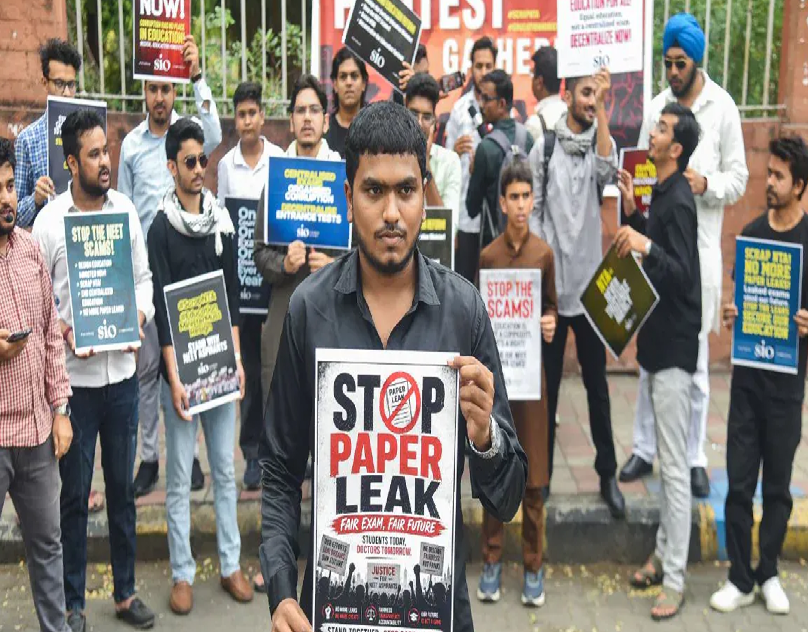
The unfolding controversy surrounding the NEET UG 2026 examination has brought India’s medical entrance system under intense public and institutional scrutiny. Allegations of a question paper leak, coupled with the subsequent cancellation of the examination, have triggered widespread concern among students, parents, and policymakers alike. What was once a routine national-level test has now evolved into a matter of parliamentary oversight, reflecting the gravity of the situation. At the centre of this development is the National Testing Agency (NTA), the body responsible for conducting NEET, which now faces pressing questions regarding the integrity and security of one of the country’s most critical examinations.
Parliamentary Intervention and Summons
In response to the escalating controversy, a Parliamentary Standing Committee has summoned senior officials, including NTA Chairperson Pradeep Kumar Joshi and Higher Education Secretary Vineet Joshi. The committee’s decision to intervene underscores the seriousness of the allegations and the broader implications for India’s examination ecosystem. The meeting is expected to examine the circumstances leading to the alleged leak, assess the adequacy of existing security protocols, and evaluate the response mechanisms employed by the authorities. More importantly, it seeks to establish accountability at the highest levels, ensuring that lapses, if any, are identified and addressed.
The Scale and Significance of NEET UG
The National Eligibility cum Entrance Test (NEET UG) is among the largest competitive examinations in the country, serving as the primary gateway to undergraduate medical education. Each year, it attracts millions of aspirants competing for a limited number of seats in medical and allied courses. In 2026, nearly 23 lakh candidates reportedly appeared for the examination conducted on May 3. The scale alone presents formidable logistical challenges, requiring meticulous planning, robust security measures, and seamless coordination across multiple agencies. Any breach in such a system has far-reaching consequences, affecting not just individual candidates but the credibility of the entire process.
Cancellation and Its Aftermath
Following allegations of malpractice and a potential paper leak, authorities took the unprecedented step of cancelling the NEET UG 2026 examination. This decision, while necessary to preserve fairness, has had a profound impact on candidates who had invested months, if not years, in preparation. The cancellation has also reignited debates around the reliability of centralised examinations and the vulnerabilities inherent in large-scale testing systems. For many aspirants, the uncertainty surrounding the examination has added an emotional and psychological dimension to an already demanding process.
Reforms Under Consideration
Central to the Parliamentary Committee’s deliberations will be the implementation of recommendations made by expert panels, including those led by K Radhakrishnan. These recommendations are expected to focus on strengthening examination security, enhancing transparency and modernising operational frameworks. Potential reforms may include the adoption of advanced encryption technologies for question papers, stricter monitoring of examination centres and improved coordination with law enforcement agencies. There is also likely to be a renewed emphasis on accountability mechanisms, ensuring that lapses are addressed promptly and effectively.
The Role of Technology and Its Limitations
While technology has significantly improved the efficiency of examination processes, it has also introduced new vulnerabilities. The alleged leak has once again highlighted the need for a balanced approach that leverages technological advancements while addressing potential risks. Digital surveillance, secure data transmission and real-time monitoring are increasingly being integrated into examination systems. However, their effectiveness depends on robust implementation and continuous oversight. The current controversy serves as a reminder that technological solutions must be complemented by strong administrative frameworks.
Government Response and Re-Examination Plans
In an effort to restore confidence, the government has announced that the NEET UG re-examination will be conducted on June 21 under enhanced security arrangements. This decision reflects a commitment to ensuring that all candidates are given a fair and equitable opportunity. Authorities have indicated that the re-examination will be conducted with stricter monitoring, improved logistics and greater coordination between agencies. The aim is not only to prevent a recurrence of the issues faced earlier but also to demonstrate a renewed commitment to transparency and integrity.
Impact on Students and the Academic Ecosystem
The ramifications of the NEET UG controversy extend beyond administrative concerns, deeply affecting the student community. For many aspirants, the uncertainty surrounding the examination has disrupted academic plans, delayed admissions and heightened stress levels. Parents and educators have also expressed concerns about the broader implications for the education system. The credibility of entrance examinations is fundamental to maintaining trust in merit-based selection processes and any erosion of this trust can have lasting consequences.
A Broader Reflection on Examination Governance
The events surrounding NEET UG 2026 have prompted a wider reflection on the governance of national-level examinations in India. As the number of candidates continues to grow, so too does the complexity of administering these tests. Ensuring fairness, transparency, and security requires not only technological innovation but also institutional accountability and continuous evaluation. The involvement of Parliament in this matter signals a recognition of these challenges and the need for systemic reforms.
Restoring Confidence Through Accountability
At its core, the current crisis is as much about perception as it is about procedure. Restoring confidence in the examination system will require clear communication, decisive action, and visible accountability. The Parliamentary Committee’s intervention is a step in this direction, signalling that the concerns of students and stakeholders are being taken seriously. The outcomes of these deliberations will likely shape the future of examination reforms in the country.
The Way Forward
As the re-examination approaches, both authorities and candidates face a critical juncture. For the government and the NTA, the focus will be on ensuring a flawless execution that rebuilds trust. For aspirants, the challenge lies in maintaining focus and resilience amid uncertainty.
The NEET UG 2026 episode serves as a stark reminder of the stakes involved in national-level examinations. It underscores the importance of robust systems, vigilant oversight and a commitment to fairness at every stage.
Ultimately, the resolution of this crisis will depend on the ability of institutions to learn from the past, implement meaningful reforms, and uphold the principles of transparency and meritocracy. In doing so, they can reaffirm the integrity of one of India’s most important educational gateways.