Odisha to Upgrade 800 Schools into Model Institutes Under PM SHRI
Odisha to Transform 800 Schools into Model Educational Institutes: A New Vision for Public Education
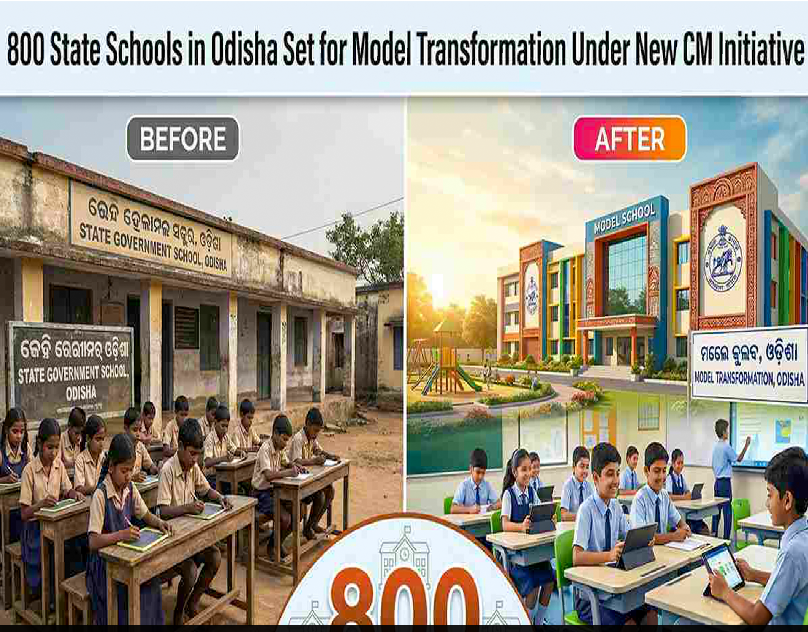
In a decisive move to elevate the quality of school education, the Government of Odisha has announced an ambitious plan to transform approximately 800 schools into model educational institutes. The initiative, articulated by Chief Minister Mohan Charan Majhi, is positioned as a cornerstone of the state’s broader educational reform agenda, aimed at modernising infrastructure, enhancing pedagogy and fostering holistic development among students. The transformation will be undertaken under the centrally sponsored PM Schools for Rising India (PM SHRI) scheme, a flagship initiative designed to create exemplary schools that reflect the aspirations of the National Education Policy 2020. Through this programme, Odisha seeks not only to improve academic outcomes but also to redefine the purpose and experience of schooling itself.
A Strategic Push Towards Educational Excellence
The decision to upgrade 800 schools reflects a deliberate and strategic effort to address systemic challenges within the state’s education sector. By focusing on selected institutions and transforming them into model schools, the government aims to create centres of excellence that can serve as benchmarks for others.
According to official statements, these schools will be equipped with modern infrastructure, digital learning tools and smart classrooms, ensuring that students have access to contemporary educational resources. The emphasis on innovation and technology integration is particularly significant, as it aligns with global trends in education and prepares students for a rapidly evolving knowledge economy.
The initiative is not merely about physical upgrades; it represents a comprehensive approach to educational reform. By combining infrastructure development with pedagogical innovation, the programme seeks to create a more engaging and effective learning environment.
Reimagining the Classroom Experience
One of the defining features of the initiative is its focus on transforming the classroom experience. Traditional modes of teaching, often characterised by rote learning and limited interaction, are set to be replaced with more dynamic and student-centric approaches.
Smart classrooms, digital content and interactive teaching methodologies will play a central role in this transformation. These tools are expected to enhance student engagement, facilitate experiential learning and encourage critical thinking.
Furthermore, the integration of technology into education is likely to bridge gaps in access to quality learning resources, particularly in rural and underserved areas. By providing students with exposure to digital platforms and innovative teaching methods, the initiative aims to create a more equitable educational landscape.
Beyond Academics: A Holistic Vision
A notable aspect of the Chief Minister’s address was the emphasis on education as a tool for life-building rather than merely a pathway to employment. This perspective reflects a broader shift in educational philosophy, one that prioritises holistic development over narrow academic achievement.
The upgraded schools will focus not only on academic excellence but also on instilling values such as discipline, ethics and social responsibility. As highlighted during the announcement, schools play a crucial role in shaping character and nurturing well-rounded individuals.
In today’s competitive and rapidly changing world, the importance of skills such as creativity, innovation and adaptability cannot be overstated. By incorporating these elements into the curriculum, the initiative aims to prepare students for the challenges and opportunities of the future.
Strengthening Institutional Capacity
The success of any educational reform depends not only on infrastructure but also on the strength of human resources. Recognising this, the Odisha government has undertaken significant efforts to bolster its teaching workforce.
In recent years, approximately 20,000 teachers have been appointed, with plans underway to recruit an additional 45,000 educators. This expansion of the teaching workforce is expected to address existing gaps and improve the overall quality of classroom instruction.
The availability of well-trained and motivated teachers is essential for the effective implementation of new pedagogical approaches. As such, teacher training and professional development are likely to play a critical role in the success of the model school initiative.
Financial Commitment and Policy Alignment
The scale of the initiative is underscored by the substantial financial commitment made by the state government. A provision of over ₹31,997 crore has been allocated for the school and mass education department in the 2026–27 budget, reflecting a strong emphasis on strengthening the education sector.
This investment is indicative of the government’s recognition of education as a key driver of social and economic development. By prioritising education in its budgetary allocations, Odisha is positioning itself to achieve long-term gains in human capital development.
The initiative also aligns closely with the objectives of the National Education Policy 2020, which advocates for experiential learning, multidisciplinary education, and the integration of technology. The PM SHRI scheme, under which the transformation will take place, embodies these principles and provides a structured framework for implementation.
Addressing Regional Disparities
One of the critical challenges in India’s education system is the disparity between urban and rural schools. In many cases, students in rural areas lack access to quality infrastructure, trained teachers and advanced learning resources.
By selecting schools across different regions for transformation, the Odisha government aims to address these disparities and ensure more equitable access to quality education. The model schools are expected to serve as hubs of excellence, demonstrating best practices that can be replicated across the state.
This decentralised approach to educational reform is particularly important in a state with diverse geographical and socio-economic contexts. It ensures that the benefits of the initiative are not confined to urban centres but extend to rural and remote areas as well.
The Role of PM SHRI Schools
The PM SHRI scheme plays a central role in the implementation of this initiative. Designed to create high-quality schools that embody the principles of NEP 2020, the scheme focuses on providing a safe, inclusive and stimulating learning environment.
Under this framework, schools are equipped with robust infrastructure, modern teaching tools, and a wide range of learning experiences. The goal is to nurture students into engaged, productive and socially responsible citizens.
By adopting this scheme, Odisha is leveraging a nationally recognised framework to drive its educational reforms. This not only ensures consistency with national priorities but also enables the state to benefit from central support and expertise.
Expanding the Vision: Primary Education and Beyond
In addition to upgrading existing schools, the state government has also announced plans to establish Godabarish Mishra Adarsh Primary Schools in every panchayat. This initiative aims to strengthen foundational education and ensure that quality learning begins at the earliest stages.
The focus on primary education is particularly significant, as it lays the foundation for all subsequent learning. By investing in early education, the government is addressing one of the most critical aspects of the education system.
Together, these initiatives reflect a comprehensive and multi-layered approach to educational reform, encompassing both primary and secondary levels.
Challenges and Implementation Considerations
While the initiative holds considerable promise, its success will depend on effective implementation and sustained commitment. Challenges such as infrastructure development, teacher training and the integration of technology will need to be addressed systematically.
Ensuring that the upgraded schools maintain high standards over time will also be crucial. This will require continuous monitoring, evaluation and support from both state and central authorities.
Additionally, the success of the initiative will depend on the active participation of stakeholders, including teachers, students, parents and local communities. Building a sense of ownership and engagement among these stakeholders will be essential for achieving long-term impact.
A Transformative Step Forward
The plan to transform 800 schools into model educational institutes represents a bold and forward-looking initiative by the Odisha government. It reflects a clear recognition of the pivotal role that education plays in shaping the future of individuals and societies. By combining infrastructure development, pedagogical innovation and a focus on holistic learning, the initiative has the potential to bring about meaningful and lasting change in the state’s education system.
Conclusion
As Odisha embarks on this ambitious journey, the transformation of 800 schools stands as a testament to its commitment to educational excellence and inclusive growth. The initiative not only addresses immediate challenges but also lays the foundation for a more resilient and future-ready education system. In an era where education is increasingly seen as a catalyst for development, such initiatives are both timely and necessary. If implemented effectively, the model school programme could serve as a blueprint for other states, contributing to the broader goal of transforming education across India. Ultimately, the success of this initiative will be measured not merely by the number of schools upgraded, but by the lives it transforms: students empowered with knowledge, skills and values to navigate an ever-changing world.