TS DOST 2026 Phase 1 Allotment Result Released Online
TS DOST 2026 Phase 1 Allotment Result Released as Telangana Degree Admissions Enter Crucial Stage
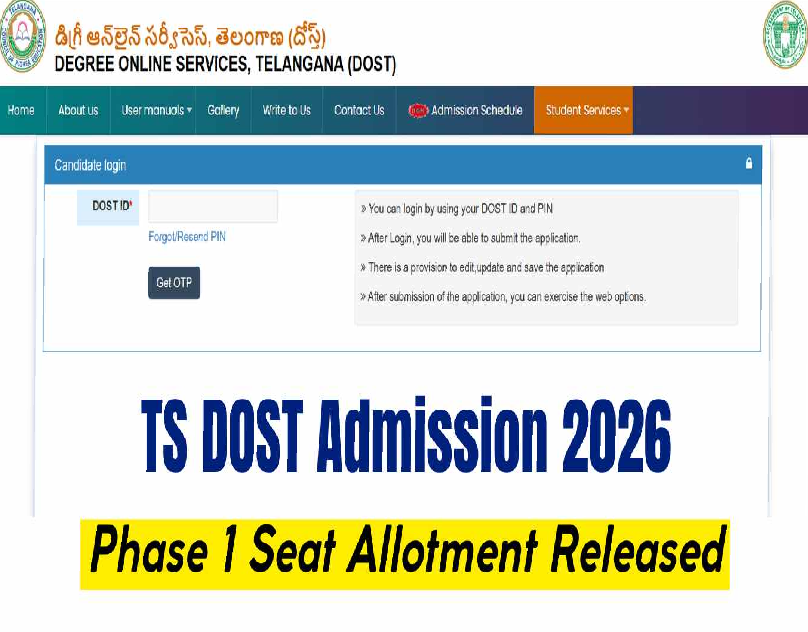
The Telangana State Council of Higher Education (TSCHE) officially released the TS DOST 2026 Phase 1 seat allotment results on May 14, marking a significant milestone in the undergraduate admission process across the state. Students who participated in the first phase of the Degree Online Services Telangana (DOST) counselling process were able to access their allotment status through the official portal, dost.cgg.gov.in, using their login credentials.
The release of the allotment results initiated one of the most decisive stages of Telangana’s centralised undergraduate admission system, as thousands of students across the state began confirming their seats, reviewing allotted colleges and preparing for the next phase of the academic admission cycle.
With undergraduate admissions increasingly shifting towards integrated digital counselling systems, TS DOST has emerged as one of India’s more structured state-level online admission frameworks, streamlining admissions into degree colleges affiliated with participating universities throughout Telangana.
A Major Step in Telangana’s Undergraduate Admission Process
The TS DOST admission platform functions as a single-window online system for undergraduate admissions into a wide range of degree programmes, including BA, B.Com, B.Sc, BBA, BCA, BBM, BSW and vocational courses offered by participating colleges and universities across Telangana.
The release of the Phase 1 allotment results represented the culmination of the first counselling round, during which students exercised web options by selecting preferred colleges and courses based on eligibility and merit.
According to official details, students who secured allotments in Phase 1 were required to complete the online self-reporting process between May 15 and May 23, 2026, to confirm their allotted seats. Failure to complete the reporting formalities within the stipulated period could result in cancellation of the allotted seat.
Educational authorities emphasised that the timely completion of the self-reporting process remained mandatory for securing admission under the first phase of counselling.
Universities Participating in TS DOST
The DOST system covers admissions into several major universities and affiliated colleges across Telangana, thereby simplifying what was once a fragmented and institution-specific admission process.
Participating institutions include:
- Osmania University
- Kakatiya University
- Telangana University
- Palamuru University
- Mahatma Gandhi University
- Satavahana University
- Veeranari Chakali Ilamma Women’s University
- Jawaharlal Nehru Technological University
- Dr Manmohan Singh Earth Sciences University
- Telangana State Board of Technical Education and Training
The integration of these universities under a unified digital admission platform has significantly reduced procedural complexity for students seeking undergraduate admissions within the state.
Officials associated with the admission process noted that the system was specifically designed to improve transparency, accessibility and administrative efficiency across Telangana’s higher education landscape.
Scale of Participation Reflects Growing Dependence on Centralised Admissions
The TS DOST admission process has witnessed substantial growth in recent years, both in terms of participating institutions and student registrations. Reports indicated that nearly 978 colleges were participating in the 2026 admission cycle, collectively offering more than 4.20 lakh undergraduate seats across various disciplines.
This scale highlights the increasing reliance on centralised online counselling systems within Indian higher education. Rather than applying separately to multiple institutions, students are now able to submit a unified application, select preferences digitally and receive seat allotments through a merit-based automated process.
Education analysts observed that such systems not only simplify admissions for students but also reduce administrative duplication for universities and colleges.
The transition towards digital admissions has become particularly important in states with large student populations, where manual admission procedures often lead to delays, inconsistencies and logistical inefficiencies.
Women Emerged as a Dominant Force in Phase 1 Allotments
One of the most notable trends emerging from the Phase 1 allotment process was the significant participation and success rate of female candidates. Reports indicated that women secured more than 36,000 seats during the first phase of allotments, substantially outnumbering male students in several categories.
Educational observers interpreted this trend as a reflection of increasing female participation in higher education across Telangana. The strong representation of women in undergraduate admissions also aligned with broader national patterns, indicating improved access to higher education among female students.
The development carried particular significance in the context of social transformation, as higher education increasingly becomes central to employment opportunities, financial independence and long-term socioeconomic mobility.
Officials noted that rising enrolment among women demonstrated growing awareness regarding the importance of higher education within families across both urban and rural regions of the state.
How Students Accessed Their Allotment Results
Candidates who participated in the counselling process were instructed to visit the official TS DOST portal and log in using their DOST ID and PIN credentials to access their allotment letters.
Once logged in, students were able to view:
- Allotted college
- Course details
- Admission status
- Reporting instructions
- Fee payment information
Candidates were advised to carefully review all details mentioned in the allotment order and immediately report discrepancies, if any, to the admission authorities.
Due to heavy traffic on the official portal following the release of results, several students reportedly experienced temporary server slowdowns during the initial hours after publication. Authorities, however, assured candidates that the system remained fully operational and encouraged them to access the portal patiently.
Importance of Self-Reporting in the Admission Process
The online self-reporting stage remains one of the most crucial components of the DOST admission system. Students allotted seats in Phase 1 were required to confirm acceptance through the portal within the specified deadline.
This confirmation process effectively reserves the allotted seat and enables students to proceed towards final institutional admission procedures.
Candidates who wished to seek better allotment opportunities in subsequent phases were also allowed to participate in further counselling rounds while retaining eligibility under the prescribed rules.
Educational experts observed that the self-reporting mechanism enhances procedural clarity by ensuring that only genuinely interested candidates retain allotted seats, thereby reducing seat wastage during subsequent rounds.
Phase 2 Registration and Counselling Also Commenced
Alongside the publication of the Phase 1 allotment results, the authorities simultaneously initiated the Phase 2 registration process for TS DOST 2026 admissions. The second-phase registration reportedly began on May 15 and was scheduled to continue until May 25.
Students who were not allotted seats in the first phase, or those seeking better course and college options, became eligible to participate in the next round of counselling.
The second phase of web option entry was also activated, allowing students to revise or newly submit preferences for subsequent allotments. This multi-phase structure ensures broader accommodation opportunities within Telangana’s undergraduate admission framework.
Digital Counselling and the Future of Higher Education Admissions
The TS DOST model represents a broader transformation taking place within India’s higher education admission ecosystem. Increasingly, states are adopting centralised digital counselling systems to improve transparency, minimise procedural inefficiencies and provide students with easier access to admission opportunities.
Education policy analysts have frequently argued that such systems reduce the burden of repetitive applications, simplify merit-based allocation and improve institutional coordination.
At the same time, the effectiveness of online systems continues to depend heavily on internet accessibility, digital literacy and technological infrastructure, particularly for students from rural or economically disadvantaged backgrounds.
Authorities associated with the DOST process have repeatedly emphasised the importance of maintaining accessible support systems to ensure that students across all regions can participate effectively in the admission process.
Closing Remarks
The release of the TS DOST 2026 Phase 1 allotment results marked a critical stage in Telangana’s undergraduate admission cycle, bringing clarity and direction to thousands of students preparing to enter higher education.
Beyond the immediate procedural significance, the admission process also reflected broader developments within India’s educational landscape, particularly the growing reliance on digital governance, centralised counselling systems and technology-driven academic administration.
With Phase 2 registrations already underway and additional counselling rounds scheduled in the coming weeks, the admission cycle remains dynamic and competitive. For students across Telangana, however, the first allotment represented far more than a digital notification; it marked the beginning of a new academic chapter and, for many, the first decisive step towards future professional aspirations.