Viksit Bharat 2047: Sitharaman Stresses Skilling & Inclusion
“Inclusive Growth, Large-Scale Skilling”: FM Sitharaman on Achieving Viksit Bharat 2047 Goal
In a compelling vision for India’s future, Nirmala Sitharaman, Union Finance Minister of India, emphasised that the country’s journey towards becoming a developed nation by 2047 must be anchored in inclusive growth, strong institutional frameworks, and large-scale skilling initiatives.
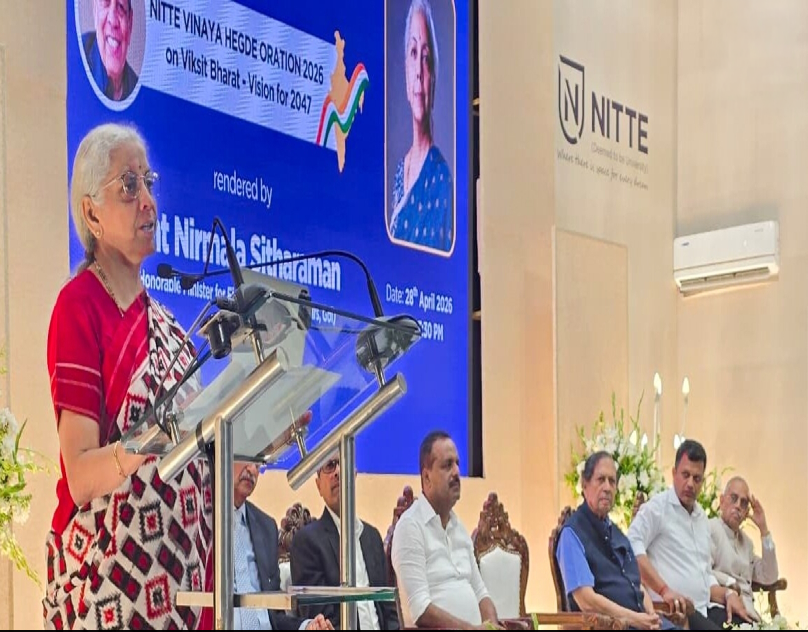
Speaking at the “Viksit Bharat- Vision for 2047” event held at NITTE University, she outlined a roadmap that goes beyond economic metrics, focusing instead on equitable development that benefits all sections of society. Her address highlighted the need for a collective national effort to transform India into a globally influential and economically robust nation.
A Vision Beyond Economic Numbers
Sitharaman underscored that India’s development cannot be measured solely through headline economic indicators such as GDP growth. While these figures are important, she stressed that true progress must reach every corner of the country, including smaller towns, rural regions, and underserved communities.
She pointed out that development must be inclusive and participatory, ensuring that the benefits of growth are shared widely. This approach is particularly significant in a diverse country like India, where disparities in access to education, employment, and resources continue to exist.
By focusing on equitable growth, the vision of Viksit Bharat aims to bridge these gaps and create opportunities for all citizens.
The Central Role of Skilling and Education
One of the key aspects highlighted in the Minister’s address was the importance of large-scale skilling. As India moves towards becoming a developed economy, the demand for a skilled workforce is expected to increase significantly.
Sitharaman emphasised that equipping individuals with relevant skills is essential not only for economic growth but also for empowering citizens to participate actively in the nation’s progress. This includes both traditional skills and emerging competencies aligned with technological advancements.
The focus on skilling also aligns with broader efforts to prepare India’s youth for global opportunities, ensuring that they remain competitive in an increasingly interconnected world.
Inclusive Growth as a National Priority
The concept of inclusive growth formed the core of Sitharaman’s message. She highlighted that development must be broad-based, reaching first-generation learners and individuals from marginalised backgrounds.
By ensuring that opportunities are accessible to all, the government aims to create a more equitable society where progress is not limited to urban centres or privileged groups.
This approach also involves strengthening social infrastructure, improving access to education and healthcare, and creating pathways for upward mobility.
A Collaborative National Effort
A significant aspect of the Minister’s address was her emphasis on collective responsibility. She stated that the vision of Viksit Bharat cannot be achieved by the government alone.
Instead, it requires a collaborative effort involving multiple stakeholders, including the central and state governments, local bodies, industry leaders, entrepreneurs, academic institutions, and citizens.
According to Sitharaman, the government’s role is to create a supportive platform through policies and infrastructure. However, the real momentum will come from the energy, innovation, and commitment of the people. This idea of shared responsibility highlights the importance of public participation in nation-building.
Strengthening Institutions for Sustainable Growth
Robust institutions are another critical component of the Viksit Bharat vision. Sitharaman emphasised the need for strong governance frameworks that ensure transparency, accountability, and efficiency.
Institutions play a vital role in maintaining stability and fostering trust, both of which are essential for sustained economic growth. By strengthening institutional capacity, India can create an environment conducive to investment, innovation, and long-term development.
India’s Global Role and Strategic Position
Looking beyond national boundaries, Sitharaman highlighted India’s potential to play a significant role on the global stage. As the world’s largest democracy, India occupies a unique position as a bridge between the East and the West, as well as between the Global North and the Global South.
She noted that a developed, stable, and democratic India would not only benefit its own citizens but also contribute positively to global stability and economic growth.
This perspective underscores the interconnected nature of modern economies and the importance of India’s growth for the wider world.
Empowering First-Generation Learners
A particularly noteworthy aspect of the Minister’s address was her focus on first-generation learners. These individuals often face unique challenges, including limited access to resources and support systems.
By prioritising their inclusion in the development process, the government aims to create a more equitable education system. This involves expanding access to quality education, providing financial assistance, and creating opportunities for skill development.
Empowering first-generation learners is essential for unlocking the full potential of India’s demographic dividend.
The Role of Innovation and Entrepreneurship
Innovation and entrepreneurship were also highlighted as key drivers of growth. Sitharaman emphasised the importance of creating an ecosystem that encourages creativity and supports new ideas.
Entrepreneurs play a crucial role in generating employment, driving technological advancements, and contributing to economic growth. By fostering a culture of innovation, India can position itself as a leader in emerging industries.
This focus on entrepreneurship aligns with broader efforts to promote start-ups and support small and medium enterprises.
Building a Future-Ready India
The vision of Viksit Bharat 2047 is not just about achieving economic milestones but also about building a future-ready nation. This involves preparing citizens to adapt to changing global trends and technological advancements.
Education, skilling, and innovation are central to this effort, ensuring that India remains competitive in a rapidly evolving world.
By investing in human capital and infrastructure, the country can create a strong foundation for long-term growth.
A Shared Vision for 2047
As India approaches the centenary of its independence in 2047, the vision of becoming a developed nation serves as a guiding goal. Sitharaman’s address reinforces the idea that this journey requires sustained effort, collaboration, and a commitment to inclusive development.
The emphasis on shared responsibility highlights the importance of collective action in achieving national objectives.
A Roadmap for Inclusive Progress
The roadmap outlined by Finance Minister Nirmala Sitharaman presents a comprehensive approach to development, as it balances economic growth with social equity and global engagement.
By focusing on inclusive growth, large-scale skilling, and strong institutions, India aims to create a model of development that is both sustainable and equitable.
As the country moves forward, the success of this vision will depend on the active participation of all stakeholders, from policymakers and industry leaders to educators and citizens.
Ultimately, the goal of Viksit Bharat 2047 represents not just an economic aspiration but a collective commitment to building a prosperous, inclusive, and globally relevant India.