CUSAT CAT 2026 Answer Key Released; Candidates Can Raise Objections Until May 17 Deadline
CUSAT CAT 2026 Answer Key Released: What Candidates Need to Know Before the Objection Deadline
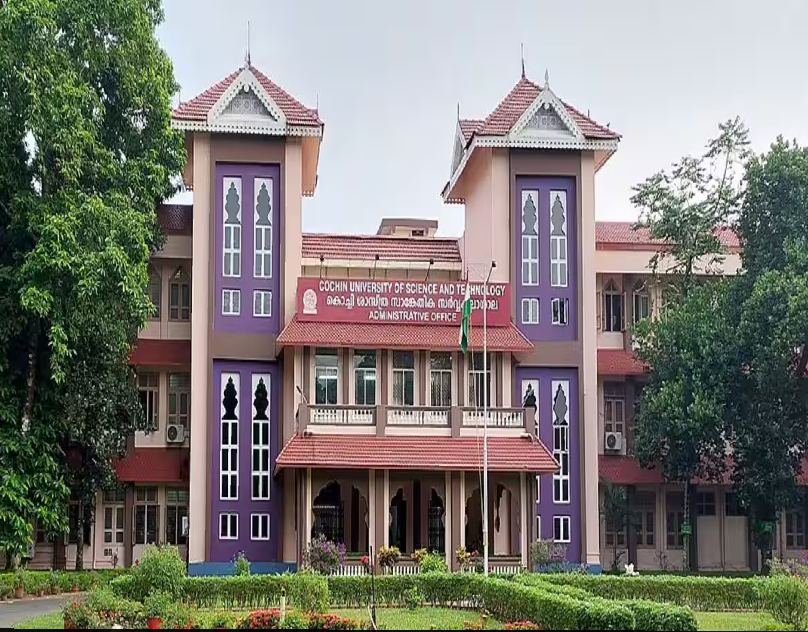
The Cochin University of Science and Technology (CUSAT) has officially released the provisional answer key for the CUSAT Common Admission Test (CAT) 2026, marking a significant development for thousands of aspirants awaiting clarity on their examination performance. Candidates who appeared for the entrance examination between May 9 and May 11 can now access the answer key, response sheet and question paper through the university’s official admissions portal. The university has simultaneously opened the objection window, enabling candidates to challenge discrepancies in the provisional answers until May 17, 2026. This phase of the admission process has become increasingly important in competitive examinations, as it offers students an opportunity to verify evaluation accuracy before final results and rank lists are announced.
A Crucial Stage in the Admission Process
For many students, the release of the answer key represents the first meaningful indication of where they stand after weeks or months of preparation. Competitive entrance examinations are often accompanied by anxiety and uncertainty, particularly when admission prospects depend on relatively small differences in marks and rank.
By publishing the provisional key and inviting objections, CUSAT is following a transparent evaluation framework that has become standard practice among major universities and national testing agencies. The mechanism allows candidates to compare their recorded responses against the officially released answers and identify potential discrepancies before results are finalised.
The university has clarified that objections must be submitted exclusively through the online candidate portal within the stipulated deadline. Challenges submitted after May 17 will not be considered for review. Candidates are also required to upload documentary evidence or academic justification supporting their objections.
How Candidates Can Access the Answer Key
Students can download the provisional answer key by logging into the official admissions website using their registered email ID and password. Once logged in, candidates are able to view the question paper, their recorded responses and the corresponding answer key for their examination paper.
The university has incorporated the objection submission feature directly into the candidate dashboard, simplifying the challenge process. This integrated system is intended to streamline verification while ensuring that all objections are recorded digitally and reviewed systematically.
Educational institutions across India have increasingly adopted online answer-key review systems to reduce procedural delays and improve transparency. For candidates, this not only creates confidence in the evaluation process but also provides an opportunity to estimate scores before the official declaration of results.
Scale and Significance of CUSAT CAT
The CUSAT Common Admission Test continues to remain one of Kerala’s prominent university entrance examinations, attracting applicants from across the country. According to reports, more than 55,000 candidates registered for CAT 2026, including approximately 47,000 applicants for undergraduate programmes and nearly 7,700 for postgraduate admissions.
The examination was conducted across 121 centres, with venues both within and outside Kerala, including cities such as Bengaluru, Chennai, and Delhi. The widespread participation reflects the growing national visibility of CUSAT’s academic programmes, particularly in engineering, marine sciences, technology, law and interdisciplinary studies.
Over the years, the university has cultivated a strong reputation for specialised technical education and research-driven programmes. Courses related to marine engineering, naval architecture, shipping technology and applied sciences continue to attract substantial competition.
Examination Pattern and Evaluation Structure
CUSAT CAT 2026 was conducted as a computer-based examination. The assessment pattern varied according to the programme and test code selected by candidates. Engineering aspirants were primarily evaluated in Physics, Chemistry and Mathematics, while other streams included subject-specific combinations relevant to their chosen disciplines.
This year’s examination also reflected modifications in the marking pattern. Reports indicate that candidates were awarded four marks for every correct response, while one mark was deducted for every incorrect answer.
Negative marking significantly influences score calculations in competitive examinations. Consequently, candidates are advised to estimate their scores carefully while using the provisional answer key. A minor difference in attempted responses can meaningfully alter rank outcomes, particularly in highly competitive programmes.
The university has stated that only objections supported by valid evidence will be reviewed before the release of the final answer key. Once the review process concludes, the revised answer key will serve as the basis for result preparation and all-India rank allocation.
Student Anxiety and Digital Crowding
As with many large-scale entrance examinations, the release of the answer key generated heavy traffic on the admissions portal. Online discussions among candidates reflected concerns regarding login delays, response-sheet access and score calculations.
Several students on online forums discussed difficulties accessing the candidate portal due to increased traffic immediately after the answer key became available. Others shared tentative score estimates and speculated about expected ranks based on previous admission trends.
One candidate on a discussion forum remarked that repeated logins were required before the response sheet loaded properly, while another expressed uncertainty about whether their projected score would be sufficient for admission into preferred programmes.
Although such discussions remain unofficial, they reveal the emotional intensity associated with competitive entrance examinations. For many students, the period between answer-key release and final result declaration can become particularly stressful, especially when counselling timelines and alternative admission options are simultaneously approaching.
Why the Objection Window Matters
The objection mechanism is not merely procedural. In recent years, answer-key challenges have occasionally resulted in revised evaluations, corrected responses and changes in candidate rankings across various entrance examinations in India.
Experts frequently argue that provisional answer keys strengthen institutional accountability because they allow students to participate directly in the verification process. Instead of relying solely on internal evaluation, universities invite academic scrutiny from candidates themselves.
This system also reduces the likelihood of post-result disputes. By addressing contested questions before results are declared, examination authorities are able to finalise rankings with greater credibility and transparency.
For candidates, however, the challenge process requires careful judgment. Submitting objections without strong academic evidence rarely influences evaluation outcomes. Subject experts typically review only those objections supported by authoritative references, standard textbooks or accepted academic reasoning.
What Happens After the Final Answer Key
Once the objection window closes on May 17, the university will examine all valid challenges before publishing the final answer key. The CUSAT CAT 2026 results and all-India ranks are expected to be announced thereafter through the official admissions portal.
Although the university has not officially confirmed the exact result date, several reports suggest that the rank list may be released in the coming weeks, likely around June 2026.
Following the declaration of results, the admission process will move into counselling and seat allotment phases. Candidates will be required to complete option registration, document verification and programme selection procedures based on rank and eligibility.
Students are therefore advised to keep all relevant documents ready, including admit cards, educational certificates, category certificates where applicable and identity proof required during counselling.
The Broader Context of Competitive Admissions
The intense focus surrounding CUSAT CAT reflects a broader reality within India’s higher education system. Entrance examinations have become highly competitive gateways to quality public education, particularly in engineering and professional programmes.
Universities such as CUSAT occupy a distinctive position because they combine comparatively affordable tuition structures with established academic credibility. This balance continues to attract students seeking strong technical education without the financial burden often associated with private institutions.
As admission competition intensifies nationwide, transparency in examination systems becomes increasingly important. Mechanisms such as provisional answer keys, online objections, and digital response verification are gradually becoming essential components of fair evaluation practices.
For now, candidates who appeared for CUSAT CAT 2026 remain focused on one immediate priority: reviewing their responses carefully before the objection window closes. The coming weeks will determine not only ranks and admissions, but also, for many students, the direction of their academic and professional future.