End of UGC, Two Board Exams, and Global Campuses: How India’s Education System Transformed in 2025
The year 2025 will be remembered as one of the most transformative periods for India’s education sector. From sweeping legislative reforms and examination overhauls to the entry of foreign universities and Indian institutes expanding overseas, the sector underwent structural and philosophical changes. These developments reflected India’s twin goals: improving domestic educational governance while positioning itself as a global higher education hub.
At the same time, the year also exposed long-standing stress points—student mental health, examination pressure, and the dominance of coaching culture—that demanded urgent institutional attention. Together, these shifts reshaped how education is regulated, delivered, assessed, and experienced in India.
VBSA Bill Signals the End of UGC and Fragmented Regulation
The most consequential development of 2025 came with the Union Cabinet’s approval of the Viksit Bharat Shiksha Adhikshan (VBSA) Bill, 2025, formerly known as the Higher Education Commission of India (HECI) Bill. This legislation proposes to dismantle India’s long-standing regulatory architecture by replacing three major bodies—the University Grants Commission (UGC), the All India Council for Technical Education (AICTE), and the National Council for Teacher Education (NCTE)—with a single overarching authority.
The intent behind the VBSA Bill is to streamline governance, reduce regulatory overlap, and ensure uniform academic standards across institutions. Accreditation, quality assurance, and academic oversight would be brought under one umbrella, potentially simplifying compliance for universities and colleges.
However, the new body will not have the power to allocate grants, which will remain with the central government. The Bill also introduces stricter penalties for non-compliance, signalling a tougher regulatory stance even as the system is simplified. Supporters see this as a long-overdue reform, while critics caution against excessive centralisation of power.
Board Exams Go Flexible as Assessment Reforms Deepen
School education also saw significant reform, particularly in how students are assessed. In line with the National Education Policy’s emphasis on flexibility and reduced exam stress, the Central Board of Secondary Education (CBSE) formally introduced a twice-a-year board examination system for Class 10 students.
Under this model, students are allowed multiple attempts within the same academic year to improve their scores, reducing the high-stakes nature traditionally associated with board exams. The reform aims to shift the focus from one-time performance to continuous improvement.
Looking ahead, CBSE also proposed introducing open-book assessments in two board exams starting in 2026. These assessments are designed to test conceptual understanding, analytical thinking, and application of knowledge rather than rote memorisation, marking a significant departure from conventional examination formats.
NTA Revamp Attempts to Restore Trust After Exam Leaks
Competitive entrance examinations remained under intense scrutiny in 2025. Following a series of alleged paper leaks in 2024, the National Testing Agency (NTA) faced mounting criticism over the credibility of high-stakes exams such as NEET and JEE.
In response, the government constituted the Radhakrishnan Committee, whose recommendations led to a comprehensive overhaul of NTA’s examination processes. Reforms included tighter security protocols, revamped question paper distribution systems, enhanced digital safeguards, and stricter monitoring of examination centres.
These measures were aimed at restoring public confidence in exams that determine access to medical and engineering colleges for millions of students. While the structural fixes were welcomed, concerns around exam-related stress and fairness continued to dominate public discourse.
Coaching Centres and Student Mental Health Face National Scrutiny
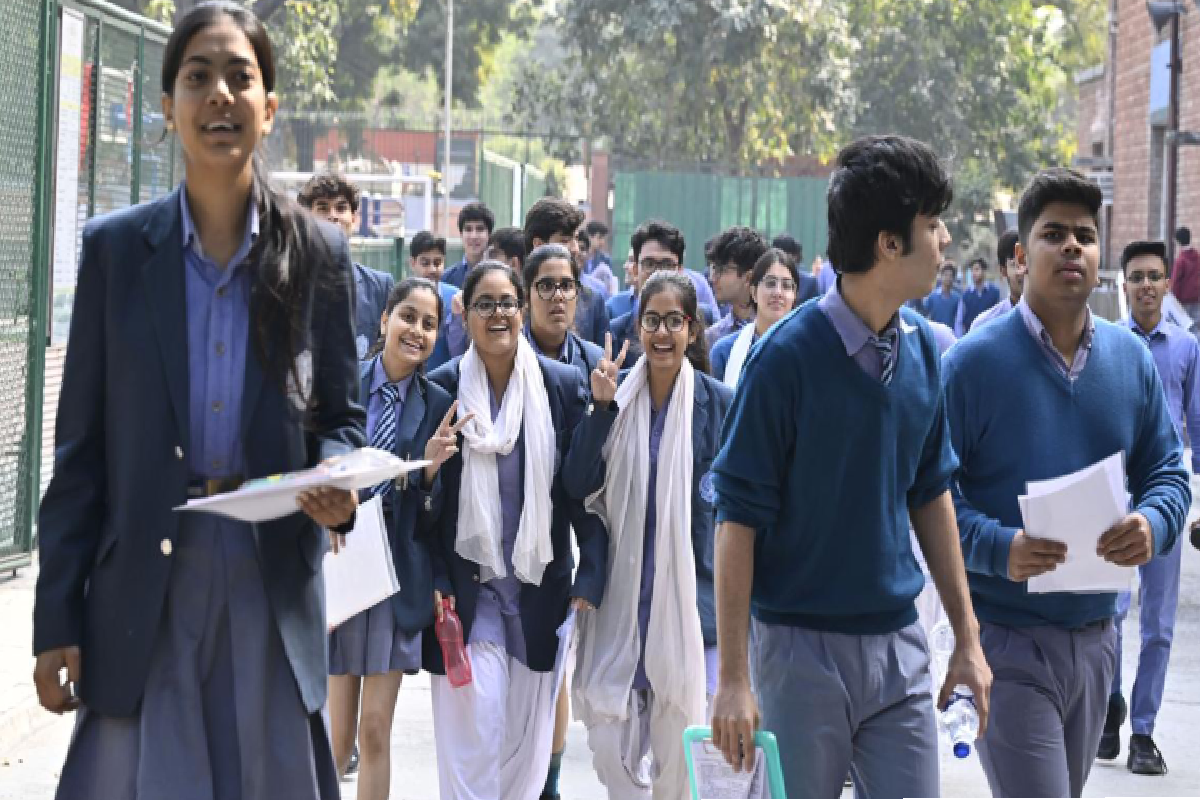
The relentless pressure of competitive exams brought student mental health into sharp focus. A parliamentary panel announced a detailed review of India’s rapidly expanding coaching centre industry, particularly in relation to exams like JEE, NEET, UPSC, and other national-level tests.
The panel sought to examine the “pressure-cooker” culture fostered by intense competition, the commercialisation of coaching, and the increasing use of technology and AI-driven learning tools. This scrutiny followed repeated reports of student suicides, especially in coaching hubs such as Kota, and across engineering and medical campuses.
The Supreme Court also intervened, mandating the registration of FIRs in suspected cases and directing the formation of a National Task Force to address mental health concerns in educational institutions. The task force launched a dedicated portal and conducted nationwide surveys to identify systemic stressors, marking one of the most coordinated responses to student well-being in recent years.
Foreign Universities and Indian Institutes Go Global
Internationalisation emerged as a defining theme of higher education in 2025. The UGC approved seventeen foreign universities to establish campuses in India, signalling a new phase of academic globalisation. Nine universities from the United Kingdom were among those expected to set up operations, reflecting growing international confidence in India’s regulatory environment.
Prominent institutions such as the University of New South Wales, the University of Liverpool, and the University of York announced campuses in cities like Bengaluru and Mumbai. These campuses promised globally recognised degrees at significantly lower costs compared to studying abroad, expanding access to international education for Indian students.
At the same time, India also began exporting its own premier institutions. IITs and IIMs announced plans to establish campuses overseas, reinforcing India’s ambition to become both a destination and a provider of world-class education.
Curriculum Revisions and Indian Knowledge Systems Return to Focus
Curriculum changes sparked debate throughout the year, particularly revisions introduced by NCERT. New Class 7 textbooks expanded discussions on the Ghaznavid invasions and highlighted the origins of algebra and mathematical concepts in ancient India, prompting both academic interest and political debate.
In another significant move, NCERT and UGC initiated efforts to integrate Ayurveda and traditional Indian knowledge systems into school and college curricula, especially in health education. Supporters viewed this as an attempt to bridge traditional wisdom with modern education frameworks, while critics called for rigorous scientific grounding.
A Year That Redefined Indian Education
Taken together, the reforms of 2025 marked a decisive shift in India’s educational philosophy—towards flexibility, accountability, global integration, and student-centric governance. While challenges around stress, equity, and implementation remain, the year laid the foundation for a fundamentally reimagined education system, one that aims to balance global ambition with local relevance.