IIM Visakhapatnam Opens EMBA Admissions for Professionals Seeking Leadership in a Digital Economy
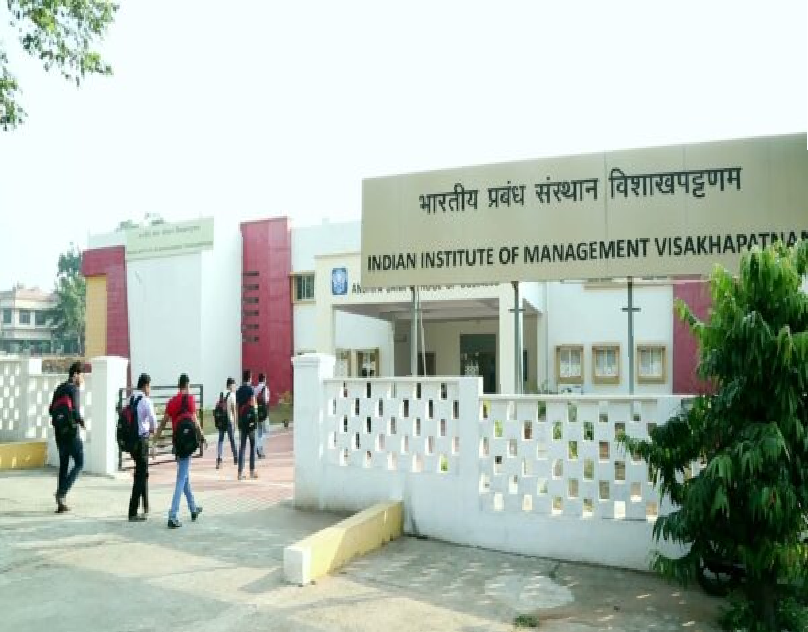
In a significant development within India’s evolving management education ecosystem, the Indian Institute of Management Visakhapatnam has announced the opening of admissions for its Executive Master of Business Administration (EMBA) programme. Designed with a clear focus on experienced professionals, the initiative reflects the growing demand for flexible, high-impact management education that aligns with the complexities of contemporary business environments.
At a time when industries are undergoing rapid transformation driven by technology, globalization, and shifting market dynamics, the need for leaders who can navigate uncertainty and drive strategic change has never been more pronounced. The EMBA programme at IIM Visakhapatnam seeks to address precisely this need, offering a carefully structured academic experience that blends foundational management principles with advanced leadership training.
A Programme Tailored for Working Professionals
The Executive MBA at IIM Visakhapatnam has been conceptualised specifically for working professionals who aspire to elevate their careers without interrupting their professional commitments. Unlike traditional full-time programmes, this offering recognises the constraints and aspirations of mid-career executives, providing them with an opportunity to upskill while remaining embedded within their organisations.
Spanning a duration of two years and structured across six academic terms, the programme is designed to deliver both depth and breadth in management education. The curriculum reflects a comprehensive approach, encompassing key domains such as Marketing, Economics, Finance and Accounting, Organisational Behaviour, Human Resources, Information Systems, Production and Operations, Strategy and Entrepreneurship.
This multidisciplinary framework ensures that participants develop a holistic understanding of business functions, enabling them to engage with complex organisational challenges from multiple perspectives.
Bridging Theory and Practice
A defining feature of the programme lies in its emphasis on integrating theoretical knowledge with practical application. In today’s data-driven and innovation-led economy, decision-making is increasingly reliant on analytical rigour and the ability to interpret complex information.
The EMBA curriculum, therefore, places strong emphasis on data-driven decision-making and analytical thinking. Participants are encouraged to develop the capacity to translate insights into actionable strategies, thereby enhancing their effectiveness within organisational contexts.
Equally significant is the programme’s focus on critical thinking, emotional intelligence, and judgement-driven decision-making. These competencies, often overlooked in conventional academic frameworks, are essential for leadership in environments characterised by ambiguity and rapid change.
Leadership for the Digital Age
The programme’s orientation towards contemporary business challenges is particularly evident in its focus on technology and digital transformation. As organisations increasingly integrate digital tools into their operations, leaders must possess not only technical awareness but also the strategic acumen to leverage these technologies effectively.
The EMBA at IIM Visakhapatnam seeks to equip participants with the skills required to navigate such transformations. By combining insights from technology and strategy, the programme enables professionals to lead organisations through periods of disruption and innovation.
This alignment with emerging industry trends underscores the institute’s commitment to relevance, ensuring that its graduates are prepared to meet the demands of a rapidly evolving business landscape.
A Pedagogical Model Rooted in Flexibility
One of the most distinctive aspects of the programme is its delivery model, which combines digital and in-person learning. The institute employs a state-of-the-art Interactive Learning (IL) platform operating under a Direct-to-Device (D2D) model, allowing participants to attend sessions remotely.
This approach offers a high degree of flexibility, enabling professionals from diverse geographical locations to participate without relocating. At the same time, the programme incorporates two five-day on-campus modules, providing opportunities for face-to-face interaction, networking and collaborative learning.
The hybrid nature of the programme reflects a broader shift in higher education towards blended learning models, which seek to combine the convenience of digital platforms with the richness of in-person engagement.
Academic Rigour and Professional Growth
The EMBA programme is anchored in a commitment to academic rigour, with a curriculum designed to challenge participants intellectually while fostering practical competence. The inclusion of subjects such as strategy, entrepreneurship and organizational behaviour ensures that participants are not only equipped with technical knowledge but also with the ability to lead and innovate.
Professor Abhishek Srivastava, Chairperson of the EMBA programme, emphasised that the initiative reflects the institute’s dedication to enabling experienced professionals to transition into enterprise-wide leadership roles. He highlighted the programme’s blend of rigorous fundamentals and contemporary perspectives, particularly in areas such as strategy, technology and sustainability.
This combination of academic depth and practical relevance positions the programme as a valuable platform for professional advancement.
Networking and Peer Learning
An often underappreciated dimension of executive education is the opportunity for peer learning. Participants in EMBA programmes typically bring diverse professional experiences, spanning industries, functions and organisational contexts.
The structure of the programme at IIM Visakhapatnam is designed to facilitate such interactions. The on-campus modules, in particular, provide a setting for participants to engage with peers, exchange ideas and build professional networks.
These interactions not only enrich the learning experience but also contribute to the development of a collaborative mindset, an essential attribute in today’s interconnected business environment.
Recognition and Alumni Status
Upon successful completion of the programme, participants are awarded an Executive MBA degree along with alumni status from IIM Visakhapatnam.
This dual recognition carries considerable significance. The degree itself serves as a testament to the participant’s academic achievement, while alumni status provides access to a network of professionals and resources that can support ongoing career development.
In the context of India’s competitive professional landscape, such affiliations can play a pivotal role in enhancing career prospects and facilitating long-term growth.
The Broader Context of Executive Education
The launch of admissions for the EMBA programme must also be viewed within the broader context of executive education in India. As organisations seek to remain competitive in an increasingly complex global economy, the demand for skilled managers and leaders continues to rise.
Institutions such as IIM Visakhapatnam are responding to this demand by offering programmes that cater specifically to experienced professionals. By combining academic excellence with practical relevance, these programmes contribute to the development of a workforce capable of driving innovation and organisational success.
The emphasis on flexibility, interdisciplinary learning, and leadership development reflects a recognition that traditional models of education may no longer suffice in addressing the needs of modern professionals.
A Forward-Looking Initiative
The opening of admissions for the Executive MBA programme represents a forward-looking initiative by IIM Visakhapatnam. It acknowledges the evolving nature of work and the need for continuous learning in an era defined by rapid change.
By providing a platform that integrates academic rigour with practical application, the programme offers professionals an opportunity to enhance their capabilities and expand their horizons. At the same time, it reinforces the institute’s position as a key contributor to India’s management education landscape.
Conclusion
The announcement of EMBA admissions by the Indian Institute of Management Visakhapatnam marks a significant step in the advancement of executive education in India. With its comprehensive curriculum, flexible delivery model and emphasis on leadership and innovation, the programme is well positioned to meet the needs of contemporary professionals.
In an increasingly complex and dynamic business environment, the ability to adapt, lead, and innovate is paramount. Programmes such as this not only equip individuals with the necessary skills but also contribute to the broader objective of building resilient and forward-thinking organisations.
As professionals consider the next steps in their careers, initiatives like the EMBA at IIM Visakhapatnam serve as a reminder that learning is not a finite endeavour but a continuous journey, one that evolves in tandem with the challenges and opportunities of the modern world.