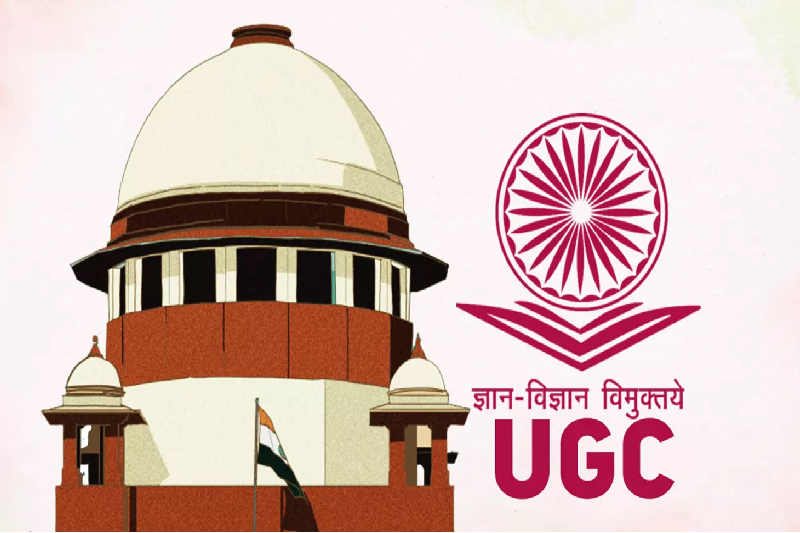
Supreme Court Turns Spotlight on Private Universities: Centre, States, and UGC Asked to Reveal Operations
In a landmark move, the Supreme Court of India has expanded a single student grievance into a nationwide inquiry into the governance, funding, and functioning of private, non-government, and deemed-to-be universities. The Court has directed the Centre, all state and Union Territory governments, and the University Grants Commission (UGC) to file personally affirmed affidavits detailing the origin, management, finances, and compliance mechanisms of all such institutions in the country.
This extraordinary step addresses questions that millions of students and parents have silently asked for years: Who runs these universities? How did they acquire land and approvals? Who monitors their operations? And where does the money students pay actually go?
How the Case Began
The matter originated with a petition by Ayesha Jain (formerly Khushi Jain), who alleged harassment and academic disruption after changing her name. Her grievance centered on Amity University, Noida, which reportedly did not update her official records and denied her attendance, causing the loss of an academic year.
Initially, the Supreme Court directed the President of the Ritnand Balved Education Foundation (the trust behind Amity) and the Vice-Chancellor of Amity University to personally submit affidavits. While they complied, the Bench observed that the case raised broader systemic issues about the governance of private universities across India, prompting the nationwide scrutiny.
Although the name change involved a transition from a traditionally Hindu name to a Muslim one, the Court did not frame the case as a religious issue. Instead, the events highlighted administrative opacity that could affect students regardless of personal circumstances.
What the Supreme Court Wants
The Apex Court has asked governments and the UGC to produce a foundational dossier for every private, non-government, and deemed university in India. This includes:
- Legal foundation: The precise law or provision under which the university was established, and the circumstances of its approval.
- State benefits: Details of land allotments, concessions, and preferential treatments received over the years, along with the conditions attached.
- Governance: Information on the founding societies or trusts, their aims, objectives, top decision-making bodies, and appointment processes.
- Compliance and functioning: How universities follow their own rules and UGC regulations in practice.
In effect, the Court is demanding what should have been publicly available all along: a transparent origin story for every private and deemed university in India.
UGC Under the Microscope
The Supreme Court has set particularly strict expectations for the UGC, asking it to clearly outline:
- The actual rules private universities must follow.
- The mechanisms used to monitor compliance.
- Audit processes and oversight systems.
- Consequences for non-compliance.
Notably, the UGC Chairman must personally affirm the affidavit, with no delegation allowed. This ensures accountability at the highest level of the regulator.
Everyday Operations in Focus
The Court is also examining routine but crucial university processes:
- Admissions: How students are selected and enrolled.
- Faculty recruitment: Criteria and processes for hiring academic staff.
- Governance checks: Oversight mechanisms that ensure institutional actions align with regulations and norms.
While administrative, these processes are central to the student experience and are often cited in complaints about inconsistency or opacity in private universities.
Testing the ‘No-Profit, No-Loss’ Claim
One of the most significant areas of scrutiny is the widely touted “no-profit, no-loss” model. Many private universities advertise themselves as non-profit institutions, but the Supreme Court wants clear verification:
- Do these institutions genuinely operate on a no-profit basis?
- Are funds diverted to founders, family members, unrelated assets, or personal perks?
- Are salaries, benefits, and expenditures consistent with academic objectives?
The Court’s tone suggests skepticism. A truly non-profit institution should maintain a clear, transparent financial trail. Any discrepancies could challenge the legitimacy of longstanding claims.
Grievance Redressal: A Key Concern
The Supreme Court has emphasized the need for functional grievance redressal mechanisms for both students and staff. Universities must demonstrate:
- That complaint systems exist and are accessible.
- That they operate independently of administrative bias.
- That complaints are resolved in a timely and effective manner.
This focus stems directly from Ayesha Jain’s experience. Her struggle with administrative delays and denial of attendance is reflective of the issues many students face, highlighting the urgent need for robust grievance systems.
Personal Liability for Accuracy
To ensure truthfulness and completeness, the Supreme Court has ordered that the Cabinet Secretary, all State and UT Chief Secretaries, and the UGC Chairman must personally affirm their affidavits. No subordinate official may sign on their behalf. The Court has warned that any misstatement, suppression, or misrepresentation will attract strict consequences.
A Litmus Test for Indian Higher Education
The Supreme Court’s directive represents a rare intervention in India’s higher-education landscape. For decades, private universities have operated in a gray zone between regulation and autonomy, benefiting from opacity and public demand for degrees.
By requiring personally affirmed affidavits from top officials, the Apex Court has redefined accountability. Governments and the UGC must now explain not only what exists on paper but also what happens in practice.
This move could mark the beginning of much-needed structural hygiene in the private higher-education sector. However, its long-term impact will depend on the accuracy of disclosures and the Court’s willingness to act on the findings.
Why This Matters
For students and parents, this scrutiny could provide answers to longstanding questions:
- Who really controls these universities?
- How are land and permissions granted?
- Are fees being used appropriately, or diverted elsewhere?
- Do grievance systems function effectively?
For regulators and policymakers, it emphasizes that private does not mean unaccountable. The Supreme Court’s insistence on transparency could create a benchmark for governance, compliance, and operational integrity across the sector.
For the first time, India’s highest court has forced the education ecosystem to confront uncomfortable truths: private status does not exempt institutions from public accountability. How governments and the UGC respond, and how rigorously the Court enforces compliance, could reshape private higher education in India for years to come.