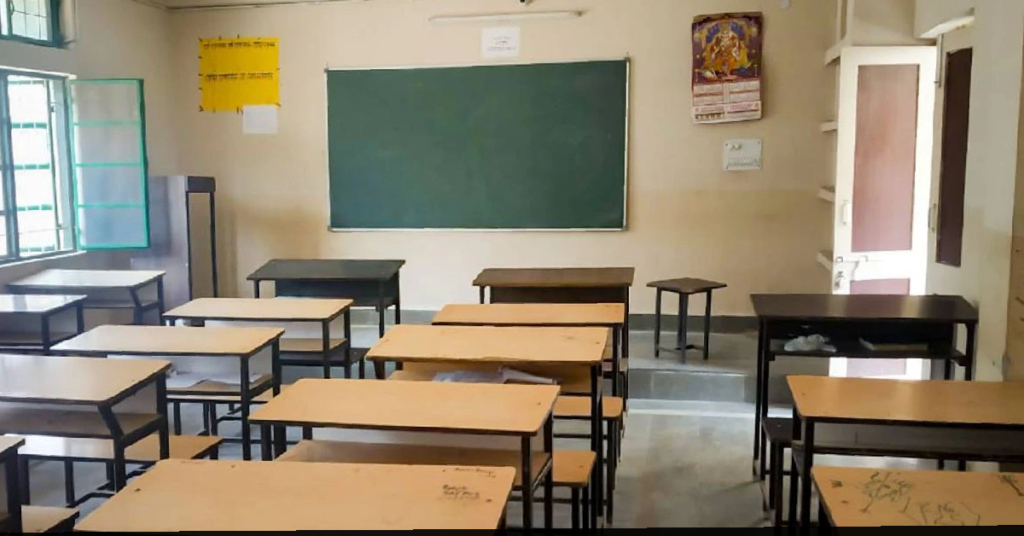

For thousands of students across Karnataka, missing an admission deadline has often meant paying an additional financial penalty, adding stress to an already challenging transition from school to higher secondary education. Beginning with the 2026-27 academic session, however, this burden will no longer exist in government Pre-University (PU) colleges. The Karnataka Department of School Education and Literacy has officially abolished the late admission penalty fee system, marking a significant policy shift aimed at making higher secondary education more accessible, equitable and transparent. The decision represents far more than the removal of a fee. It reflects the government’s intention to strengthen administrative accountability while ensuring that students are not financially disadvantaged because of procedural delays or exceptional personal circumstances. For parents, educators and policymakers alike, the move is being viewed as an important step towards a more student-friendly education system.
Why Was the Penalty Fee Removed?
Until now, students seeking admission to First and Second PU courses after the prescribed deadline were required to pay a penalty fee before their admissions could be regularised. While the provision was originally introduced to discourage delayed admissions and maintain administrative discipline, authorities observed that the system was increasingly being misused.
According to the Department of School Education and Literacy, certain institutions reportedly relied on the penalty mechanism to regularise admissions that had not followed the prescribed procedures. Instead of functioning as an exceptional provision, the late admission fee gradually became a routine administrative practice in some colleges.
Recognising these concerns, the department decided to withdraw the penalty fee system altogether and instructed government PU colleges to adhere strictly to the officially notified admission schedule. Institutions will now be expected to complete admissions within the stipulated timelines without depending on financial penalties to legitimise delayed enrollments.
Key Highlights of the Reform
- Effective from the 2026-27 academic session, late admission penalty fees have been abolished in all government Pre-University (PU) colleges across Karnataka.
- No additional charges will be levied on students seeking admission after the prescribed deadline under the revised policy.
- The reform aims to make higher secondary education more accessible, affordable and equitable for all learners.
- Government PU colleges have been directed to strictly adhere to the official admission schedule and follow departmental guidelines.
- The policy seeks to strengthen institutional accountability by discouraging the misuse of late admission regularisation.
- Students affected by medical emergencies, migration, delayed examination results or documentation issues will no longer face an added financial burden.
- The initiative is expected to benefit economically weaker families, rural students and first-generation learners, while promoting greater participation in higher secondary education.
A Relief for Students and Parents
The abolition of late admission penalties comes as welcome relief for families already coping with rising educational expenses. Admission to higher secondary education often coincides with the purchase of textbooks, uniforms, transportation arrangements and coaching expenses. Even a relatively modest additional fee can become a burden for economically weaker households.
Students may also face unavoidable circumstances that delay admissions. Delayed examination results, migration from another state, medical emergencies, or family issues can all disrupt the admission process. Under the earlier system, such students often had to bear an additional financial cost despite circumstances beyond their control.
By removing the penalty, the government has acknowledged that access to education should not become more expensive simply because of procedural delays.
Strengthening Administrative Accountability
The reform is equally significant from an administrative perspective. Rather than allowing delayed admissions to be regularised through financial penalties, the government is placing greater emphasis on institutional responsibility.
Government PU colleges have now been instructed to follow the admission calendar meticulously and ensure that every admission complies with departmental guidelines. This shifts accountability from students to educational institutions, encouraging more efficient planning and better record management.
Such measures also improve transparency, reducing opportunities for procedural irregularities while reinforcing public confidence in the admission process.
Supporting Greater Educational Access
Karnataka has consistently focused on improving participation in higher secondary education, recognising the importance of Class 11th and Class 12th education as the bridge between school and university.
The state has witnessed increasing enrollment in PU colleges, particularly following improved SSLC results and growing awareness among families regarding the importance of higher education. Removing unnecessary financial barriers aligns with broader efforts to encourage students to continue their education instead of discontinuing their academic journey after Class 10.
For rural students, first-generation learners and economically disadvantaged families, even minor policy reforms can significantly improve educational accessibility.
Implications for Karnataka PU Admissions
The new policy is expected to positively influence Karnataka PU admissions by making the admission process more student-centric. Students who require additional time because of documentation issues, transfers or exceptional personal circumstances will no longer face an added financial burden.
However, it is equally important to understand that abolishing penalty fees does not imply unlimited flexibility. Colleges are still expected to complete admissions within the officially prescribed timelines, and students should continue to apply as early as possible.
The reform therefore balances flexibility with administrative discipline, ensuring that educational institutions maintain orderly admissions while avoiding unnecessary financial penalties.
Click below to watch the video.
A Reflection of Student-Friendly Governance
Across India, education departments are increasingly recognising that administrative systems should facilitate learning rather than create avoidable obstacles. Karnataka’s decision reflects this broader philosophy.
Instead of viewing late admissions solely as disciplinary concerns, the government has chosen to prioritise student welfare while simultaneously tightening institutional oversight. Such an approach aligns with contemporary educational governance, where transparency, accessibility and inclusivity are becoming central policy objectives.
The reform also demonstrates how relatively small administrative changes can produce meaningful benefits for thousands of students every year.
Implementation and Future Impact
As the 2026-27 academic session approaches, government PU colleges across Karnataka will begin implementing the revised admission framework. The success of this initiative will depend not only on the removal of the late admission penalty fees but also on the effective enforcement of admission schedules and institutional accountability.
If implemented efficiently, the reform could become a model for other states seeking to simplify admission procedures without compromising administrative standards.
Ultimately, education policies should reduce barriers rather than create them. Karnataka’s latest decision reinforces the principle that every deserving student should have the opportunity to pursue higher secondary education without being penalised for circumstances that may be beyond their control.
For students and parents, this is more than a financial concession; it is a reassuring signal that educational governance is becoming increasingly responsive to their needs. As similar reforms continue to emerge across the country, initiatives like these strengthen the vision of an education system that is fair, accessible and focused on learner success, exactly the kind of development that deserves attention on EducationTodayNews.