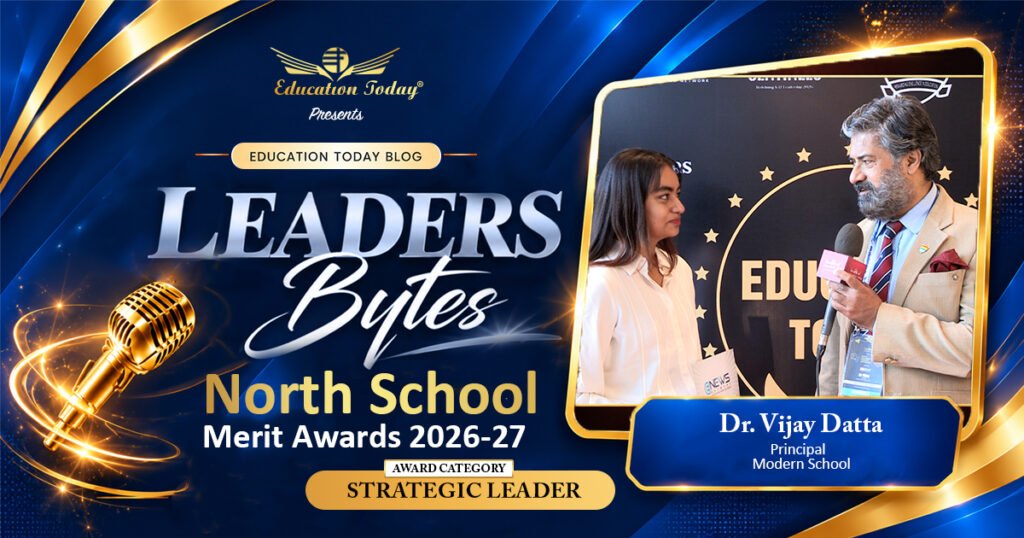
As part of the North Educators’ Summit & Awards 2026, Dr. Vijay Datta, Principal of Modern School, was featured in a leadership interaction highlighting the role of school leadership in shaping meaningful educational experiences.
Effective educational leadership extends beyond academic performance to creating an environment where students can develop critical thinking, creativity, confidence, and a sense of responsibility. As education continues to evolve, school leaders play an important role in fostering innovation, supporting teachers, and ensuring that learning remains relevant to students’ changing needs. A forward-looking school environment must balance academic rigour with holistic development, preparing learners to navigate future challenges with adaptability and purpose.
Strong educational leadership is about building learning environments where academic excellence and holistic student development go hand in hand.
The statement captures an important priority for contemporary school education: developing capable, confident and responsible learners. It also highlights the significance of leadership in creating a school culture that values continuous improvement, meaningful learning and student growth.
This feature also offers readers of EducationToday a perspective on the ideas and priorities shaping school education.
Educational leadership involves guiding schools, supporting teachers, and creating an environment that promotes effective teaching and learning.
Strong educational leadership helps improve school management, support educators, and enhance students’ learning experiences.
School education continues to evolve with changing teaching approaches, technology, student needs, and expectations.
School leaders can adapt through continuous learning, collaboration, innovation, and effective planning.
School leaders help shape the future by encouraging innovation, supporting teachers, and building student-focused learning environments.