Vocational education is gaining greater recognition across India as governments seek to create stronger links between academic learning and industry-ready skills. In a significant policy decision, the Goa government has announced that students who complete Class 10th plus ITI through a two-year programme will now be considered academically equivalent to Class 12th. The move is expected to expand opportunities for higher education and employment while reinforcing the value of skill-based learning. EducationTodayNews explores what this decision means for students and the future of vocational education.
Goa Grants Academic Equivalency to ITI Students
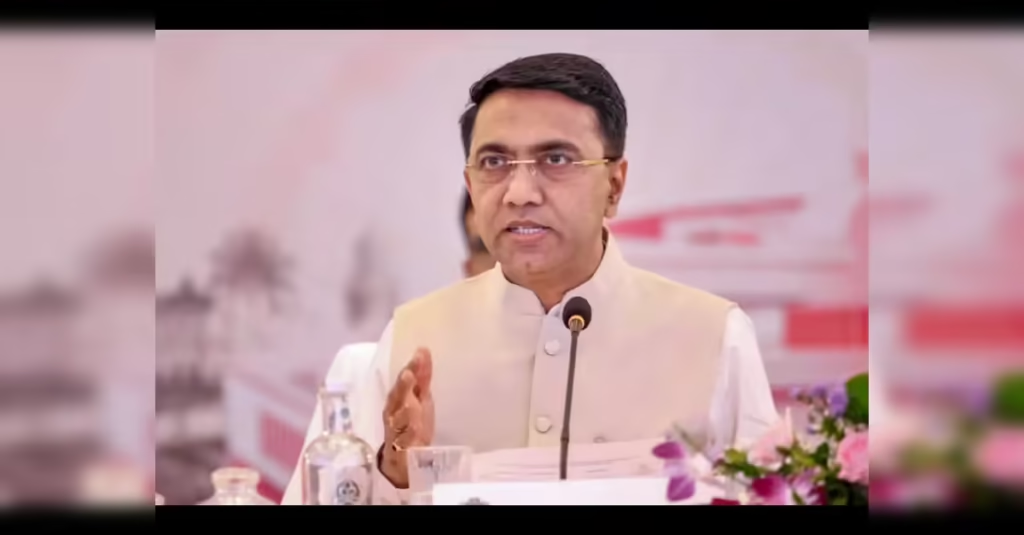
The Goa government has approved the recognition of students who complete Class 10th followed by a two-year ITI programme as equivalent to Higher Secondary (Class 12th). The decision aims to ensure that vocational learners receive academic recognition comparable to that of students who follow the conventional higher secondary route.
This equivalency will enable eligible students to apply for higher education programmes and recruitment opportunities where a Class 12th qualification is required, subject to the eligibility conditions of individual institutions and organisations.
The announcement reflects a growing emphasis on creating flexible educational pathways that support both academic and vocational learning.
Why This Policy Is Significant
For many years, ITI graduates possessed valuable technical knowledge but often faced challenges because their qualifications were not recognised as equivalent to Class 12th. This limited their access to several undergraduate programmes and employment opportunities. The new policy bridges this gap by acknowledging vocational education as an equally important route to career development. It also supports India’s broader objective of promoting skill-based education alongside traditional academic qualifications.
Key Benefits for Students
The decision offers several advantages for vocational learners.
- Greater access to higher education
- Improved eligibility for government recruitment
- Recognition of vocational qualifications
- Better long-term career prospects
- More flexibility in educational choices
- Increased encouragement for students to pursue technical training
These benefits are expected to strengthen confidence in vocational education among students and parents.
Understanding the Role of Industrial Training Institutes
Industrial Training Institutes provide practical training across a wide range of technical trades, preparing students for employment in sectors such as manufacturing, construction, electrical services, automotive technology and information technology. Unlike conventional academic programmes, ITIs focus heavily on hands-on learning, helping students develop practical skills that meet current industry requirements. By recognising ITI education as equivalent to Class 12th, the Goa government has highlighted the importance of technical expertise in today’s workforce.
New Opportunities for Higher Education
One of the most important outcomes of the policy is the expansion of academic opportunities for ITI graduates.
Students recognised under the new equivalency system can apply for various undergraduate courses, provided they satisfy the admission requirements of the respective universities or colleges.
This creates a smoother transition from vocational education to higher studies and encourages continuous learning throughout a student’s career.
Supporting India’s Skill Development Vision
India has consistently promoted skill development as a key driver of economic growth and employment generation. Recognising vocational qualifications within the mainstream education framework supports this objective by encouraging students to acquire practical expertise without sacrificing future academic opportunities. The Goa government’s initiative demonstrates how vocational and academic education can complement one another rather than exist as separate pathways.
Career Opportunities Beyond Technical Training
Academic equivalency provides vocational learners with greater flexibility when planning their future.
Students may now be able to:
- Pursue undergraduate degree programmes
- Apply for competitive examinations requiring Class 12th eligibility
- Continue specialised professional education
- Explore entrepreneurial opportunities
- Enhance career growth through advanced technical qualifications
These options allow students to combine practical skills with higher education, creating broader career prospects.
Click below to watch the video.
A Positive Step for Vocational Education
The decision sends a strong message about the growing importance of vocational education in India. For many years, academic qualifications were often regarded as the preferred route, while technical education received comparatively less recognition.
By formally acknowledging the educational value of ITI qualifications, the Goa government has taken an important step towards reducing this perception gap. The policy encourages students to choose learning pathways based on their interests, abilities and career goals rather than social expectations.
It also reflects the changing needs of industries that increasingly require skilled professionals with practical expertise.
What Students Should Keep in Mind
Students intending to benefit from the new policy should remain informed about the detailed implementation guidelines issued by the Goa government and the relevant educational authorities.
They should also:
- Confirm eligibility before applying for higher education
- Keep all academic and vocational certificates safe
- Follow university admission notifications carefully
- Seek guidance from their ITI institutions regarding available opportunities
- Stay updated with official government announcements
Being aware of these requirements will help students make informed decisions regarding their educational and professional journeys.
A Progressive Reform for Future Learners
The Goa government’s decision to recognise Class 10th plus ITI as equivalent to Class 12th marks an important milestone for vocational education in India. By giving technical education formal academic recognition, the policy removes barriers that have long limited the opportunities available to ITI graduates.
The reform is expected to improve access to higher education, broaden employment prospects and encourage more students to pursue skill-based learning with confidence. As India continues to strengthen its focus on workforce development and practical education, initiatives such as this demonstrate how vocational qualifications can play an equally important role in building successful careers.
With greater flexibility, enhanced academic recognition and improved career pathways, the policy has the potential to benefit thousands of students while contributing to a stronger and more inclusive education system.