Table of Contents
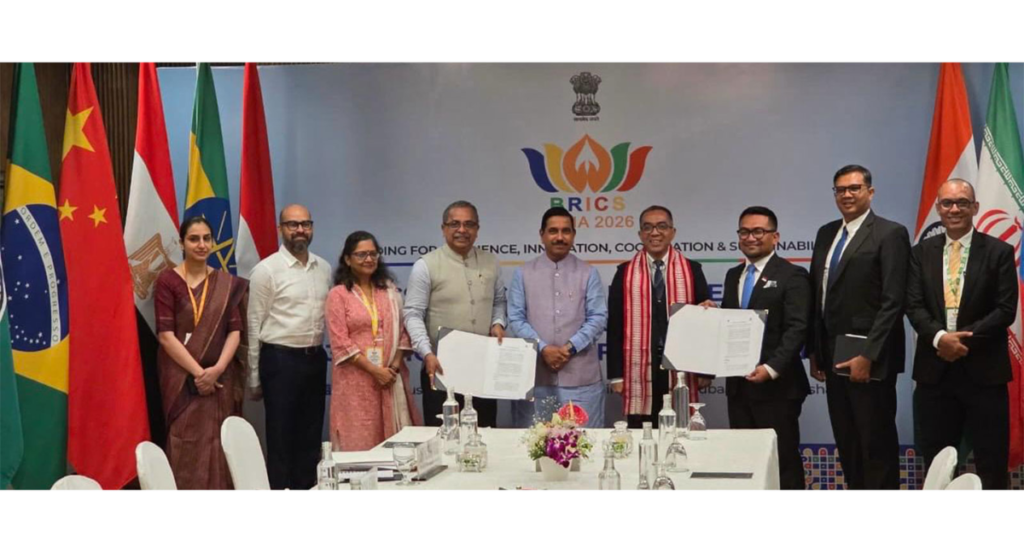
India’s higher education sector is strengthening its international research networks, with the Indian Institute of Technology Madras (IIT Madras) and Indonesia entering into a landmark partnership focused on research, innovation and deep technologies. The Memorandum of Understanding (MoU) was signed between the IIT Madras Global Research Foundation (IITM Global) and Indonesia’s Ministry of Higher Education, Science and Technology.
The agreement, announced on 7th August 2026, aims to create stronger links between the research and innovation ecosystems of India and Indonesia. It brings together IIT Madras’ expertise in advanced research and technology with Indonesia’s national priorities in higher education, science and innovation.
The partnership is significant as it moves beyond conventional academic exchange and places collaborative research, entrepreneurship, talent development and deep technology at the heart of bilateral cooperation.
Strengthening India-Indonesia Academic Ties
The new agreement reflects the growing importance of international partnerships in higher education. Universities are increasingly working across national boundaries to share expertise, develop technologies and address complex challenges that cannot be solved by individual institutions alone.
IIT Madras has developed a strong ecosystem connecting academic research with industry, entrepreneurship and technology development. Its research and innovation infrastructure provides opportunities for researchers and entrepreneurs to transform scientific ideas into practical applications.
For Indonesia, collaboration with a leading Indian technology institution offers an opportunity to strengthen connections between its higher education system and advanced research capabilities. The partnership can potentially create new avenues for researchers, students and entrepreneurs from both countries to work together.
This wider India-Indonesia collaboration also adds an important higher education dimension to the relationship between the two countries.
What the MoU Covers
The partnership focuses on several areas intended to strengthen research capacity, innovation and technology development.
Key areas include:
- Collaborative research and development involving researchers and institutions from both countries
- Promotion of innovation and entrepreneurship
- Development and commercialisation of deep technologies
- Talent development and knowledge exchange
- Support for technology-driven ventures
- Greater cooperation between higher education and research ecosystems
The broad scope of the agreement indicates that the partnership is intended to create practical outcomes rather than remain limited to institutional exchanges.
Deep Technology Takes Centre Stage
One of the most notable elements of the MoU is its focus on deep technology. Deep-tech ventures generally depend on substantial scientific research and engineering expertise and can require considerable time and investment before reaching commercial maturity.
This makes universities and research institutions particularly important to the deep-tech ecosystem. They provide laboratories, specialised knowledge, researchers and intellectual property that can help transform complex scientific concepts into viable technologies.
IIT Madras has been actively strengthening its deep-tech ecosystem through research, entrepreneurship and industry engagement. Its research infrastructure has supported the development of technology-based ventures across different areas, while its wider innovation ecosystem connects researchers with entrepreneurs and industry.
The new partnership with Indonesia could extend this ecosystem internationally by creating opportunities for researchers and innovators to collaborate on advanced technological solutions.
From Research to Real-World Applications
Generating research is only one part of the innovation process. Converting research findings into useful technologies, products and services is equally important.
The MoU’s emphasis on commercialisation could help address this challenge. Successful commercialisation often requires collaboration between researchers, entrepreneurs, investors, industries and policymakers.
A promising research idea may need prototype development, testing, intellectual property protection, investment and industry partnerships before it can become a market-ready solution. International collaboration can bring together different capabilities and resources at each stage of this process.
For India and Indonesia, this could open opportunities to develop technologies relevant to shared regional challenges while also creating new possibilities for technology-led enterprises.
Creating Opportunities for Students and Researchers
The success of any research partnership ultimately depends on the people involved. Students, researchers, engineers and entrepreneurs will play a central role in translating the objectives of the MoU into tangible outcomes.
International research partnerships can give students and scholars exposure to different academic environments, research methods and technological ecosystems. They can also encourage interdisciplinary collaboration, which is particularly important in deep-tech fields.
Many emerging technologies require expertise from several disciplines. Engineering, artificial intelligence, computer science, biotechnology, materials science and other specialised fields may need to work together to develop commercially viable solutions.
Greater interaction between Indian and Indonesian researchers could therefore contribute to a more internationally connected talent pool.
Why This Matters for Higher Education
The partnership comes at a time when the role of universities is changing rapidly. Higher education institutions are no longer viewed only as centres of teaching and academic research. They are increasingly expected to contribute to innovation, entrepreneurship, economic development and national problem-solving.
This evolution makes international research partnerships particularly valuable. Such agreements can help institutions share infrastructure, expertise and knowledge while giving researchers access to wider networks.
For emerging economies, partnerships between institutions in the Global South can be especially significant. They allow countries to exchange knowledge and develop solutions that reflect regional requirements rather than relying exclusively on models developed elsewhere.
The IIT Madras-Indonesia agreement demonstrates how higher education can become an important component of broader international cooperation.
A Growing Focus on Innovation-Led Education
The development also offers an important lesson for the education sector. As technology becomes increasingly central to economic growth, institutions will need to prepare students for careers that combine strong academic foundations with research, innovation and problem-solving skills.
For EducationToday, this development reflects a wider transformation taking place across higher education. Universities are increasingly becoming innovation hubs where academic knowledge, industry partnerships and entrepreneurship come together.
Students interested in technology careers may increasingly find opportunities not only through conventional degree programmes but also through research projects, innovation centres, start-up ecosystems and international collaborations.
This shift also highlights the importance of creating an academic environment where students can experiment, conduct research and develop solutions to real-world problems.
Building a Stronger Research Partnership
The signing of the MoU provides a framework for sustained cooperation, but its long-term impact will depend on implementation. Joint research projects, talent development initiatives, innovation programmes and successful technology ventures will ultimately determine how effectively the agreement achieves its objectives.
If supported by sustained institutional commitment, the partnership could strengthen research capabilities in both countries while encouraging greater movement of ideas, expertise and technology across borders.
The agreement also demonstrates the potential of international higher education partnerships to contribute to economic development. By linking academic research with entrepreneurship and commercialisation, universities can play a more direct role in developing future technologies.
As India and Indonesia deepen their engagement in higher education and research, deep-tech innovation could become an important bridge between academic knowledge and practical economic solutions. The IIT Madras partnership therefore represents more than an institutional agreement. It signals a broader move towards collaborative, research-driven and innovation-focused higher education.
The MoU aims to strengthen cooperation between IIT Madras and Indonesian partners in research, innovation and deep-technology development.
Deep-tech collaboration can support research and development in advanced technologies, encourage innovation and help translate scientific research into practical applications.
The collaboration could facilitate joint research projects, academic exchanges, knowledge sharing and opportunities to work on technology-focused initiatives.
It can strengthen institutional ties, promote cross-border research and encourage greater cooperation between researchers, universities and technology ecosystems in both countries.
The partnership can support emerging technology and deep-tech research areas, with specific projects and areas of cooperation depending on the institutions involved.