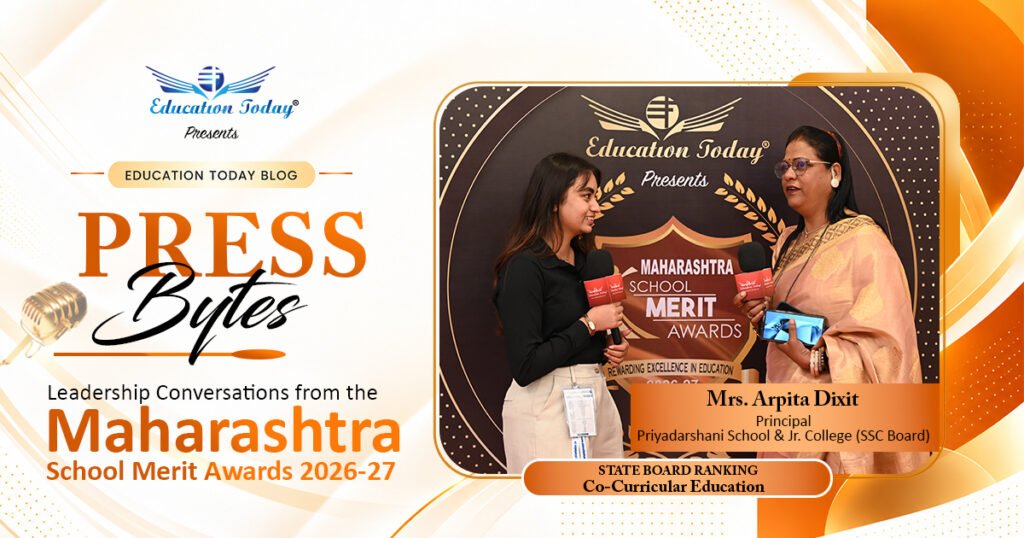
Educator Mrs. Arpita Dixit, Principal of Priyadarshini School & Junior College (SSC Board), Pune, expressed her happiness at receiving an EducationToday Award after her institution was recognised as number one in co-curricular activities in the state board category at the Maharashtra Educators’ Summit and Awards 2026.
Crediting the achievement to the collective efforts of students, parents, management, teaching staff and support teams, Mrs. Dixit emphasised that a school’s success depends on the contribution of its entire community.
Sharing a message for fellow educators, she highlighted the growing importance of addressing students’ mental health and managing screen time alongside academic learning. She urged schools to adopt a student-centred approach that recognises children’s emotional and developmental needs.
“Students should be the centre of studies. We should focus more on their mental health and screen time, rather than academics alone.”
Mrs. Dixit’s message highlights the need for a balanced approach to education, where academic achievement goes hand in hand with emotional wellbeing. As children navigate increasing digital exposure and academic expectations, schools have an important role in fostering healthy habits, providing appropriate support, and creating environments where students can thrive both inside and outside the classroom.
Mrs. Arpita Dixit is featured in a discussion highlighting the importance of prioritising student well-being alongside academic achievement.
Student well-being supports emotional health, engagement, positive relationships, and the ability to participate effectively in learning.
Schools can provide safe learning environments, encourage open communication, promote healthy routines, and make appropriate support available to students.
Emotional and physical well-being can influence concentration, motivation, classroom participation, and students’ ability to manage academic challenges.
Holistic education supports students’ intellectual, emotional, social, physical, and personal development alongside academic learning.