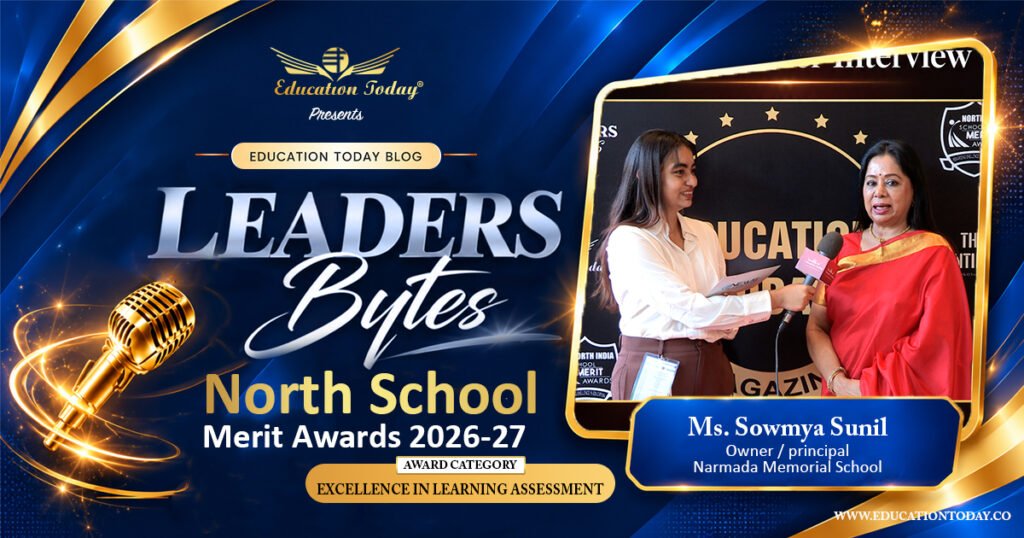
At the North Educators’ Summit & Awards 2026, Ms. Sowmya Sunil represents the institutional leadership perspective of Narmada Memorial School, highlighting the importance of creating a supportive educational environment that encourages academic progress and personal growth. The interaction reflects the broader role of school leadership in nurturing students’ abilities, strengthening values and ensuring that education prepares young learners for the opportunities and challenges ahead.
“Meaningful education builds more than knowledge; it develops the confidence, character and capabilities students need to shape their future.”
This editorially drafted statement underscores the importance of a balanced approach to school education. While academic achievement provides an essential foundation, students also need opportunities to develop critical thinking, communication skills, resilience and a sense of responsibility. School leadership plays a significant role in creating learning environments that support these qualities alongside classroom learning. By prioritising students’ overall development, educational institutions can help young people become confident, adaptable and responsible individuals who are prepared to contribute positively to society. This perspective reinforces the value of educational excellence that combines knowledge with character and lifelong learning.
This feature also offers readers of EducationToday a perspective on the ideas and priorities shaping school education.
Sowmya Sunil emphasises building strong educational foundations through holistic learning and students’ overall development.
Holistic learning focuses on the academic, emotional, social, physical, and personal development of students.
Strong foundations help students develop essential knowledge, critical thinking, confidence, and positive learning habits.
It encourages creativity, communication, problem-solving, emotional awareness, and the ability to apply knowledge in real-life situations.
Schools can combine academic instruction with experiential activities, creative learning, life skills, and value-based education.