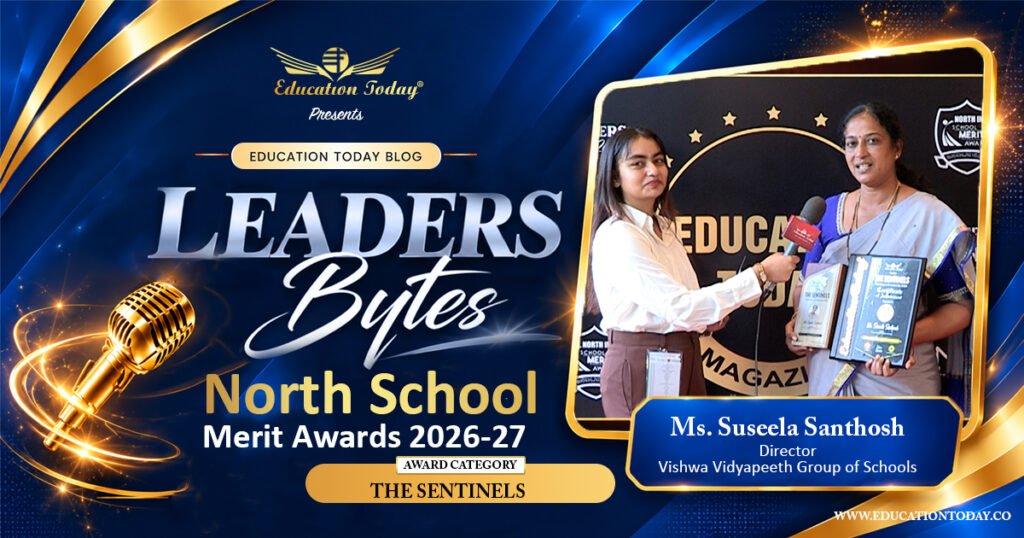
At the North Educators’ Summit & Awards 2026, Ms. Suseela Santosh represents the educational leadership perspective of Vishwa Vidyapeeth Group of Schools. The interaction provides an opportunity to explore the importance of holistic education, value-based learning, and progressive teaching practices in shaping future-ready learners. It highlights the role of school leadership in creating an environment where academic achievement is complemented by character development, creativity and independent thinking.
“Educational excellence lies in nurturing knowledgeable, compassionate and confident individuals who are prepared to make a meaningful difference in the world.”
This editorially drafted statement reflects the importance of an educational approach that balances academic rigour with personal growth and social responsibility. School leaders play a vital role in fostering learning environments that encourage curiosity, strengthen values, and help students discover their individual potential. By integrating meaningful learning experiences with essential life skills, schools can prepare learners to adapt to changing circumstances and approach future challenges with confidence. This perspective reinforces the significance of leadership that places holistic student development at the centre of educational excellence.
This feature also offers readers of EducationToday a perspective on the ideas and priorities shaping school education.
Suseela Santosh emphasises holistic and value-based learning as important approaches to achieving educational excellence.
Value-based learning integrates principles such as honesty, empathy, respect, responsibility, and integrity into the educational process.
Holistic learning supports academic achievement while nurturing students’ emotional, social, physical, and personal development.
Schools can encourage ethical behaviour, community participation, collaborative activities, and positive teacher-student relationships.
Holistic learning develops the overall potential of students, while value-based education helps them build strong character and make responsible decisions.