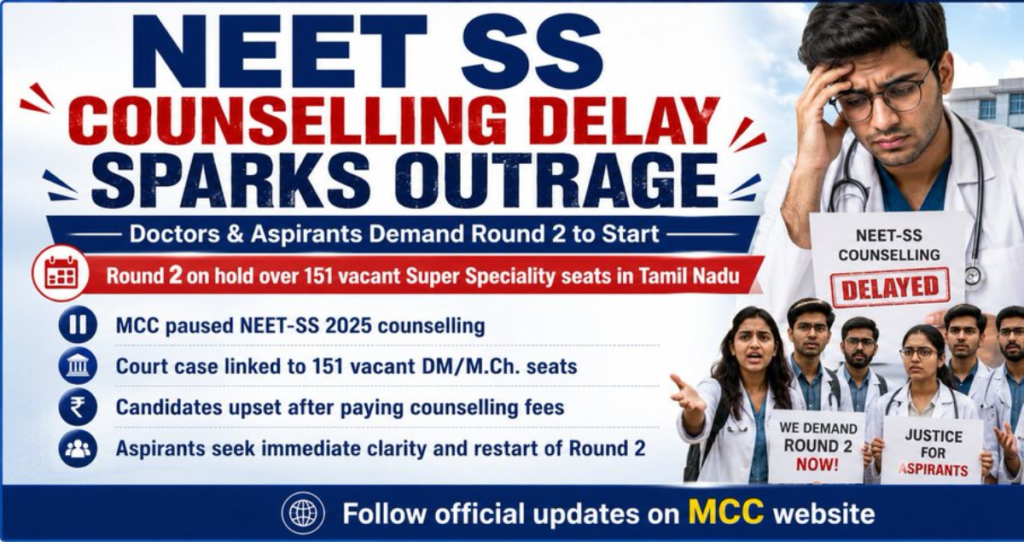
The delay in the NEET Super Speciality (NEET SS) 2025 counselling process has entered its fifth month, creating growing concerns among medical graduates waiting for admission opportunities. The Federation of All India Medical Association (FAIMA) has urged the Supreme Court and the Central government to intervene and ensure that the counselling process is completed at the earliest. The prolonged delay has left several doctors uncertain about their academic and professional future. As candidates continue to wait for a clear timeline, the issue has become a significant development in EducationTodayNews, highlighting concerns around medical education admissions and the impact of delayed counselling procedures.
NEET SS Counselling Delay Raises Concerns Among Doctors
The NEET SS examination is an important pathway for medical professionals seeking admission to super speciality courses across India. However, the counselling process for NEET SS 2025 has remained stalled for several months, causing uncertainty among candidates who have qualified for advanced medical education programmes.
According to the concerns raised by FAIMA, the continued delay is affecting hundreds of doctors who are waiting to secure seats in super speciality disciplines. The organisation has requested immediate steps from authorities to resolve the issue and prevent further disruption to the academic calendar.
The delay has also raised questions about the impact of prolonged admission timelines on medical training and workforce planning. Doctors pursuing specialised education depend on timely counselling schedules to begin their courses and continue their professional progression.
FAIMA Requests Intervention from Supreme Court and Centre
FAIMA has appealed to the Supreme Court and the Centre to take urgent measures to address the counselling deadlock. The organisation has highlighted the difficulties faced by candidates due to the absence of a confirmed admission schedule. The association has sought a fast-track resolution so that eligible candidates can proceed with their admissions without further uncertainty. The appeal reflects the growing frustration among medical professionals who have been waiting for months for the completion of the process.
Key concerns raised regarding the delay include:
- Extended uncertainty among qualified NEET SS candidates
- Disruption in the academic timeline for super speciality courses
- Challenges faced by doctors planning their future career pathways
- Need for timely intervention to complete the counselling process
Impact on NEET SS Candidates
For doctors who have successfully cleared the NEET SS examination, counselling is a crucial stage that determines their admission into specialised medical programmes. Any delay in this process directly affects their ability to begin advanced training.
Many candidates organise their professional plans based on the expected admission schedule. A prolonged delay can create difficulties related to career planning, academic commitments and future opportunities.
The uncertainty surrounding admissions also creates additional pressure for doctors who have already invested significant time and effort preparing for competitive medical examinations. Candidates are now awaiting clarity from the concerned authorities regarding the next steps.
Importance of Timely Medical Admissions
Timely completion of medical counselling processes is essential for maintaining a smooth academic cycle. Super speciality courses require structured schedules as they involve advanced training, clinical exposure and specialised learning.
Delays in admission procedures can impact not only candidates but also medical institutions responsible for conducting these programmes. A predictable counselling timeline helps institutions manage resources effectively and ensures that students receive the required training within the planned duration.
The current situation has highlighted the importance of efficient coordination between examination authorities, government bodies and other stakeholders involved in medical admissions.
Growing Demand for a Clear Counselling Timeline
As the NEET SS counselling delay enters its fifth month, candidates and medical organisations are seeking transparency regarding the expected timeline for the process. FAIMA’s request for intervention reflects the urgent need for authorities to provide clarity and complete the pending admission procedure.
A definite schedule would allow candidates to make informed decisions about their academic journey. It would also help medical institutions prepare for the upcoming academic sessions without further complications.
The issue has brought attention to the challenges that arise when admission procedures face unexpected delays. Ensuring timely communication and effective coordination remains essential to maintaining confidence among students and medical professionals.
Click below to watch the video.
Authorities’ Role in Resolving the Admission Deadlock
The resolution of the NEET SS counselling issue requires cooperation among all concerned authorities. Candidates are looking towards the government and judicial system for a solution that prioritises the completion of admissions while maintaining necessary procedures.
A swift resolution would provide relief to thousands of doctors awaiting their next academic step. It would also reinforce the importance of maintaining efficient systems for postgraduate and super speciality medical education.
The situation underlines the need for stronger mechanisms to prevent prolonged delays in future admission cycles. A well-coordinated approach can help ensure that medical professionals are not affected by uncertainties after completing highly competitive examinations.
Moving Towards a Resolution for NEET SS Candidates
The ongoing NEET SS counselling delay has created significant uncertainty for doctors aspiring to pursue super speciality education. With FAIMA urging the Supreme Court and Centre to intervene, candidates are hopeful for a timely resolution.
The completion of the counselling process remains crucial for restoring clarity and ensuring that eligible doctors can begin their specialised training without further postponement. As authorities review the matter, candidates continue to await a clear announcement regarding the next steps.
Addressing such delays effectively will be important for strengthening the medical education system and ensuring that future admission processes remain smooth, transparent and student-focused.