Adobe’s AI Impact Summit Announcement: Free Creative Cloud Access for Indian Students Signals a Transformative Moment
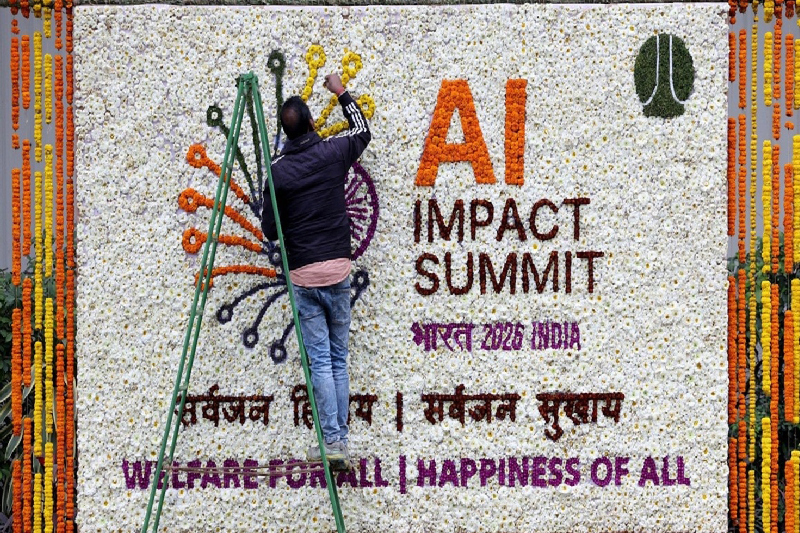
At a time when artificial intelligence is redefining the contours of creativity, productivity and employability, a significant announcement has emerged from the AI Impact Summit 2026 in New Delhi. Global technology leader Adobe has unveiled a new initiative that will provide students enrolled at accredited higher education institutions across India with free access to some of its most powerful AI-enabled applications, including Adobe Photoshop, Adobe Acrobat and Adobe Firefly.
The announcement, made during the ongoing summit at Bharat Mandapam, represents far more than a promotional offering. It signals a strategic recalibration of how digital skills, AI literacy and creative capacity are to be cultivated among India’s vast and ambitious student population.
A Strategic Investment in AI-Driven Creativity
Adobe has described the initiative as a “strategic investment” designed to accelerate AI-enabled creativity and productivity within the country. The language is deliberate. India, with its demographic advantage and rapidly expanding digital ecosystem, stands at the threshold of a new creative economy fuelled by artificial intelligence, immersive media and design-led innovation.
By extending complimentary access to industry-standard tools, Adobe is effectively lowering the barriers to participation in this evolving landscape. For many students, particularly those from institutions with limited technological infrastructure, the cost of premium creative software has historically been prohibitive. This new provision may alter that equation decisively.
Currently, Adobe offers a student subscription package in India priced at Rs. 400 for the first month and Rs. 2,714 per month thereafter. The Creative Cloud Pro student plan includes an extensive suite of applications, i.e - Photoshop, Illustrator, Premiere Pro, Acrobat Pro, Adobe Express, Firefly, After Effects, InDesign, Lightroom, Adobe XD, Audition, Animate, Dreamweaver, InCopy, Lightroom Classic, Character Animator, Capture, Adobe Fresco, Bridge, Photoshop Express, Media Encoder, Lightroom Web, Acrobat Reader, Adobe Scan and Fill & Sign.
Under the newly announced plan, key AI-powered applications - Photoshop, Acrobat and Firefly will be made available free of charge to eligible students enrolled in accredited higher education institutions across India. The implications of this gesture are profound.
Beyond Software: Embedding AI-First Learning
Crucially, this initiative is not confined to software access alone. Adobe has committed to providing structured curriculum support alongside the tools. Students will not simply receive access to powerful applications; they will be trained in their effective and responsible use.
This “AI-first” pedagogical approach underscores a growing recognition that digital tools, however sophisticated, yield meaningful outcomes only when paired with systematic instruction. The curriculum component is intended to equip learners with the competencies required to harness generative AI responsibly, understanding not merely how to create, but how to create ethically, efficiently and innovatively.
The reach of this programme is expected to be considerable. Adobe has indicated that the offer, along with its supporting curriculum, will be extended free of charge to students across 15,000 schools and 500 colleges that will house Content Creator Labs. These labs form part of a government initiative announced in the Union Budget 2026, aimed at strengthening India’s creative and digital industries.
The Government’s AVGC Vision and Industry Alignment
The Content Creator Labs initiative aligns with the government’s broader ambition to generate 20 lakh jobs in Animation, Visual Effects, Gaming and Comics (AVGC) by 2030. This sector, already buoyant, is poised for exponential expansion as global demand for digital content intensifies.
By integrating Adobe’s AI-enabled tools into this national framework, a vital bridge is formed between policy aspiration and industry execution. Students will be exposed to the same technologies employed by global creative professionals, thereby enhancing their employability and international competitiveness.
In this context, Adobe’s move may be interpreted not merely as corporate generosity but as strategic foresight. As the global creative economy becomes increasingly AI-driven, early familiarity with generative and productivity tools could determine professional trajectories for an entire generation.
Partnership with NASSCOM FutureSkills Prime
Further strengthening the initiative is Adobe’s collaboration with NASSCOM FutureSkills Prime. Through this partnership, students will gain access to AI learning courses and certifications designed to formalise and validate their digital competencies.
NASSCOM FutureSkills Prime serves as a national platform for digital upskilling, connecting learners with industry-relevant programmes in emerging technologies. By integrating Adobe’s AI-first modules into this ecosystem, students can pursue structured certifications that enhance their academic credentials and professional prospects.
This collaboration also represents an extension of the Adobe Digital Academy, i.e - Adobe’s global training and career pathway programme. The academy has historically focused on equipping learners from diverse backgrounds with practical digital skills, and its Indian expansion through FutureSkills Prime signifies a localisation of that mission.
Reimagining the Student Creative Experience
For students, the significance of this announcement extends beyond financial relief. Access to tools such as Photoshop and Firefly opens new avenues for experimentation, storytelling and entrepreneurship.
Generative AI tools like Firefly, for instance, allow users to create high-quality visual assets from text prompts, dramatically reducing the time required to conceptualise and prototype ideas. Acrobat’s AI-driven document capabilities streamline research, collaboration and content management. Photoshop’s evolving AI features enable precise image editing with unprecedented efficiency.
Together, these applications empower students not merely to consume content, but to produce it at a professional standard. Whether pursuing careers in design, marketing, journalism, architecture, engineering or education, learners stand to benefit from early exposure to such technologies.
Moreover, the democratisation of creative software may foster a broader cultural shift. Students from non-metropolitan regions, who may previously have lacked access to premium digital tools, can now participate more fully in the national creative discourse.
Bridging Academia and Industry
One of the enduring challenges in higher education has been the gap between academic instruction and industry expectation. Employers increasingly seek graduates who are not only theoretically proficient but also technologically agile.
Adobe’s initiative appears designed to narrow this divide. By embedding AI tools within the academic environment and pairing them with structured learning pathways, students can graduate with both conceptual understanding and demonstrable technical competence.
The inclusion of certifications via NASSCOM FutureSkills Prime further strengthens this bridge. Formal credentials provide tangible evidence of proficiency, enhancing employability in a competitive job market.
Economic and Societal Implications
From a macroeconomic perspective, initiatives of this nature contribute to India’s broader digital transformation agenda. As artificial intelligence becomes a central driver of productivity across sectors, early integration into educational frameworks ensures that the workforce of tomorrow is prepared for AI-augmented roles.
The government’s emphasis on AVGC employment generation reflects recognition of the sector’s export potential and cultural significance. By supporting this ambition through accessible software and curriculum integration, Adobe positions itself as both a technological enabler and an ecosystem partner.
For students, particularly those aspiring to careers in digital media, animation, gaming or design, the announcement may prove transformative. The ability to build portfolios using globally recognised tools can enhance both domestic and international opportunities.
A Measured Optimism
While the initiative is undeniably promising, its long-term impact will depend upon effective implementation. Institutional readiness, faculty training and sustained engagement will be essential to ensure that software access translates into genuine skill acquisition.
Nevertheless, the announcement at the AI Impact Summit 2026 reflects a noteworthy convergence of corporate strategy, governmental vision and educational reform. It acknowledges that the future of creativity lies at the intersection of human imagination and artificial intelligence.
In extending free access to AI-powered applications and embedding structured learning pathways, Adobe has signalled its confidence in India’s creative potential. For students across the country, this may mark not only an expansion of digital resources but the beginning of a new chapter in AI-enabled innovation.
As the summit continues at Bharat Mandapam, the broader message resonates clearly: the creative economy of tomorrow will belong to those who can harness AI thoughtfully, responsibly and imaginatively. Through this initiative, Indian students are being invited to step confidently into that future.