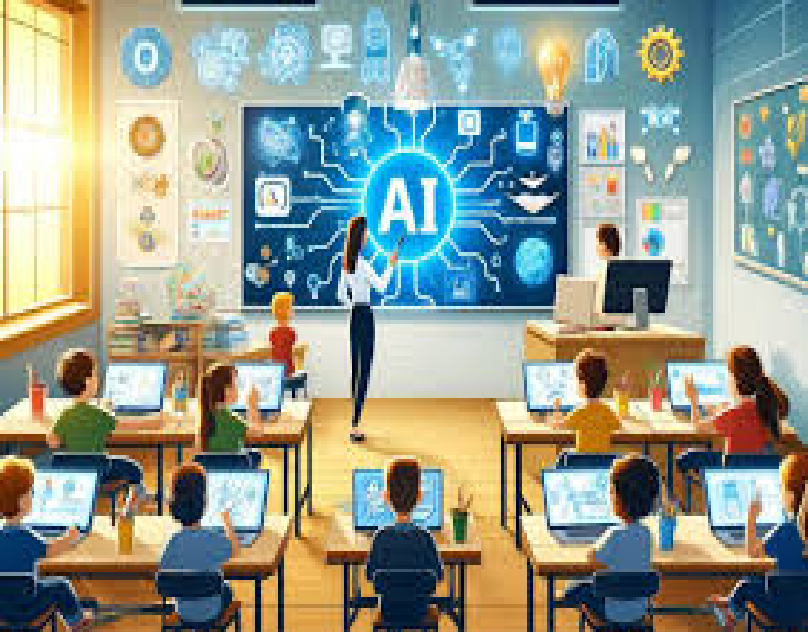
CBSE Introduces AI & Computational Thinking in Schools 2026–27
CBSE’s Landmark Shift: Artificial Intelligence and Computational Thinking Become Core Pillars of School Education (2026–27)
In a decisive move set to reshape the future of school education in India, the Central Board of Secondary Education (CBSE) has formally announced the integration of Artificial Intelligence (AI) and Computational Thinking (CT) into the curriculum for the 2026–27 academic session. The reform, aligned with the National Education Policy (NEP) 2020 and the National Curriculum Framework for School Education (NCFSE) 2023, marks a significant transition towards future-ready learning from the foundational stage of schooling.
A future-focused curriculum from Class 3 onwards
Under the new framework, students from Classes 3 to 8 will be introduced to structured learning modules in computational thinking and AI. The initiative aims to embed logical reasoning, problem-solving, pattern recognition and ethical understanding of technology into everyday learning.
Rather than treating AI as a standalone technical subject, CBSE intends to weave computational thinking across disciplines, ensuring that students develop a cross-curricular understanding of digital concepts. This approach reflects a broader educational philosophy in which technology is not isolated but integrated into the way children learn languages, mathematics and environmental studies.
For younger learners in Classes 3 to 5, the emphasis will be on foundational thinking skills, introduced through interactive, activity-based and largely unplugged methods. From Classes 6 to 8, students will gradually progress to structured exposure to AI concepts, including data literacy, basic algorithms and introductory statistical reasoning.
Aligning education with the digital age
The initiative comes at a time when digital transformation is rapidly redefining industries, workplaces and everyday life. By embedding AI education early, CBSE aims to ensure that students are not merely consumers of technology but informed participants in a digital ecosystem.
Education authorities have emphasised that the goal is not to overload students with technical complexity but to nurture curiosity, analytical thinking and responsible usage of emerging technologies. A key principle of the curriculum is also to minimise excessive screen dependency, with a strong focus on paper-based activities, group tasks and project-driven learning.
This balanced approach reflects growing concerns around digital fatigue among children while still acknowledging the necessity of technological literacy in the 21st century.
Structured implementation through training and workshops
To ensure effective rollout, CBSE has designed a multi-layered implementation strategy involving teachers, schools and regional academic bodies. The framework includes district-level workshops, expert-led training sessions and continuous professional development programmes for educators.
Teacher readiness is being positioned as a central pillar of the reform. CBSE will conduct orientation programmes through its Centres of Excellence, ensuring that educators across the country are equipped to deliver the new curriculum with confidence and consistency.
In addition, digital learning resources, handbooks and structured teaching modules are being developed to support classroom delivery. These materials are expected to be made available before the academic rollout, enabling schools to prepare for the transition.
Seven thematic pillars of learning
The AI and CT curriculum has been structured around seven key thematic areas designed to build both conceptual understanding and practical application skills. These themes include:
- Foundational computational thinking skills
- Problem-solving and logical reasoning
- Data interpretation and literacy
- Interdisciplinary applications of AI
- Real-world problem solving
- Assessment of digital understanding
- Ethical and responsible use of artificial intelligence
This thematic structure ensures that learning progresses from basic cognitive development to applied technological awareness, gradually preparing students for advanced digital competencies in higher grades.
Building ethical and responsible digital citizens
One of the most significant aspects of the reform is its strong emphasis on ethics and responsibility. As AI becomes increasingly embedded in daily life, CBSE aims to ensure that students understand not only how technology works but also its broader social implications.
Issues such as bias in algorithms, responsible data usage, digital privacy, and the ethical application of AI tools are expected to be introduced in an age-appropriate manner. This reflects a shift from purely skill-based education to value-driven technological literacy.
By instilling these principles early, the curriculum seeks to develop students who are not only technically aware but also socially responsible digital citizens.
Strengthening India’s long-term education vision
This initiative is closely aligned with India’s broader vision of creating a knowledge-driven economy powered by innovation and digital skills. By integrating AI and computational thinking at the school level, CBSE is laying the groundwork for a generation that is better equipped for emerging careers in technology, data science, robotics, and machine learning.
Experts believe that this early exposure will help bridge the gap between traditional education and the demands of future workplaces, where adaptability and computational thinking are becoming essential skills.
At the same time, the structured and phased approach ensures that schools across diverse regions can adopt the curriculum without disruption, maintaining equity in access to quality education.
The road ahead
While the announcement has been widely welcomed as a progressive step, its success will depend heavily on implementation. Teacher training, infrastructure readiness and the development of high-quality learning materials will play a crucial role in shaping outcomes. As India moves closer to the 2026–27 academic rollout, the education system stands at the threshold of a significant transformation. CBSE’s integration of AI and computational thinking is not merely a curriculum update; it represents a redefinition of how learning is conceptualised in schools. By preparing students to think logically, engage critically, and interact responsibly with technology, the initiative signals a decisive step towards an education system that is firmly aligned with the realities of a rapidly evolving digital world.