Jharkhand Class 10 Result 2026: 95.27% Pass, Trends Explained
Beyond the Numbers: A Closer Look at Jharkhand’s Class 10 Results 2026 and What They Signal for School Education
The declaration of the Jharkhand Academic Council (JAC) Class 10 results for 2026 marks more than a routine academic milestone; it offers a compelling snapshot of the evolving educational landscape in the state. Released on April 23, the results have drawn attention for their remarkable consistency, strong pass percentage and a notable surge in high-performing students, particularly those securing first division. At the heart of this year’s outcome lies an impressive statistic: over 2.26 lakh students have achieved first division, underscoring a significant concentration of academic excellence. This figure alone reflects not merely individual merit, but a broader systemic shift towards improved learning outcomes and examination preparedness.
A Year of Strong Academic Performance
The overall pass percentage for 2026 stands at an impressive 95.27 per cent, with more than 4 lakh students successfully clearing the examination. Such consistency in performance indicates that academic achievement is no longer confined to select pockets but is increasingly widespread across districts. The data suggests that sustained efforts in curriculum delivery, evaluation processes and student engagement are beginning to yield tangible results. Interestingly, gender-based performance trends reveal a familiar yet encouraging pattern: girls have marginally outperformed boys, continuing a trajectory observed in recent years. This trend not only reflects improved access to education for girls but also signals a deeper cultural shift towards academic parity.
The Rise of First Division Achievers
The large number of first division scorers, over 2,26,957 students, marks a defining feature of this year’s results. Traditionally, the first division has been associated with high academic distinction, requiring students to secure 60 per cent or above. The surge in such scores suggests a more competitive academic environment, where students are not merely passing but striving for excellence. This upward movement may be attributed to several factors, including enhanced teaching methodologies, increased access to digital learning resources and a growing emphasis on conceptual clarity rather than rote memorisation. It also reflects the heightened aspirations of students and parents alike, who increasingly view board examinations as a crucial stepping stone towards future academic and professional pursuits.
Digital Accessibility and Ease of Result Checking
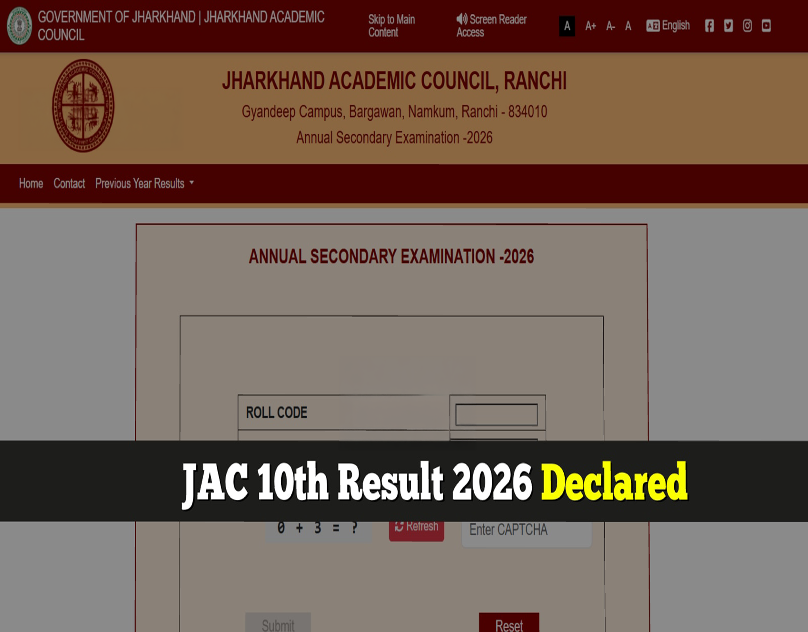
In keeping with contemporary trends, the JAC has ensured that results are easily accessible through digital platforms. Students can check their scores on the official website by entering their roll number and roll code, a process designed to be both efficient and user-friendly. Additionally, the availability of results via platforms such as DigiLocker has further streamlined access, enabling students to download digital marksheets instantly. This shift towards digital dissemination not only reduces logistical delays but also aligns with broader national efforts to promote paperless governance and accessibility in education.
District-Level Performance and Emerging Trends
While state-level statistics offer a macro perspective, district-level data provides deeper insights into regional performance. Certain districts have demonstrated exceptional outcomes, indicating the presence of effective school-level leadership, robust teaching practices and supportive learning environments. Moreover, the narrowing gap between districts suggests a gradual levelling of educational opportunities. This is a noteworthy development in a state where geographical and socio-economic disparities have historically influenced academic outcomes.
The Role of Educational Reforms
The strong performance in the 2026 results cannot be viewed in isolation. It is, in many ways, the culmination of sustained reforms and policy interventions aimed at strengthening school education. From teacher training initiatives to curriculum rationalisation, multiple efforts have been directed towards enhancing the quality of learning. There has also been a discernible shift towards competency-based education, where understanding and application are prioritised over memorisation. Such changes are gradually reshaping the way students engage with academic content, leading to more meaningful learning experiences.
Challenges Beneath the Surface
Despite the encouraging figures, it is important to approach the results with a balanced perspective. High pass percentages, while commendable, also raise questions about assessment standards and the depth of learning. Are students truly mastering concepts or are they adapting effectively to examination patterns? Furthermore, the pressure to perform, intensified by rising competition, can have implications for student wellbeing. As academic expectations continue to escalate, the need for a more holistic approach to education becomes increasingly evident.
What Lies Ahead for Students
For students, the Class 10 results represent a pivotal juncture. The choices they make in the coming months, whether to pursue Science, Commerce or Humanities, will shape their academic trajectories and career pathways. In this context, informed decision-making becomes crucial. Rather than viewing streams through a hierarchical lens, students must align their choices with their interests, aptitudes and long-term aspirations. Schools and educators, too, have a vital role to play in guiding students through this transition.
A Reflection of Broader Educational Progress
Ultimately, the JAC Class 10 results 2026 serve as a mirror reflecting the broader progress of school education in Jharkhand. The combination of high pass rates, increased first division achievers and improved accessibility points towards a system that is evolving in the right direction. However, the journey is far from complete. Sustaining this momentum will require continued investment in teacher development, infrastructure and student support systems. Equally important is the need to balance academic achievement with emotional and cognitive growth, ensuring that education remains both rigorous and humane.
Conclusion
The narrative emerging from the Jharkhand Class 10 results 2026 is one of cautious optimism. It is a story of progress, perseverance and potential of a system striving to deliver quality education to an ever-growing cohort of learners. Yet, beyond the numbers lies a more profound question: how can this success be translated into long-term educational transformation? The answer will depend not only on policies and institutions but also on the collective commitment of educators, students and society at large. As the state celebrates this year’s achievements, it also stands at the threshold of new possibilities, where education is not merely about passing examinations, but about shaping informed, capable and resilient individuals.