SSC JHT Recruitment 2026 Notification Out for Translator Posts
A Gateway to Language Careers: Decoding SSC JHT Recruitment 2026 and Its Expanding Opportunities
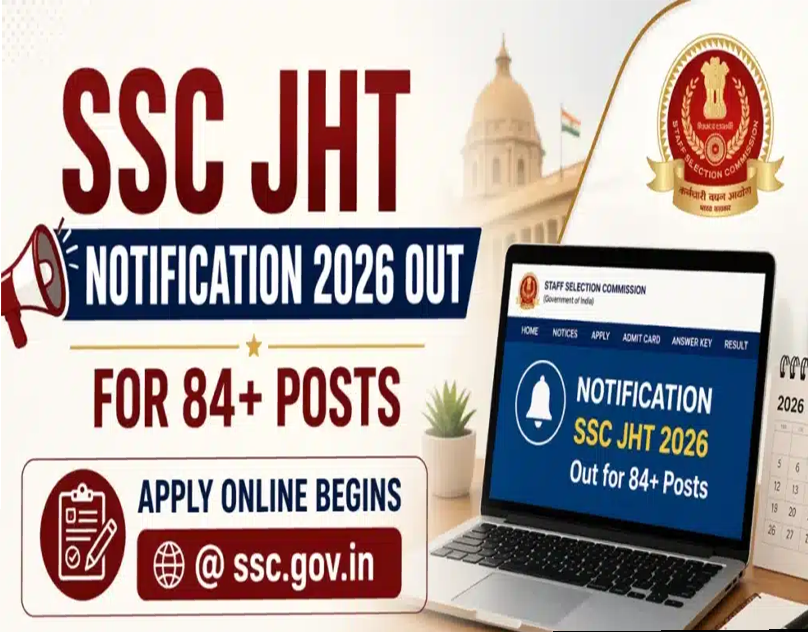
The announcement of the Staff Selection Commission (SSC) Junior Hindi Translator (JHT) Recruitment 2026 marks a significant moment for aspirants seeking to build careers in language services within the Indian government. More than a routine notification, this development reflects the continued institutional emphasis on linguistic proficiency, administrative efficiency and the vital role of translation in governance. Released on April 23, 2026, the notification opens the door to multiple translation-related positions across central government ministries and departments. What distinguishes this recruitment cycle is not merely the availability of posts, but the broader relevance it holds in a multilingual nation where communication across languages is both a necessity and a constitutional commitment.
The Expanding Scope of Translation Roles
The SSC JHT recruitment encompasses a range of posts including Junior Hindi Translator, Junior Translator and Senior Hindi Translator. These roles are integral to ensuring that official communication is accessible in both Hindi and English, thereby facilitating administrative inclusivity and linguistic balance.
In practical terms, translators in government departments are entrusted with converting policy documents, reports, notifications and legal texts between languages without compromising accuracy or nuance. Their work lies at the intersection of language, law and administration, an area that demands both intellectual rigour and cultural sensitivity.
The inclusion of multiple roles within a single recruitment cycle also reflects the layered structure of language services in governance. From entry-level translation tasks to more complex supervisory responsibilities, the framework offers a clear progression pathway for candidates.
Eligibility: A Blend of Academic Depth and Practical Skill
A defining feature of the SSC JHT recruitment is its emphasis on specialised academic qualifications. Candidates are required to possess a Master’s degree in either Hindi or English, complemented by translation experience. This dual requirement underscores the expectation that applicants must demonstrate not only linguistic proficiency but also the ability to apply it in real-world contexts.
Such criteria elevate the recruitment beyond general graduate-level examinations. It is not merely about language fluency; it is about mastering the art of translation, an intricate discipline that involves precision, contextual understanding and interpretative skill.
Moreover, the eligibility framework aligns with the broader professionalisation of language services in India. By setting high academic standards, the SSC ensures that selected candidates are equipped to handle the complexities of official communication in a multilingual administrative environment.
Application Process: Digital, Structured and Accessible
In keeping with contemporary recruitment practices, the application process for SSC JHT 2026 is entirely online, conducted through the official SSC portal. This digital approach simplifies the process for applicants across the country, eliminating geographical barriers and enhancing accessibility.
The notification outlines essential details such as application timelines, examination patterns and procedural guidelines, all of which are crucial for candidates navigating a competitive recruitment landscape. The structured nature of the process ensures transparency, while also placing the onus on candidates to remain informed and attentive to deadlines.
Importantly, applicants are encouraged to consult the official notification in detail, as it is the primary source of accurate, up-to-date information. In an era of information overload, this emphasis on official channels is both necessary and prudent.
Selection Process: Measuring Competence in Stages
The selection process for SSC JHT typically involves a written examination followed by document verification. However, beyond this procedural outline lies a carefully designed assessment framework aimed at evaluating both theoretical knowledge and practical application.
The written examination often comprises objective and descriptive components, testing candidates on language proficiency, translation skills and comprehension. This dual format ensures that candidates are assessed not only on their ability to recall information but also on their capacity to interpret and translate meaning effectively.
Such a multi-stage evaluation reflects the nuanced nature of translation work, where accuracy must be balanced with clarity and contextual relevance. It also reinforces the meritocratic ethos of the recruitment process, ensuring that only the most capable candidates progress.
The Significance of Language in Governance
At a broader level, the SSC JHT recruitment highlights the enduring importance of language in governance. India’s linguistic diversity, while culturally enriching, also presents administrative challenges. Effective translation serves as a bridge, enabling communication across regions and communities.
Government translators play a crucial role in this ecosystem, ensuring that policies and directives are accessible to a wider audience. Their work supports not only administrative efficiency but also democratic participation, as citizens are better able to understand and engage with official information.
In this context, the SSC JHT recruitment is not merely about filling vacancies; it is about strengthening the linguistic infrastructure of governance.
Opportunities and Career Trajectories
For aspirants, the SSC JHT examination represents a gateway to stable and intellectually engaging careers. Positions offered under this recruitment fall within the Group ‘B’ category, providing not only financial security but also professional growth.
Successful candidates may find themselves working in diverse ministries, handling a wide range of subject matter from legal documentation to technical reports. This diversity ensures that the role remains dynamic, requiring continuous learning and adaptation.
Furthermore, the hierarchical structure of translation roles allows for career progression, enabling individuals to move from junior positions to senior and supervisory roles over time. Such progression is often accompanied by increased responsibilities and opportunities for specialisation.
Challenges and Expectations
While the opportunities are considerable, the path to success in SSC JHT recruitment is far from straightforward. The competitive nature of the examination demands thorough preparation, particularly in areas such as grammar, comprehension and translation techniques.
Candidates must also develop a deep understanding of both the source and target languages, as well as the cultural contexts that shape them. Translation is as much about interpretation as it is about language and this complexity adds to the challenge.
Additionally, the increasing standardisation of examinations means that aspirants must be strategic in their preparation, focusing not only on content but also on time management and exam technique.
The Broader Recruitment Landscape
The release of the SSC JHT notification is part of a wider recruitment cycle undertaken by the Commission, which includes examinations for various roles across sectors. This integrated approach ensures a steady influx of talent into government services, addressing both administrative needs and employment aspirations. Within this broader framework, the JHT examination occupies a unique niche, catering to candidates with specialised linguistic skills. It complements other recruitment drives by addressing a critical functional area within governance.
Conclusion: A Timely Opportunity in a Competitive Era
The SSC JHT Recruitment 2026 stands as a timely opportunity for candidates seeking to combine their academic training in languages with meaningful public service. It represents a convergence of skill, opportunity and national need, an intersection that is increasingly relevant in today’s interconnected world. Beyond the immediate prospects of employment, the recruitment also symbolises a deeper recognition of the importance of language in shaping governance and society. As India continues to evolve, the role of translators will remain indispensable, ensuring that communication remains inclusive, accurate and effective. For aspirants, the message is clear: preparation, precision and perseverance will be key. For the system, the recruitment marks another step towards strengthening the linguistic foundations of administration, an endeavour that is as essential as it is enduring.