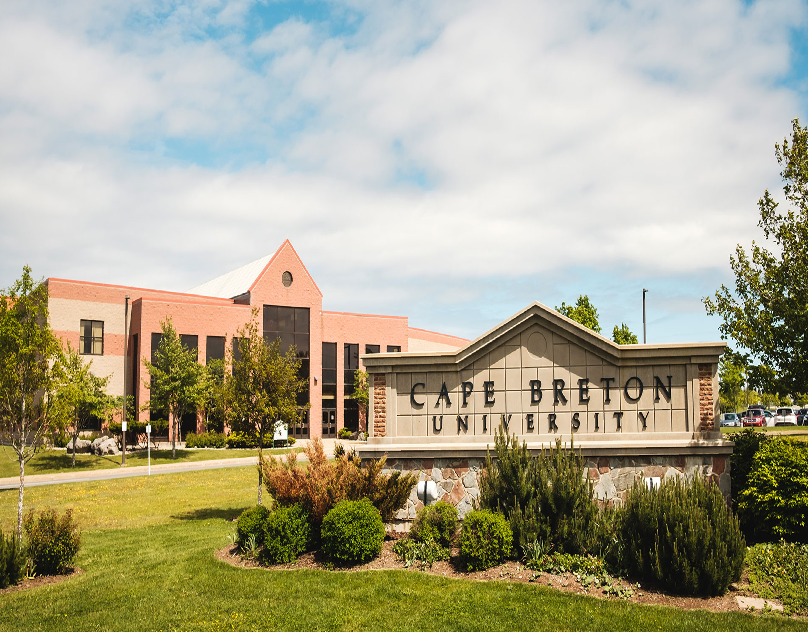
Global Education Expands as Canadian University Builds Strategic Academic Partnerships in India
Canadian University Expands Academic Footprint in India with Strategic MoUs and Collaborative Vision
In an increasingly interconnected global education landscape, international partnerships are becoming central to the evolution of higher learning. Against this backdrop, Cape Breton University (CBU) has taken a significant step towards strengthening its engagement with India by signing three memoranda of understanding (MoUs) with leading Indian institutions. The development, part of a multi-city outreach initiative, reflects a broader shift towards collaborative, cross-border education models that prioritise research, mobility and innovation. The initiative is not merely symbolic; it underscores a deliberate strategy to deepen academic ties, foster research collaboration and expand opportunities for students across both countries. At a time when India is emerging as a global hub of talent and innovation, such partnerships signal a mutual recognition of shared academic ambitions and future potential.
A Strategic Outreach Across Key Indian Cities
The outreach, led by David C. Dingwall, President and Vice-Chancellor of CBU, unfolded across several prominent Indian cities, including New Delhi, Gurugram, Noida, Vadodara and Ahmedabad between April 27 and May 2, 2026.
This extensive itinerary highlights the seriousness of the university’s intent. Rather than limiting engagement to a single institution or region, the delegation sought to establish a broad-based network of partnerships across academic, governmental and industrial stakeholders. Such an approach reflects an understanding that meaningful collaboration in higher education requires sustained, multi-layered engagement.
The visit also exemplifies how universities are increasingly adopting diplomatic roles, acting as bridges between nations through knowledge exchange and institutional cooperation.
Three MoUs: Building the Framework for Collaboration
At the heart of this outreach lie three key MoUs, each designed to facilitate different aspects of academic collaboration. One of the most notable agreements was signed with BML Munjal University, specifically with its School of Engineering and Technology.
This five-year agreement is expected to enable a range of academic initiatives, including student and faculty exchanges, joint research projects and the co-creation of academic conferences. Such initiatives not only enhance institutional visibility but also enrich the academic experience for participants by exposing them to diverse pedagogical approaches and research environments.
A second MoU was established with the National Education Forum (NEF), positioning it as CBU’s official convening partner in India. This partnership is particularly significant, as it facilitates structured engagement with both central and state governments, as well as leading academic institutions. It effectively creates a framework for sustained collaboration, rather than isolated engagements.
The third agreement was formalised with Lok Jagruti Kendra University in Gujarat, further extending the university’s collaborative footprint. In addition, discussions were held with institutions such as Parul University and Navrachana University, indicating the possibility of future partnerships and an expanding academic network.
Together, these agreements form a robust foundation for long-term engagement, encompassing research, teaching and institutional development.
Engagement with Policymakers: Aligning Vision and Policy
A key highlight of the visit was the delegation’s meeting with Ashish Sood in the national capital. The discussions centred on emerging areas of collaboration, including artificial intelligence, community development and startup ecosystems, domains that are rapidly reshaping the contours of higher education and employment.
The meeting also introduced the concept of an “Educity” model, a forward-looking framework that envisions integrated campuses where global universities can operate within shared infrastructure. This model, if realised, could redefine how international institutions engage with India, enabling greater accessibility and collaboration without the traditional constraints of geographical separation.
Such policy-level engagement underscores the importance of aligning institutional initiatives with broader governmental priorities, ensuring that collaborations are both relevant and sustainable.
Expanding Collaboration Beyond Academia
The outreach extended beyond academic institutions to include interactions with state leadership, notably in Gujarat, where discussions were held with Harsh Sanghavi in Gandhinagar.
These discussions focused on building talent pipelines aligned with emerging sectors such as semiconductors, renewable energy and automotive manufacturing. Such engagement reflects a growing recognition that universities must work closely with industry and government to ensure that education remains relevant to evolving workforce needs.
The state government’s support for potential collaborations, including invitations to explore opportunities linked to major projects like the Dholera Special Investment Region, further highlights the strategic importance of such partnerships.
By integrating academic collaboration with industrial and policy frameworks, the initiative positions itself as a holistic model for international engagement.
Hybrid Learning: A New Paradigm for Global Education
One of the most compelling aspects of the collaboration is its emphasis on hybrid learning models. These models allow students to complete part of their coursework in India before transitioning to CBU’s campus in Sydney, Nova Scotia.
Such an approach offers multiple advantages. It reduces the financial and logistical barriers associated with international education, while also enabling students to gain global exposure. At the same time, it allows institutions to optimise resources and expand their reach without requiring full-scale physical expansion.
Hybrid learning represents a shift from traditional models of international education, which often require students to relocate entirely. By contrast, this approach is more flexible, inclusive and responsive to the needs of contemporary learners.
India as a Strategic Academic Partner
CBU’s outreach reflects a broader recognition of India’s growing significance in the global education ecosystem. With its vast student population, expanding higher education infrastructure and increasing emphasis on research and innovation, India presents immense opportunities for international collaboration.
As noted by university leadership, India is increasingly viewed as a “global powerhouse of talent and innovation,” making it a strategic partner for institutions seeking to expand their global footprint.
This perception is reinforced by India’s policy initiatives, including the National Education Policy (NEP) 2020, which encourages international collaboration and the entry of foreign universities. Such policies create a conducive environment for partnerships like those established by CBU.
Implications for Students and Institutions
For students, these collaborations open up new pathways for academic and professional development. Opportunities for exchange programmes, joint research and hybrid learning can significantly enhance learning outcomes and career prospects.
For institutions, partnerships with international universities provide access to global expertise, research networks and innovative pedagogical practices. They also enhance institutional reputation and competitiveness in an increasingly globalised education market.
Moreover, such collaborations contribute to the broader goal of knowledge exchange, fostering a more interconnected and collaborative academic community.
The Road Ahead: Sustaining Momentum
While the signing of MoUs marks an important milestone, the true success of these collaborations will depend on their implementation. Sustained engagement, effective coordination and continuous evaluation will be essential to ensure that the partnerships deliver tangible outcomes.
Institutions will need to invest in infrastructure, faculty development and administrative support to facilitate these initiatives. Equally important will be the ability to adapt to changing circumstances, including technological advancements and evolving educational needs.
If executed effectively, these collaborations have the potential to serve as models for future international partnerships, demonstrating how universities can work together to address global challenges and opportunities.
Conclusion
The signing of three MoUs by Cape Breton University during its India outreach represents more than a series of agreements; it signifies a strategic alignment of vision, resources and aspirations between institutions across two countries. By focusing on areas such as artificial intelligence, research collaboration, student mobility and hybrid learning, the initiative reflects the evolving priorities of higher education in the 21st century. It also underscores the importance of international partnerships in shaping the future of education. As these collaborations unfold, they are likely to contribute not only to the growth of the participating institutions but also to the broader advancement of global education. In an era defined by connectivity and innovation, such initiatives offer a glimpse into the future of academic cooperation, one that is inclusive, dynamic and profoundly transformative.