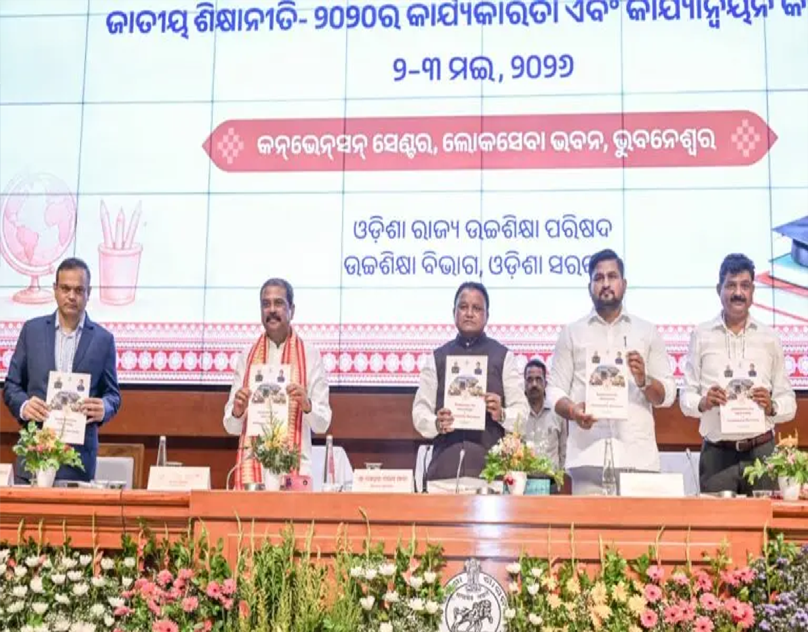
Odisha Launches ShaktiShree App and Internship Reforms to Boost Campus Safety and Skills Growth
Odisha’s ‘ShaktiShree’ Initiative: A Transformative Push for Safer Campuses and Industry-Ready Graduates
In a significant stride towards reforming higher education, the Government of Odisha has introduced a dual initiative that seeks to simultaneously address student safety and employability. The launch of the ‘ShaktiShree’ mobile application, accompanied by a comprehensive set of internship guidelines, signals a forward-looking approach to educational governance, one that is both inclusive and aligned with the evolving demands of the modern workforce. Unveiled by Chief Minister Mohan Charan Majhi during a national-level workshop in Bhubaneswar, the initiative reflects Odisha’s broader ambition to emerge as a leading knowledge hub in India. With the presence of Union Education Minister Dharmendra Pradhan and state Higher Education Minister Suryabanshi Suraj, the announcement carried both symbolic and strategic weight, positioning the state at the forefront of progressive educational reform.
Reimagining Student Safety Through Technology
At the heart of this initiative lies the ‘ShaktiShree’ mobile application, an innovative digital platform designed specifically to enhance the safety, accessibility, and overall well-being of girl students in higher education institutions. The app represents a proactive shift from reactive grievance redressal mechanisms to a more integrated and preventive support system.
Among its most notable features are 24/7 SOS alerts, enabling students to seek immediate assistance in emergencies. Additionally, the platform allows for anonymous reporting of harassment, thereby addressing one of the most persistent barriers to complaint registration, fear of retaliation or stigma. The app is also equipped with mental health support resources, acknowledging the growing need to address psychological well-being within academic environments.
Importantly, the application establishes direct connectivity with Internal Complaints Committees (ICCs) within institutions, ensuring that grievances are not only reported but also systematically addressed. This integration underscores a broader institutional accountability framework, reinforcing the state’s commitment to safer and more inclusive campuses.
In a country where concerns around campus safety often influence educational access, particularly for women, the introduction of such a tool is both timely and necessary. By embedding safety into the digital infrastructure of higher education, Odisha is effectively lowering barriers to participation and retention among female students.
Bridging the Gap Between Academia and Industry
Complementing the safety-focused intervention is the introduction of structured internship guidelines, a move that addresses another longstanding challenge within Indian higher education, the disconnect between theoretical learning and practical application.
The newly released framework is designed to integrate academic curricula with real-world exposure, ensuring that students graduate not only with knowledge but also with employable skills. The guidelines emphasise internships, community engagement and skill-based learning, all of which are aligned with the principles of the National Education Policy (NEP) 2020.
This approach reflects a broader pedagogical shift towards experiential learning, where students are encouraged to apply classroom concepts in professional settings. By facilitating structured interactions between educational institutions and industry stakeholders, the initiative aims to cultivate a workforce that is both competent and adaptable.
The emphasis on industry readiness is particularly significant in the context of India’s demographic landscape. With a large proportion of the population in the working-age group, the ability to translate academic achievement into meaningful employment is critical. Odisha’s internship framework seeks to address this imperative by embedding employability within the educational process itself.
Alignment with the National Education Policy 2020
Both the ‘ShaktiShree’ app and the internship guidelines are firmly rooted in the vision articulated by the National Education Policy 2020. The NEP advocates a holistic transformation of the education system, emphasising multidisciplinary learning, skill development and equitable access.
Union Education Minister Dharmendra Pradhan described the NEP as not merely a policy but a “national mission” aimed at positioning India as a global knowledge leader. In this context, Odisha’s initiative can be seen as a practical manifestation of that vision, translating policy principles into actionable programmes at the state level.
The focus on safety, inclusivity, and employability resonates strongly with the NEP’s core objectives. By prioritising these elements, the state is not only enhancing the quality of education but also ensuring that it remains relevant in a rapidly changing global landscape.
Empowering Women in Higher Education
A particularly noteworthy aspect of the initiative is its emphasis on empowering women. The ‘ShaktiShree’ app, with its dedicated focus on female students, acknowledges the unique challenges faced by women in academic spaces.
Safety concerns have long been a deterrent to higher education participation among women, especially in regions where access to secure infrastructure is limited. By providing a reliable and accessible support system, the app has the potential to significantly improve enrolment and retention rates among female students.
Moreover, the integration of mental health support reflects a nuanced understanding of student needs. In an era marked by increasing academic pressure and societal expectations, addressing mental well-being is essential to fostering a conducive learning environment.
The internship guidelines further contribute to women’s empowerment by ensuring that female students have equal access to professional opportunities. By bridging the gap between education and employment, the initiative equips women with the skills and confidence needed to succeed in competitive industries.
Institutional and Policy-Level Implications
Beyond its immediate impact on students, the initiative also carries important implications for educational institutions and policymakers. By introducing standardised guidelines and digital tools, the state government is setting a precedent for structured and accountable governance in higher education.
Institutions are now expected to align their internal mechanisms with the new framework, fostering greater consistency and transparency. This, in turn, could lead to improved academic outcomes and enhanced institutional credibility.
The initiative also underscores the importance of collaboration between government bodies, educational institutions and industry stakeholders. By fostering such partnerships, Odisha is creating a more cohesive and dynamic educational ecosystem.
Challenges and the Road Ahead
While the ‘ShaktiShree’ initiative represents a significant step forward, its success will ultimately depend on effective implementation. Ensuring widespread adoption of the app, particularly in rural and underserved areas, will be crucial. This may require targeted awareness campaigns and digital literacy initiatives.
Similarly, the effectiveness of the internship guidelines will hinge on the availability of quality internship opportunities and the willingness of industries to engage with educational institutions. Building robust industry-academia partnerships will therefore be essential.
Monitoring and evaluation will also play a key role in sustaining the initiative’s impact. Regular assessments, feedback mechanisms and data-driven decision-making will be necessary to refine and enhance the programme over time.
A Vision for a Knowledge-Driven Future
The launch of the ‘ShaktiShree’ app and internship guidelines marks a new chapter in Odisha’s higher education journey. It reflects a comprehensive and forward-thinking approach, one that recognises the interconnectedness of safety, skill development and academic excellence.
By addressing both the emotional and professional dimensions of student life, the initiative sets a benchmark for holistic educational reform. It demonstrates that meaningful change is not achieved through isolated interventions but through integrated strategies that consider the diverse needs of learners.
As states across India continue to navigate the complexities of educational transformation, Odisha’s model offers valuable insights. It illustrates how technology, policy and institutional collaboration can converge to create a more inclusive, responsive and future-ready education system.
In the final analysis, the ‘ShaktiShree’ initiative is not merely a policy announcement; it is a statement of intent. It signals Odisha’s commitment to nurturing a generation of learners who are not only academically proficient but also empowered, resilient and prepared to contribute to a rapidly evolving world.