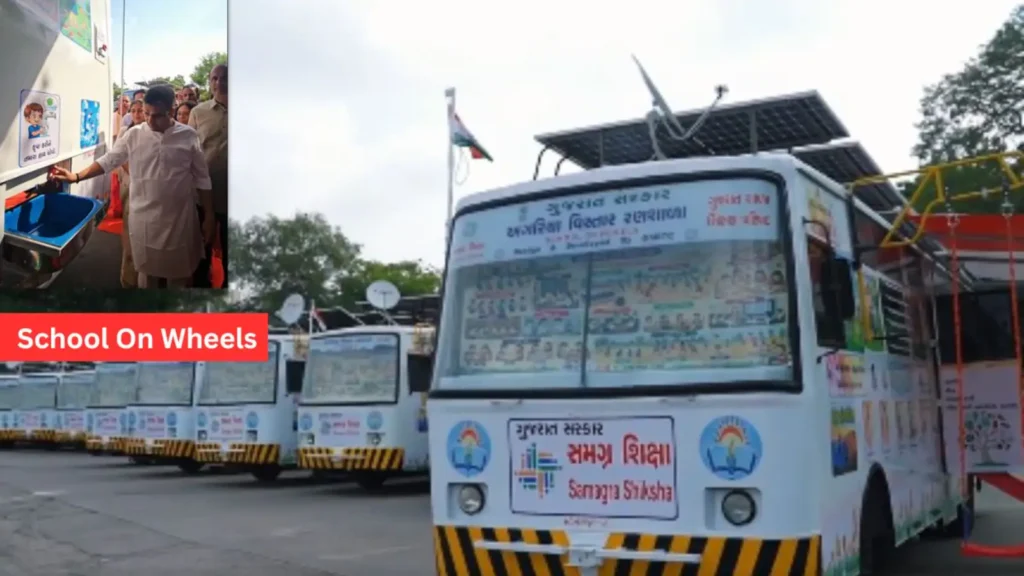
The Gujarat government has launched an innovative ‘School on Wheels’ initiative to ensure uninterrupted education for children living in remote salt-producing regions of the state. Under the programme, 28 retired state transport buses have been converted into solar-powered mobile classrooms designed to serve children from Agariya (salt-worker) families. The initiative aims to address educational challenges faced by migratory communities and has emerged as a significant development in EducationNews, highlighting how innovative solutions can help improve access to learning for underserved populations.
Addressing the Educational Challenges of Salt-Pan Communities
Gujarat’s salt-producing regions are home to thousands of Agariya families who migrate seasonally in search of livelihood opportunities. During the salt production season, families move to remote desert areas where access to schools is often limited.
For children, this migration can lead to disruptions in education, irregular attendance and learning gaps. The absence of nearby schools and the long distances required to access educational facilities make it difficult for many students to continue their studies consistently.
Recognising these challenges, the Gujarat government introduced the School on Wheels programme to ensure that education remains accessible even in geographically isolated areas. The initiative focuses on bringing learning opportunities directly to children rather than requiring them to travel long distances.
What Is the School on Wheels Initiative?
The programme involves the transformation of 28 retired buses from the Gujarat State Road Transport Corporation (GSRTC) into fully equipped mobile classrooms. These buses have been specially designed to function as learning centres in remote salt-producing regions.
The initiative is being implemented through the combined efforts of the Gujarat Education Department, Samagra Shiksha and GSRTC. By repurposing retired buses, the project provides a practical and cost-effective solution for reaching children who might otherwise struggle to access formal education.
Each mobile classroom is designed to create an engaging and supportive learning environment, helping students continue their education without interruption.
Key Features of the Mobile Classrooms
The School on Wheels buses are equipped with several facilities to support learning:
- Smart televisions for digital education
- Mini libraries with reading materials
- Solar-powered electricity systems
- Study desks and seating arrangements
- Drinking water facilities
These resources help create a classroom-like atmosphere and enable students to benefit from both traditional and technology-enabled learning methods.
Bringing Education Directly to Children
One of the most distinctive aspects of the initiative is its ability to take classrooms directly to children. The buses travel to remote salt-pan settlements where families reside during the salt production season.
Instead of expecting students to travel long distances to attend school, the programme brings educational services to their communities. This approach significantly reduces barriers to education and enables children to continue learning despite seasonal migration.
Each mobile classroom can accommodate more than 20 students at a time. The buses provide a safe and structured environment where children can participate in lessons, reading activities and other educational programmes.
The use of solar power ensures that the classrooms can function efficiently even in areas with limited access to conventional electricity, making them particularly suitable for desert conditions.
Click below to watch the video.
Reducing Dropout Rates Among Migrant Children
Reducing school dropout rates is one of the primary objectives of the School on Wheels initiative. Children from migratory communities often face educational disruptions that can affect their academic progress and future opportunities.
By ensuring continuity in learning, the programme seeks to keep students connected to the education system throughout the year. Regular access to educational resources and learning support can improve attendance and help children maintain their academic development.
The initiative also promotes educational inclusion by focusing on communities that have traditionally faced difficulties in accessing quality education. Providing learning opportunities within these communities can help ensure that more children remain enrolled in school and continue their studies.
Expected Benefits of the Initiative
The programme is expected to provide several long-term benefits:
- Improved school attendance
- Reduced dropout rates
- Continuous learning during migration
- Better access to digital education
- Greater educational inclusion
These outcomes can contribute to stronger educational foundations and improved opportunities for children living in remote regions.
Why the Initiative Matters
The School on Wheels programme demonstrates how innovative approaches can address long-standing educational challenges. Rather than relying solely on traditional infrastructure, the initiative adopts a flexible model that adapts to the needs of migratory communities.
The project combines mobility, technology and sustainability to deliver education in areas where conventional schooling may be difficult to access. It also reflects the growing emphasis on inclusive education and the importance of ensuring that every child has an opportunity to learn, regardless of geographical location or socio-economic circumstances.
By focusing on accessibility and continuity, the initiative supports broader efforts to improve educational outcomes and reduce inequalities within the education system.
Driving Education Beyond Classroom Walls
Gujarat’s School on Wheels initiative represents a creative and practical approach to improving educational access for children living in remote salt-producing regions. Through the conversion of 28 retired buses into solar-powered mobile classrooms, the state has developed a solution that brings learning directly to migratory communities. The programme aims to reduce dropout rates, promote educational inclusion and ensure uninterrupted learning for children who face unique challenges due to seasonal migration. As an inspiring example featured in EducationToday News, the initiative highlights how innovation and community-focused planning can help make quality education accessible to every child.