Table of Contents
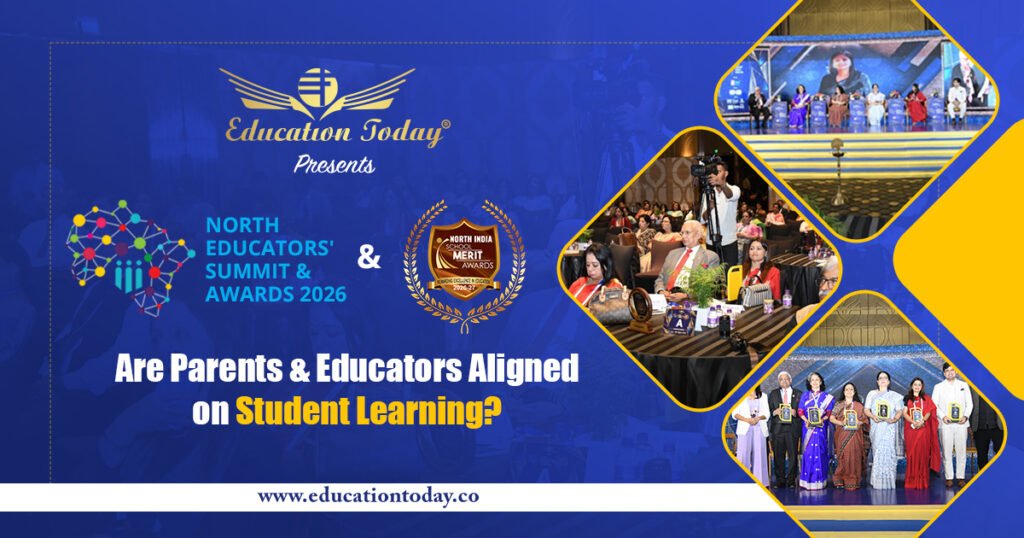
The relationship between parents and educators plays a significant role in shaping a child’s educational journey. However, differences in expectations, perceptions of academic success, and approaches to learning can sometimes create gaps between what families want and what schools aim to deliver. This important issue took centre stage at the North Educators’ Summit and Awards 2026, organised by EducationToday, during a panel discussion titled ‘Are Parents & Educators Aligned on Student Learning?’ The conversation brought together experienced school leaders to examine how stronger communication, shared responsibilities and a broader understanding of student development can improve educational outcomes. Through their diverse perspectives, the panellists explored the importance of holistic learning, teacher development, inclusive education, student well-being and technology-enabled teaching in building a more collaborative approach to education.
Panel 1: Are Parents & Educators Aligned on Student Learning?
Moderated by Mr. Srinivasan Sriram, Principal of The Mann School, the discussion featured Dr. Neelima Kamrah, Principal of KIIT World School, Gurgaon; Mrs. Kanika Sachdeva Govi, Principal of Delhi Public School, Rohini; Mrs. Rohini Aima, Principal – cum – Vice – Chairperson of Jammu Sanskriti School; Ms. Tanu Tiwari, Principal of The Sagar School, Alwar; and Mr. Saurabh Sehgal, Director of Sapphire International School.
The discussion explored a fundamental question facing contemporary schools: are parents and educators equally invested in the same learning outcomes? While parents often assess progress through academic performance and examination results, educators must also consider emotional development, practical skills, individual learning needs and social responsibility. Aligning these perspectives requires consistent communication and a shared understanding of what constitutes meaningful student progress.
Mr. Srinivasan Sriram brought his extensive experience in teaching, school administration, and educational innovation to the discussion. With more than 36 years of teaching experience and 15 years in administration, he has focused on transforming how students learn and assimilate knowledge. His commitment to the continuous professional development of educators highlights the importance of equipping teachers to respond to changing student needs. Effective parent-educator collaboration also depends on teachers being able to communicate learning objectives clearly and help families understand the educational approaches adopted by schools.
Dr. Neelima Kamrah emphasised an educational philosophy centred on experiential learning, inclusion and holistic development. With over 25 years of experience and a Ph.D. in Multiple Intelligences, her professional background reflects the importance of recognising different learning styles and individual strengths. Her approach highlights why parents need to understand that children develop at different rates and demonstrate their abilities in different ways. Learning experiences that extend beyond textbooks and conventional assessments can help students develop critical thinking, creativity and practical understanding.
Mrs. Kanika Sachdeva Govi brought attention to the role of teacher development, educational technology, and value-based learning. With extensive experience in education management and teacher development, she has also worked in areas including career counselling, community outreach and school safety. These priorities reflect the broader responsibilities schools have towards students. Teachers need ongoing professional development to address evolving classroom requirements, while parents benefit from clear communication about academic expectations, student welfare and future opportunities. A collaborative relationship can help ensure that children receive consistent guidance both at school and at home.
Mrs. Rohini Aima highlighted the importance of quality education, inclusive schooling and teacher development. With more than 38 years of experience, she has worked towards strengthening educational practices and creating inclusive learning environments. Her background as a CBSE Master Trainer and certified expert in inclusive schools reinforces the need to recognise individual learning requirements. Parents and educators must work together to ensure that students receive appropriate support and opportunities, rather than measuring their progress exclusively against the achievements of their peers.
Ms. Tanu Tiwari brought the perspective of student well-being and holistic development to the discussion. As Principal of The Sagar School, she advocates an educational environment that combines academics with sports, arts, pastoral care and life skills. Her approach highlights the importance of nurturing resilience, empathy, leadership, character and social responsibility alongside academic achievement. For parents and educators, this means recognising that a child’s development involves more than examination results. Emotional well-being and opportunities to explore individual interests are equally important in preparing students for future challenges.
Mr. Saurabh Sehgal focused on educational innovation, digital transformation, and future-ready learning. As Director of Sapphire International School, he has worked towards integrating technology with pedagogy and exploring approaches that connect global educational practices with local requirements. His perspective reflects the need to prepare students for a rapidly evolving world through digital literacy, adaptability, critical thinking, and problem-solving. At the same time, aligning parents with these changing educational priorities requires schools to explain how technology supports learning and why future-ready skills matter beyond traditional academic measures.
The discussion reinforced a broader message: parent-educator alignment cannot be achieved through occasional meetings or academic progress reports alone. It requires continuous dialogue, mutual trust, and a willingness to understand different perspectives. Schools must communicate their educational objectives effectively, while parents need opportunities to participate meaningfully in their children’s development.
Ultimately, the panel at the North Educators’ Summit and Awards 2026, organised by EducationToday, highlighted the importance of building a shared vision for student success. When parents and educators work together to balance academic achievement with emotional well-being, practical learning and personal growth, they create a stronger foundation for children’s long-term development.
The discussion focused on the gap between parent expectations and actual student learning, exploring how schools can create a balance between academic goals and students’ overall development.
The gap can arise from differences in expectations regarding academic performance, learning abilities, individual interests, assessment methods, and the pace of student development.
Schools can encourage transparent communication, conduct regular parent-teacher meetings, share student progress, and help parents understand individual learning needs.
A strong partnership builds trust, improves communication, and ensures that parents and educators work together to support students’ academic, emotional, and social development.
Schools can combine academic instruction with experiential learning, extracurricular activities, critical thinking, creativity, life skills, and emotional development to support well-rounded student growth.