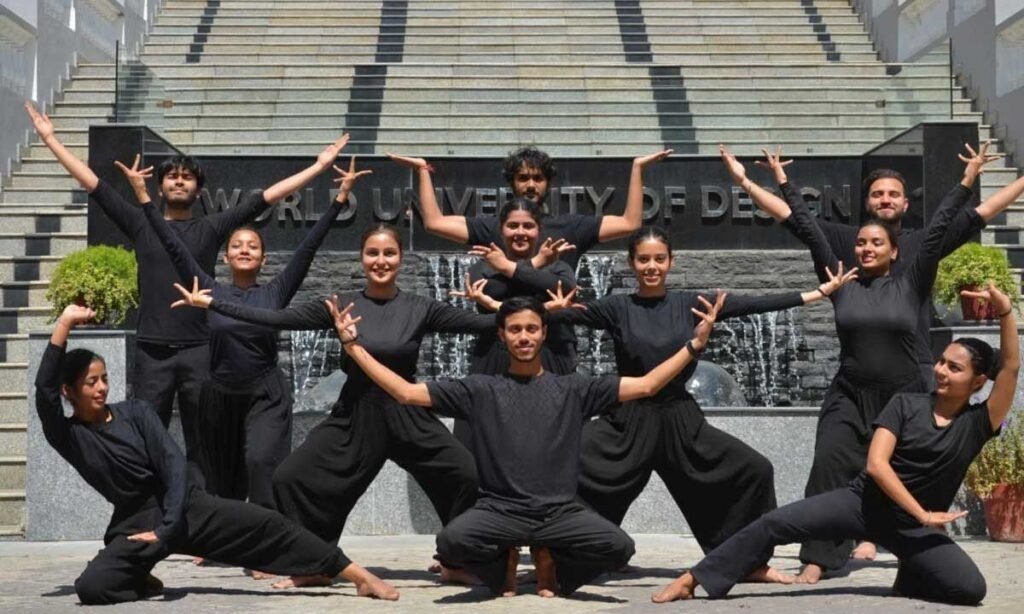
The performing arts landscape in India is undergoing a remarkable transformation, driven by the growth of digital entertainment, independent productions and a renewed appreciation for artistic expression. Responding to these evolving industry needs, the World University of Design (WUD) has introduced new theatre programmes aimed at preparing students for a wide range of creative careers in India. The initiative seeks to blend artistic excellence with practical learning, enabling aspiring performers and theatre professionals to build sustainable careers in the creative sector. The newly launched programmes have been designed to provide students with a comprehensive understanding of theatre while equipping them with the technical, creative and professional skills demanded by today’s entertainment and cultural industries. As the demand for trained creative professionals continues to grow, specialised courses such as these are expected to contribute significantly to India’s expanding creative economy.
The new theatre programmes have been developed to move beyond conventional classroom learning by combining academic study with extensive practical training. Theatre education is no longer limited to acting alone; it encompasses storytelling, performance, production, collaboration and creative problem-solving.
Students will engage in activities that encourage experimentation and artistic exploration while gaining a deeper understanding of the performing arts. This balanced approach enables learners to strengthen both their creative abilities and professional competence.
By introducing dedicated theatre programmes, WUD aims to provide students with an educational environment where artistic passion is supported by structured learning and industry relevance.
The role of theatre has expanded considerably in recent years. Alongside live performances, theatre professionals now contribute to cinema, television, streaming platforms, advertising, education and cultural organisations.
Theatre education also develops transferable skills that are valued across multiple professions.
These include:
- Effective communication
- Creativity and innovation
- Teamwork and collaboration
- Leadership abilities
- Critical thinking
- Public speaking and confidence
Such capabilities make theatre graduates adaptable not only within the performing arts but also across numerous creative and professional fields.
One of the distinguishing aspects of the programmes is their emphasis on experiential learning. Rather than relying solely on theoretical instruction, students will actively participate in rehearsals, workshops and live productions throughout their academic journey.
The curriculum is expected to include practical exposure in areas such as:
- Acting and performance
- Voice and movement
- Script interpretation
- Stagecraft
- Direction
- Collaborative productions
Working on practical projects enables students to understand the creative process from multiple perspectives while building confidence through performance-based learning.
The expansion of India’s media and entertainment industries has significantly increased employment opportunities for trained creative professionals. Graduates of these programmes will be equipped to explore diverse creative careers in India, both on and off the stage.
Potential career pathways include:
- Theatre actor
- Director
- Scriptwriter
- Production manager
- Drama educator
- Event professional
- Cultural programme coordinator
- Creative content developer
The versatility of theatre education allows graduates to adapt to different sectors while continuing to develop their artistic practice.
A key objective of the new programmes is to reduce the gap between academic learning and industry expectations. Employers increasingly seek professionals who possess practical experience alongside technical knowledge.
Through workshops, collaborative productions and exposure to professional theatre practices, students are expected to gain valuable insights into the functioning of the creative industry.
This practical orientation helps learners understand production processes, audience engagement and collaborative working methods that are essential in professional environments.
India’s creative industries are expanding rapidly, creating demand for professionals with specialised artistic skills. Theatre continues to play an important role within this ecosystem by nurturing storytelling, cultural expression and innovation.
Formal education in the performing arts contributes to the development of skilled professionals capable of supporting theatre companies, production houses, educational institutions and cultural organisations.
The introduction of specialised theatre education reflects the increasing recognition that creative disciplines deserve the same academic attention as traditional professional programmes.
Although many students may aspire to careers in acting or directing, theatre education offers broader personal and professional advantages.
Students often develop:
- Strong interpersonal skills
- Emotional intelligence
- Confidence under pressure
- Adaptability
- Organisational abilities
- Creative leadership
These qualities remain valuable regardless of the career path graduates eventually choose, making theatre education a holistic learning experience.
Modern creative professions require individuals who can work across multiple disciplines. Theatre naturally brings together performers, writers, designers, musicians and technicians, encouraging students to appreciate different aspects of creative production.
This collaborative environment promotes innovation while helping learners understand how diverse skills contribute to successful performances and productions.
Such interdisciplinary exposure prepares students to adapt to the changing demands of the global creative industry.
The launch of these programmes reflects the growing importance of specialised arts education within India’s higher education system. As the performing arts continue to evolve alongside technological and cultural changes, institutions are increasingly recognising the need to prepare students for dynamic and multidisciplinary careers. By combining artistic development with practical training, the programmes aim to create graduates who are not only talented performers but also confident professionals capable of contributing meaningfully to the creative economy.
The introduction of WUD’s new theatre programmes represents a significant step towards strengthening arts education and expanding opportunities for students interested in creative careers in India. By integrating academic learning with practical experience, the programmes seek to prepare graduates for the diverse opportunities emerging across theatre, media and the wider creative industries. As per EducationTodayNews, initiatives such as these demonstrate how higher education institutions are adapting to the evolving needs of the creative sector. As India’s cultural and entertainment landscape continues to grow, specialised programmes that combine artistic excellence with career-focused learning are expected to play an important role in shaping the next generation of creative professionals.