CBSE Launches Post-Result Helpline and Email Support to Assist Students After Class 12 Results 2026
CBSE’s New Post-Result Support System Signals a More Student-Centric Approach
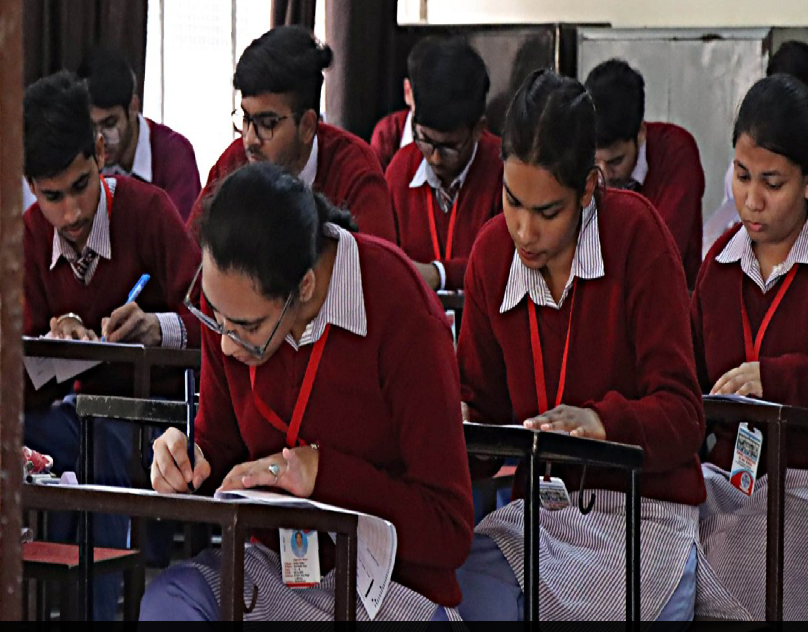
The declaration of board examination results in India has always carried emotional weight far beyond marksheets and percentages. For millions of students and parents, the post-result period often becomes a complex intersection of anxiety, expectation, relief and uncertainty. Recognising the growing emotional and administrative pressures surrounding the Class XII results, the Central Board of Secondary Education (CBSE) has introduced dedicated helpline and email support services aimed at assisting students with post-result queries and concerns.
The initiative arrives at a particularly sensitive moment. The 2026 CBSE Class XII results, announced recently, recorded an overall pass percentage of 85.20 per cent, reflecting a noticeable decline compared to the previous year. Alongside the statistical conversation, social media platforms and student forums have witnessed widespread discussions surrounding evaluation patterns, digital marking systems and re-evaluation concerns. Against this backdrop, CBSE’s decision to expand its support infrastructure represents more than an administrative measure; it reflects an attempt to restore confidence and communication during one of the most stressful academic phases in a student’s life.
According to the board, students, parents and schools can now access tele-counselling support through an official helpline for assistance related to examination results, evaluation doubts and stress management. An authorised email support system has also been introduced as an alternative communication channel for students seeking clarification.
Importantly, the board also issued a caution against the use of unauthorised email addresses circulating online, urging students to rely exclusively on verified communication platforms. In an era where misinformation spreads rapidly across digital platforms, such warnings are increasingly necessary, particularly when students are already emotionally vulnerable after receiving results.
The Growing Emotional Burden of Examination Culture
India’s board examination ecosystem has long been shaped by intense academic competition and societal expectations. For many students, Class XII results influence university admissions, scholarship opportunities and future career trajectories. As a consequence, the period immediately following the result declaration frequently becomes emotionally charged.
Over the years, concerns surrounding student mental health have become increasingly visible. Academic pressure, comparison culture and unrealistic expectations often amplify post-result distress. While conversations about mental well-being in education have expanded considerably, institutional support systems have not always evolved at the same pace.
CBSE’s latest initiative, therefore, reflects an important shift in educational administration, one that acknowledges emotional support as an essential component of academic governance rather than an optional addition. The board explicitly stated that the helpline services aim not only to provide clarification regarding evaluation and results, but also to reduce stress among students and parents.
This emphasis matters. In competitive academic environments, even procedural uncertainties can intensify anxiety. Questions surrounding re-evaluation, marks discrepancies or access to answer sheets often become emotionally overwhelming when students feel they lack clear channels for guidance.
Why Students Are Raising More Questions This Year
The 2026 examination cycle has generated unusual levels of discussion regarding evaluation standards and digital assessment methods. Earlier this year, CBSE confirmed its transition towards fully digital evaluation systems and clarified that the traditional post-result verification of marks process would gradually change under the new framework.
The board’s adoption of On-Screen Marking (OSM) has drawn mixed reactions from students. While education officials maintain that digital evaluation improves accuracy and eliminates totalling errors, sections of the student community have expressed dissatisfaction regarding unexpectedly low scores and perceived strictness in marking.
Online student discussions across forums and social media platforms reveal a mixture of confusion, frustration and uncertainty. Some students have questioned the consistency of evaluation, while others have voiced concerns about limited clarity regarding post-result procedures.
To its credit, CBSE appears aware of this growing sentiment. By establishing official support channels immediately after the results, the board is attempting to provide students with a structured mechanism for communication rather than allowing confusion to escalate unchecked across unofficial online spaces.
The Role of Tele-Counselling in Modern Education
Tele-counselling services in educational systems are no longer viewed merely as crisis-response tools. Increasingly, they are becoming part of broader student support frameworks focused on emotional resilience, stress management and informed decision-making.
CBSE has, in recent years, expanded its psycho-social counselling initiatives during examination periods. Earlier in 2026, the board introduced round-the-clock counselling and Interactive Voice Response System (IVRS) support for Class X and XII students to address examination stress and emotional well-being.
The latest helpline initiative can therefore be viewed as part of a wider institutional transition towards more continuous student engagement. Rather than limiting support to the examination phase alone, the board is extending assistance into the equally stressful post-result period.
This evolution is significant because emotional pressure does not end once examinations conclude. In many cases, uncertainty surrounding results, admissions and re-evaluation procedures becomes even more psychologically demanding than the examination itself.
Beyond Marks: The Need for Transparent Communication
One of the recurring frustrations among students has been the lack of predictable communication surrounding result schedules and post-result procedures. In the days leading up to the Class XII result declaration, students across the country repeatedly refreshed official portals amid unclear timelines and speculative reports regarding release dates.
The digital age has accelerated the speed at which rumours and misinformation spread. Students often encounter unofficial updates through social media posts, YouTube channels or messaging groups, many of which lack accuracy or verification.
In this context, official helplines and email support systems serve a broader purpose beyond query resolution. They help re-establish institutional credibility and provide students with dependable communication pathways during periods of uncertainty.
Transparency in educational administration is no longer limited to publishing results on time. It increasingly involves responsiveness, accessibility and the ability to engage directly with student concerns.
Re-Evaluation and Student Expectations
The issue of re-evaluation remains especially sensitive in high-stakes examinations. Many students view board results not merely as academic outcomes, but as defining indicators of future opportunity. Even marginal differences in marks can affect university admissions, scholarships or competitive eligibility.
As a result, dissatisfaction with results often leads to demands for rechecking, answer-sheet access or score clarification. This year, CBSE has introduced revised fee structures for answer-sheet access and rechecking requests, aiming to make the process more accessible for students.
At the same time, education experts caution against excessive emotional dependence on re-evaluation outcomes. While procedural corrections do occur, substantial score changes remain relatively uncommon. The larger concern, many argue, lies in ensuring that students do not equate academic performance with personal worth.
A Larger Shift in Educational Governance
CBSE’s support initiative also reflects broader transformations occurring within India’s educational landscape. Increasingly, educational boards are being expected to function not only as examining authorities but also as student-centric institutions capable of addressing emotional, technological and administrative challenges simultaneously.
This shift aligns closely with the wider philosophy of the National Education Policy (NEP) 2020, which advocates reducing academic stress while promoting holistic student development. The board’s recent decisions, including reducing pressure associated with third-language examinations and expanding counselling systems, indicate a gradual movement in that direction.
Nevertheless, implementation remains the true test. Helplines and support systems are meaningful only if they remain accessible, responsive and adequately staffed during peak periods of student demand.
The Importance of Responsible Public Discourse
The reaction to the 2026 CBSE results has also demonstrated how rapidly educational discussions now unfold online. Reddit forums, student groups and social media communities have become spaces where students collectively process disappointment, confusion and frustration.
While such platforms provide emotional solidarity, they can also amplify panic, misinformation and unrealistic expectations. In some cases, unauthorised email addresses and unofficial complaint campaigns have circulated widely among students.
This makes institutional communication even more essential. Students navigating emotionally charged academic moments require clarity, empathy and verified information rather than speculation-driven discourse.
The Road Ahead for Students and the Board
CBSE’s decision to introduce dedicated post-result helpline and email support services may appear administrative on the surface, but it carries deeper educational significance. It signals a recognition that modern education systems must support students not only academically, but emotionally and communicatively as well.
As India’s examination culture continues to evolve under digital evaluation systems and policy reforms, the relationship between educational institutions and students will increasingly depend upon trust, transparency and responsiveness.
For students awaiting re-evaluation outcomes, planning admissions or simply trying to process their results, the coming weeks will remain emotionally demanding. Yet initiatives such as these suggest that educational boards are beginning to acknowledge an important reality: examination systems cannot remain purely procedural in a generation where student well-being has become inseparable from academic performance.