IIT Jammu to Establish Leh Satellite Campus and Kargil Engineering Hub in Ladakh Region
IIT Jammu’s Expansion into Ladakh Signals a New Chapter for Technical Education in the Himalayan Region
The Indian Institute of Technology (IIT) Jammu has announced an ambitious expansion initiative in Ladakh, unveiling plans to establish a satellite campus in Leh alongside a future residential engineering campus in Kargil. The development marks one of the most significant higher education initiatives undertaken in the Union Territory in recent years and is expected to substantially improve access to advanced technical education for students living in remote Himalayan regions.
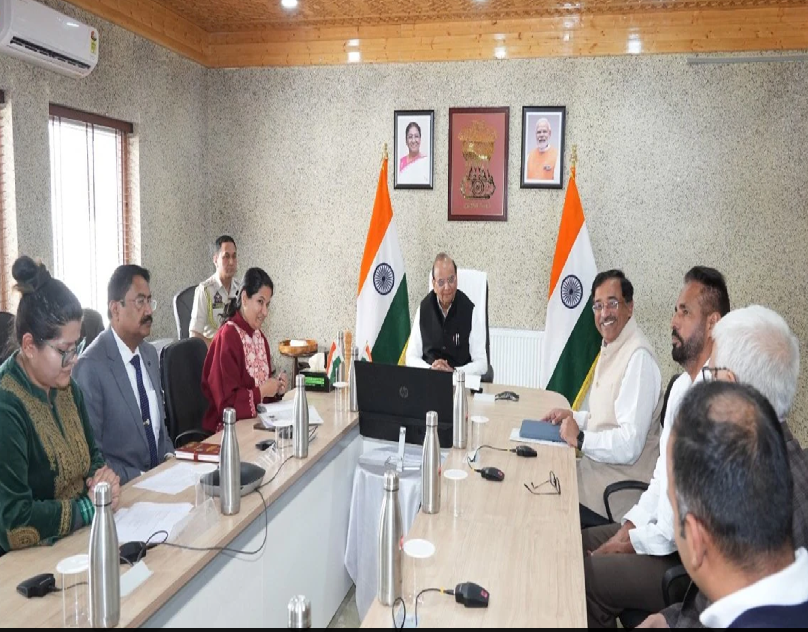
The announcement follows the signing of a Memorandum of Understanding (MoU) between IIT Jammu and the Union Territory Administration of Ladakh. The agreement was formalised in the presence of Lieutenant Governor Vinai Kumar Saxena, who described the collaboration as a transformative step for the region’s educational future.
For decades, students from Ladakh have faced substantial geographical and infrastructural barriers in accessing premier technical institutions. The new initiative seeks to address those long-standing challenges while simultaneously laying the foundation for a stronger regional ecosystem centred on research, innovation and skill development.
A Landmark Educational Initiative for Ladakh
The proposed satellite campus in Leh represents more than a simple institutional extension. It reflects a broader effort to decentralise access to elite technical education and reduce the educational disparity experienced by students in geographically isolated regions.
Ladakh’s terrain, climate and limited educational infrastructure have historically made higher education particularly difficult to access. Students aspiring to study engineering or specialised technological disciplines have often been compelled to travel thousands of kilometres away from home, creating financial strain as well as emotional hardship for families.
Officials associated with the project believe the IIT Jammu initiative could substantially reduce this burden by bringing quality education closer to students within the region itself.
Under the first phase of the agreement, approximately 40 students from Ladakh are expected to begin pursuing academic programmes at IIT Jammu from the July-August 2026 academic session onward.
Subsequently, academic activities are expected to begin locally in Leh through a temporary satellite campus that will operate from the Government Polytechnic College.
The Long-Term Vision: A Residential Campus in Kargil
While the Leh satellite campus is expected to serve as the immediate academic hub, the long-term vision extends much further. IIT Jammu has also proposed the development of a full-fledged residential engineering campus in Kargil in the coming years.
The proposed Kargil campus is expected to function as a permanent centre for engineering and technological education in the region. Officials believe it could eventually evolve into a major institutional hub capable of supporting advanced teaching, research collaborations, startup incubation and innovation-driven programmes.
The residential nature of the campus is particularly significant. It suggests the eventual creation of a comprehensive academic ecosystem rather than a limited extension centre. Such infrastructure could include laboratories, faculty housing, research facilities, hostels, incubation centres and collaborative academic spaces.
If implemented successfully, the Kargil campus may substantially reshape higher education accessibility in the Himalayan belt and create new opportunities for students who traditionally lacked proximity to premier institutions.
Courses Tailored to Regional and Global Needs
One of the notable aspects of the initiative is the selection of academic programmes aligned both with Ladakh’s developmental priorities and emerging global technological trends.
Initially, IIT Jammu plans to offer courses in:
- Civil Engineering
- Artificial Intelligence and Data Science
The choice of Civil Engineering is particularly relevant for a region characterised by mountainous terrain, seismic sensitivity and climatic challenges. Officials have indicated that the programme will focus on sustainable and climate-resilient infrastructure suitable for high-altitude environments.
This could have long-term implications not only for education but also for regional infrastructure planning, environmental sustainability, and disaster resilience.
Similarly, the inclusion of Artificial Intelligence and Data Science reflects the growing importance of digital technologies across sectors. These disciplines are increasingly central to global innovation and their introduction in Ladakh signals an effort to integrate students from remote regions into future-oriented technological fields.
The combination of locally relevant engineering education with globally competitive technological disciplines may prove crucial in creating balanced developmental opportunities for the region.
Reducing Educational Migration and Brain Drain
One of the recurring concerns highlighted by regional administrators is the migration of talented students away from Ladakh due to limited educational opportunities.
For many families, sending students outside the region for higher studies involves significant financial expenditure, cultural adjustment and prolonged separation from home. In some cases, these factors discourage students from pursuing specialised education altogether.
The IIT Jammu initiative is therefore being viewed not merely as an educational expansion but also as a strategy to address regional brain drain.
By creating advanced educational infrastructure within Ladakh itself, policymakers hope to retain local talent, encourage academic continuity and build a stronger, skilled workforce capable of contributing directly to the region’s development.
The initiative may also encourage students to pursue careers in research, engineering, innovation and entrepreneurship without feeling compelled to permanently relocate elsewhere.
Strengthening Research and Innovation in the Region
Beyond classroom instruction, the collaboration between IIT Jammu and the Ladakh administration is expected to support broader academic and innovation-oriented activities.
Officials have indicated that the initiative may eventually facilitate:
- Faculty exchange programmes
- Research collaborations
- Startup incubation
- Innovation centres
- Skill development initiatives
These components could significantly expand the academic ecosystem within Ladakh and encourage interdisciplinary problem-solving linked to regional challenges.
For example, Ladakh presents unique opportunities for research in:
- Sustainable mountain infrastructure
- Renewable energy systems
- Cold desert ecology
- Climate adaptation
- High-altitude engineering
- Remote connectivity technologies
An IIT-linked academic ecosystem could potentially transform the region into a specialised research hub for Himalayan and high-altitude studies.
The Broader Importance of Satellite Campuses
The establishment of satellite campuses by premier institutions reflects a wider trend within Indian higher education aimed at decentralisation and regional inclusion.
Traditionally, elite institutions such as the IITs have been concentrated in major urban centres. While these campuses have achieved global academic recognition, their geographical concentration has often limited accessibility for students in remote or underserved regions.
Satellite campuses represent an attempt to bridge this gap by extending institutional reach without compromising academic quality.
India has already witnessed similar models in other educational institutions, where regional centres help improve access while simultaneously fostering local innovation ecosystems.
In the context of Ladakh, the significance becomes even more pronounced due to the region’s geographical isolation and strategic importance.
IIT Jammu’s Growing Academic Footprint
Established in 2016, the Indian Institute of Technology Jammu is among the newer IITs but has steadily expanded its academic and infrastructural presence over the past decade.
The institute has focused on developing modern infrastructure, interdisciplinary programmes, and research-oriented academic frameworks. Its expansion into Ladakh further demonstrates an institutional ambition that extends beyond conventional campus development.
The collaboration also aligns with national priorities centred on educational accessibility, regional development, and strengthening technical education infrastructure in strategically important regions.
Challenges Ahead
Despite the optimism surrounding the announcement, the project will likely face substantial logistical and operational challenges.
Building and maintaining advanced academic infrastructure in high-altitude Himalayan regions involves difficulties related to:
- Harsh climatic conditions
- Transportation and connectivity
- Construction limitations
- Faculty retention
- Resource accessibility
- Technological infrastructure
Ensuring year-round academic continuity in such environments may require specialised planning and adaptive infrastructure design.
There will also be questions surrounding long-term funding, faculty recruitment, student accommodation and research capacity development.
However, the institutional backing of IIT Jammu, combined with administrative support from the Ladakh government, may provide the necessary framework for sustained implementation.
A Transformational Opportunity for the Region
The IIT Jammu expansion into Leh and Kargil arrives at a time when India is increasingly emphasising equitable educational access and regional empowerment.
For students in Ladakh, the initiative represents more than the arrival of a prestigious institution. It symbolises the possibility of pursuing advanced technical education without leaving behind their cultural, geographical and social roots.
The long-term implications could extend far beyond academics. Improved technical education infrastructure has the potential to influence regional employment, entrepreneurship, infrastructure development, digital innovation and scientific research.
If executed effectively, the satellite campus in Leh and the proposed residential campus in Kargil may become catalysts for a broader transformation in the educational and developmental landscape of Ladakh.
Closing Perspective
The decision by IIT Jammu to establish a satellite campus in Leh and a residential engineering campus in Kargil marks a significant milestone in the evolution of higher technical education in India’s Himalayan region. At its core, the initiative seeks to solve a deeply rooted challenge: making world-class education accessible to students who have historically remained distant from premier academic institutions due to geography and infrastructure limitations. By combining advanced engineering education with regional developmental priorities, the project has the potential to create not only future engineers and scientists but also a stronger, more self-reliant educational ecosystem within Ladakh itself.