IIT Madras Launches Online BS Programme in Aeronautics & Space Technology: Expanding Access to Aerospace Education
The Indian Institute of Technology (IIT) Madras has introduced an innovative Bachelor of Science (BS) programme in Aeronautics and Space Technology, marking a significant step towards widening access to specialised aerospace education in India. Designed as a skill-oriented undergraduate course and delivered entirely in online mode, the programme reflects the institution’s continuing commitment to democratising high-quality technical education while responding to the rapidly expanding demands of the aerospace and allied industries.
Open to students who have completed Class 12 or an equivalent qualification, as well as diploma holders, the programme seeks to cultivate analytical, design and technical competencies essential for careers in aeronautics, space systems and related engineering sectors. By blending theoretical rigour with practical exposure, the initiative aims to create a new generation of professionals equipped to contribute meaningfully to technologically advanced industries.
A Timely Initiative for a Growing Sector
The aerospace sector is undergoing a profound transformation globally. Advances in satellite technology, commercial aviation, defence aerospace systems, renewable energy applications and autonomous vehicles are driving demand for highly specialised talent. India, with its expanding space missions, indigenous aircraft development initiatives and emerging private aerospace enterprises, stands at a pivotal moment.
Against this backdrop, IIT Madras’ decision to launch an accessible, flexible undergraduate programme appears both timely and strategic. It not only addresses workforce requirements but also opens avenues for learners who may not otherwise have access to conventional campus-based engineering education.
Programme Launch and Institutional Vision
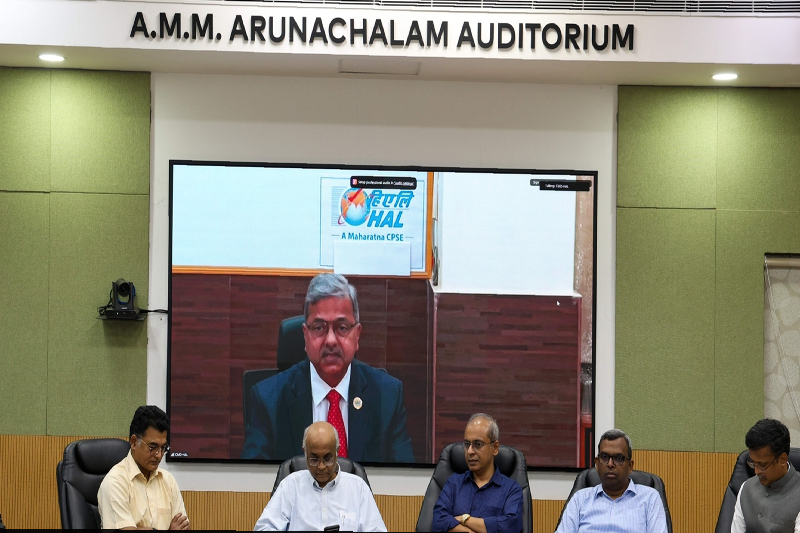
The programme was formally launched at the IIT Madras campus in the presence of the institute’s Director, Prof. V. Kamakoti, alongside prominent industry stakeholders who joined virtually. Among them were Dr. D.K. Sunil, Chairman and Managing Director of Hindustan Aeronautics Limited (HAL), and Dr. V. Sumantran, former Chairman of IndiGo Airlines.
Their involvement highlights the collaborative nature of the initiative, signalling alignment between academic institutions and industry leaders. Such partnerships are increasingly vital in ensuring that academic curricula remain responsive to real-world technological developments and employment trends.
Prof. Kamakoti emphasised that aeronautics and space technology are expanding at an exponential pace and require a skilled workforce capable of addressing emerging technological challenges. The programme, he noted, represents another step towards making specialised education accessible to a broader segment of aspiring learners.
Blending Theory with Practical Exposure
One of the defining features of the programme is its integrated learning model. Rather than relying solely on theoretical instruction, the curriculum combines:
- Recorded lectures delivered by expert faculty
- Live interactive tutorial sessions
- Online discussion forums fostering collaborative learning
- Exposure to practical design and analytical methodologies
This blended pedagogical approach ensures that students develop both conceptual understanding and applied technical skills. Such a balance is particularly important in engineering disciplines where theoretical insight must translate into practical problem-solving ability.
Interdisciplinary Career Pathways
Although the programme is centred on aeronautics and space technology, its scope extends beyond traditional aerospace careers. The press statement accompanying the launch highlights potential opportunities across several sectors, including:
- Aerospace and aviation industries
- Automotive engineering
- Wind power and renewable energy technologies
- Industrial research and development
- Advanced manufacturing and engineering analysis
This interdisciplinary orientation reflects the increasing convergence of technologies across industries. Skills in aerodynamics, materials science, simulation modelling and systems engineering often find applications far beyond aerospace contexts.
Online Learning and Accessibility
The decision to deliver the programme entirely online represents a progressive response to evolving educational paradigms. Digital learning platforms have transformed access to higher education, enabling learners from diverse geographical, economic and professional backgrounds to pursue specialised study without relocating.
For working professionals, diploma holders seeking career advancement or students from regions lacking specialised institutions, the online format offers unprecedented flexibility. It also allows learners to balance academic pursuits with professional or personal commitments.
Moreover, digital delivery encourages familiarity with virtual collaboration tools, simulation software and remote learning technologies, i.e - competencies increasingly valued in modern engineering workplaces.
Placement and Internship Support
To strengthen employability outcomes, IIT Madras will provide placement and internship support through its Centre for Outreach and Digital Education (CODE). This institutional backing is particularly significant for an online programme, as it ensures that students benefit from structured career guidance and industry connections.
Access to internships enables learners to apply theoretical knowledge in professional environments, build industry networks and develop practical expertise. Such experiences often play a decisive role in securing employment after graduation.
Potential Employment Prospects
Graduates of the programme are expected to find opportunities across a wide spectrum of organisations, including:
- Public sector undertakings such as Hindustan Aeronautics Limited and Bharat Dynamics Limited
- Aerospace manufacturing and engineering firms
- Global aviation companies like Boeing, Airbus and Rolls-Royce
- Technology enterprises such as Honeywell, Siemens and Ansys
- Engineering analysis companies and emerging start-ups
The diversity of potential employers reflects the transferable nature of aerospace engineering skills, which often intersect with advanced manufacturing, simulation technology and systems engineering.
Preparation for Higher Education and Research
Beyond immediate employment prospects, the programme also aims to prepare students for advanced academic pursuits. Graduates are expected to be well equipped for competitive examinations such as GATE and for postgraduate studies at leading institutions, including IITs and the Indian Institute of Science (IISc).
Strong foundations in aerodynamics, propulsion, structural analysis and computational modelling can open pathways to research careers in aerospace engineering, defence technology, renewable energy systems and advanced materials science.
Industry-Academia Collaboration: A Crucial Element
The involvement of industry leaders in the programme’s launch underscores the growing importance of academia–industry collaboration. Such partnerships ensure curriculum relevance, facilitate internship opportunities and provide insights into emerging technological trends.
In sectors characterised by rapid innovation, continuous dialogue between educational institutions and industry stakeholders is essential. It helps align academic training with workforce requirements while fostering innovation and applied research.
Challenges and Opportunities in Online Technical Education
While online education offers remarkable accessibility, delivering complex technical disciplines virtually requires thoughtful design. Simulation tools, virtual laboratories and interactive learning platforms must be effectively integrated to ensure meaningful skill development.
IIT Madras’ experience in digital education initiatives positions it well to navigate these challenges. If implemented effectively, the programme could serve as a model for future online engineering education in India and beyond.
A Broader Educational Perspective
The launch of this programme reflects a larger shift in higher education towards flexibility, inclusivity and industry relevance. As technological fields evolve rapidly, traditional educational pathways alone may not suffice to meet workforce demands.
Online specialised programmes provide an alternative route for skill acquisition, lifelong learning and professional development. They also support national objectives related to technological advancement, innovation and economic growth.
Conclusion
IIT Madras’ online BS programme in Aeronautics and Space Technology represents a forward-looking initiative that combines accessibility, academic excellence and industry alignment. By opening specialised aerospace education to Class 12 graduates and diploma holders nationwide, the institute is contributing to the cultivation of a skilled workforce capable of supporting India’s expanding aerospace ambitions.
For aspiring engineers, technologists and researchers, the programme offers a valuable opportunity to engage with cutting-edge disciplines while benefiting from the credibility and expertise of a premier institution. With robust academic design, industry collaboration and dedicated placement support, it holds considerable promise for shaping future careers in aerospace and related technological domains.
As aerospace innovation continues to redefine global technological landscapes, initiatives like this ensure that educational opportunities keep pace, enabling learners not only to participate in that future but to help shape it.