Major Exam Updates 2026: Results, Admit Cards, Recruitment Deadlines and Key Dates Explained Updates
ICAI CA Exam 2026 Schedule Announced: A Strategic Timeline for Aspirants Across Foundation, Intermediate and Final Levels
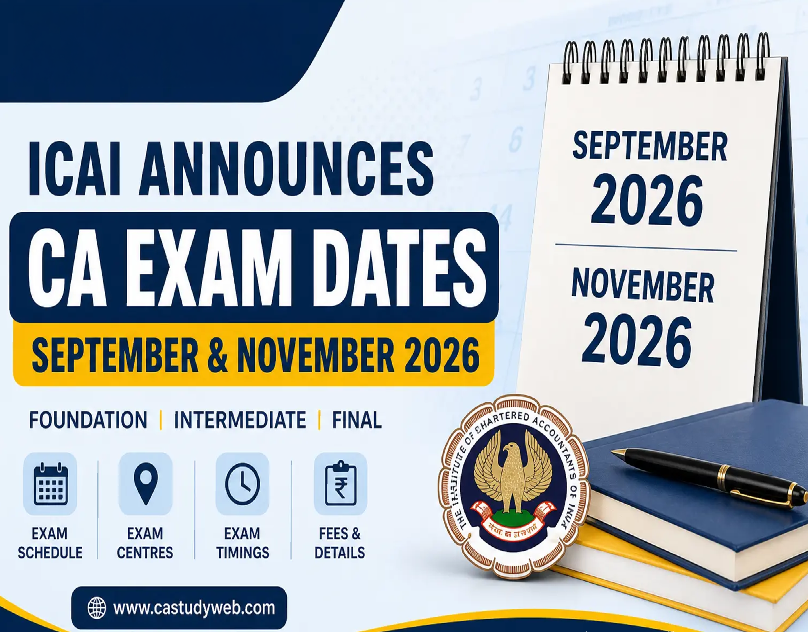
The announcement of the Chartered Accountancy (CA) examination schedule for 2026 by the Institute of Chartered Accountants of India marks a pivotal moment in the academic calendar for thousands of aspirants across the country. As one of India’s most rigorous and prestigious professional qualifications, the CA examination demands not only intellectual rigour but also meticulous planning. The newly released timetable for the September to November 2026 cycle provides candidates with a structured framework within which to align their preparation strategies. At its core, the announcement reflects the Institute’s commitment to maintaining transparency, predictability and academic discipline in the conduct of examinations. It also offers students a valuable opportunity to recalibrate their study schedules in accordance with clearly defined timelines.
A Comprehensive Examination Schedule
The ICAI has outlined a detailed schedule covering all three levels of the CA course: Foundation, Intermediate and Final. According to the official notification, the Foundation examinations will be conducted on September 2, 5, 7 and 9, 2026. The Intermediate examinations are divided into two groups, with Group I scheduled for September 1, 3 and 6, and Group II set for September 8, 10 and 12, 2026.
The Final examinations, which represent the culmination of the CA journey, are slated for November. Group I papers will be held on November 2, 4 and 6, followed by Group II on November 9, 11 and 13, 2026.
This staggered scheduling ensures adequate spacing between examination groups, allowing candidates to manage their preparation and performance effectively. It also reflects a structured progression through the levels, reinforcing the hierarchical nature of the CA programme.
Understanding the Structure of the CA Programme
The CA qualification is widely regarded as one of the most demanding professional courses in the field of commerce and finance. It is structured into three progressive levels: Foundation, Intermediate and Final, each designed to test increasingly complex competencies.
The Foundation level serves as the entry point for students, typically undertaken after the completion of secondary education. It introduces fundamental concepts in accounting, law, economics and quantitative aptitude. The Intermediate level builds upon this foundation, delving deeper into areas such as taxation, auditing and financial management.
The Final level, conducted in November 2026 for this cycle, represents the pinnacle of the programme. It requires a comprehensive understanding of advanced subjects, coupled with practical exposure gained through articleship training. The examination at this stage is not merely academic; it evaluates a candidate’s readiness to function as a professional in the financial and corporate sectors.
A Shift Towards Structured Examination Cycles
The 2026 schedule must also be viewed in the context of recent reforms introduced by ICAI. Notably, the Institute has streamlined its examination cycle, particularly for the Final course, by reducing the number of attempts to two per year: May and November.
This shift from a thrice-yearly to a biannual examination framework is intended to provide students with more substantial preparation time. It addresses longstanding concerns regarding compressed study intervals and the pressure associated with frequent examination attempts.
By aligning the Final examinations with a more predictable schedule, the Institute has enhanced the overall coherence of the CA programme. For aspirants, this translates into greater clarity and improved planning capabilities.
Strategic Implications for Aspirants
The release of the examination timetable is not merely an administrative update; it carries significant strategic implications for students. With precise dates now available, candidates can structure their preparation in a more disciplined and targeted manner.
Time management emerges as a critical factor in this context. The spacing of Intermediate and Foundation examinations in early September, followed by Final examinations in November, creates distinct preparation phases. Students appearing for multiple levels must allocate their time judiciously, balancing revision with practice.
Equally important is the need for a phased study approach. Aspirants are advised to focus initially on conceptual clarity, followed by intensive revision and mock testing. The availability of exact dates allows for the creation of detailed study plans, ensuring that each subject receives adequate attention.
The Role of Discipline and Consistency
Success in the CA examination is often attributed to consistency rather than last-minute effort. The newly announced schedule reinforces this principle by providing a long-term framework within which students can operate.
For Foundation and Intermediate candidates, the months leading up to September represent a crucial period for consolidating knowledge. For Final-level aspirants, the additional time until November offers an opportunity to refine their understanding of complex topics and enhance their problem-solving skills.
The emphasis on discipline is further underscored by the nature of the examination itself. With multiple papers spread across several days, candidates must maintain both mental and physical stamina. The structured timetable allows for adequate rest and recovery between papers, enabling optimal performance.
Digital Access and Information Transparency
The ICAI has made the detailed timetable available through its official website, ensuring easy access for all candidates. This digital dissemination reflects a broader trend towards transparency and efficiency in examination management.
Students can review subject-wise schedules, timings, and guidelines, allowing them to prepare with precision. The availability of official information also reduces reliance on unofficial sources, minimising the risk of misinformation.
In addition to the timetable, the Institute typically provides guidelines on examination protocols, application procedures and important deadlines. This comprehensive approach ensures that candidates are well-informed at every stage of the examination cycle.
Exam Preparation in a Competitive Landscape
The CA examination remains one of the most competitive professional assessments in India. With a large number of candidates appearing each year, the level of competition is intense. The announcement of the 2026 schedule is therefore likely to intensify preparation efforts across the country.
Aspirants must adopt a holistic approach to preparation, combining conceptual understanding with practical application. Regular practice through mock tests and previous years’ question papers is essential for building confidence and improving time management.
Furthermore, staying updated with changes in syllabus, examination patterns, and evaluation criteria is crucial. The ICAI periodically revises its curriculum to align with industry requirements, making it imperative for students to remain informed.
The Psychological Dimension of Examination Preparation
Beyond academic preparation, the psychological aspect of examination readiness plays a significant role. The release of the timetable often marks a transition from abstract preparation to concrete action.
For many students, this can be both motivating and challenging. The clarity of deadlines provides a sense of direction, but it also underscores the proximity of the examination. Managing stress, maintaining focus and sustaining motivation become key factors in this phase.
Institutions, mentors, and peer groups can play an important role in supporting students during this period. Structured guidance and collaborative learning environments can help mitigate anxiety and enhance overall performance.
Broader Significance of the CA Qualification
The Chartered Accountancy qualification holds immense significance in the professional landscape. It opens pathways to careers in auditing, taxation, corporate finance, consultancy and entrepreneurship. The rigorous nature of the examination ensures that those who qualify possess a high level of competence and credibility.
The announcement of the 2026 schedule thus represents more than an academic update; it is a gateway to professional opportunities. Each examination cycle brings a new cohort of aspirants closer to achieving their career aspirations.
Moreover, the role of chartered accountants in the economy continues to evolve, with increasing emphasis on regulatory compliance, financial transparency and strategic decision-making. The CA qualification equips professionals with the skills required to navigate this complex environment.
The Way Forward
The release of the ICAI CA Exam 2026 schedule for the September to November cycle provides a clear and structured roadmap for aspirants. With defined dates for Foundation, Intermediate and Final levels, candidates are now equipped to plan their preparation with precision and purpose. As the examination period approaches, the focus must shift towards disciplined study, consistent revision, and strategic practice. The journey to becoming a chartered accountant is demanding, but it is also deeply rewarding. Ultimately, the timetable serves as both a guide and a reminder of the effort required, the challenges ahead, and the opportunities that await. For aspirants, it marks the beginning of the final phase of preparation, where determination, resilience and clarity of purpose will play a decisive role in shaping outcomes.